Why Is My Steering Wheel Vibrating?
By Ryan Boccaccio
Published 04/25/2026

Steering wheel vibration is one of the most common diagnostic complaints we see at Mavis, and one that drivers should never ignore. Whether your steering wheel shakes when braking, you feel steering wheel vibration at high speeds, or your car shakes when driving at any speed, the cause usually traces back to tires, brakes, or suspension components. Here's how to identify steering wheel vibration causes based on when the shaking occurs and what to do next.
A shaking steering wheel is essentially your car’s way of telling you something is off. Whether the car shakes when driving, the steering wheel shakes when braking, or there’s steering wheel vibration at high speeds, your car is sending a clear message. Luckily, the majority of steering wheel vibration causes can be fixed well before they develop into more serious issues, provided you know what to look for.
Have you found yourself asking Why is my steering wheel shaking recently? Today, we’ll take a closer look at what each symptom means and how to determine whether it’s a simple fix or a bigger issue that requires a qualified mechanic. It might be a wheel balance or alignment problem, a warped brake rotor, or tires wearing unevenly or even something else like a worn wheel bearing. Either way, identifying the early warning signs can prevent more costly repairs and keep you safe on the road.
If your car shakes while accelerating or at highways speeds, slow down - this is your friendly reminder not to ignore it. This is your simple guide on examining the underlying causes, how to address them, and how to keep the wheel steady. So let’s dig into it.
When the Shaking Happens: Timing Tells the Story
What’s the secret to cracking the code behind why your steering wheel is shaking? Pay attention to when the shaking happens. An experienced mechanic knows to keep an ear out for rhythm because the timing of that vibration can reveal a great deal about the underlying cause. Does your car shake when driving at highway speeds? Do you feel the steering wheel shake when braking? Or perhaps the car shakes while accelerating out of a complete stop. Whatever the case, each situation can point to a different system under duress.
Shaking While Traveling at High Speeds
If the steering wheel vibration happens at highway speeds, this is typically an indication of imbalance or uneven contact with the road. Unbalanced tires, bent wheels, or alignment issues are frequent causes of steering wheel vibration. A wheel balance or alignment caused vibration can be hard to pick up on at first, often presenting as a faint hum or wobble around 60 mph, but the problem gets worse the longer you ignore it.
Shaking When Braking
If the shaking shows up only when braking, it’s definitely time to have your brake system inspected. Warped rotors or uneven pad wear can make the steering wheel shake when braking, causing that trembling sensation to travel up through your fingertips. Beyond being annoying, that shaking also indicates your car is having a difficult time coming to a smooth, controlled stop.
Shaking While Accelerating
If the car shakes while accelerating, especially from a complete stop, this could indicate worn suspension or drivetrain components. Your attention should go to the CV joints, control arms, motor mounts and possibly even wheel bearings. These areas of your car could be under serious strain.
Not only is it irritating that your car shakes while accelerating, it’s often your powertrain’s only way of telling you something is wrong. Unlike a steering wheel vibration at high speeds, which can stem from improper wheel or tire balance, this type of shaking frequently results from something in the drivetrain.
Transmission issues can also lead to shuddering, particularly if the fluid is old or the torque converter is slipping. Here, the shaking may feel rhythmic or pulsing as the gears shift.
Whatever the underlying cause may be, acceleration-related vibration shouldn’t be overlooked and shrugged away. The problem can quickly become serious and lead to expensive repairs. A trusted mechanic can inspect the drivetrain, check for worn mounts, and ensure your wheels and axles are aligned and balanced correctly.
Is It Safe to Drive with a Shaking Steering Wheel?
No, it is not safe to drive with a shaking steering wheel. A shaking steering wheel indicates a mechanical issue that affects your ability to control the vehicle safely. Whether it's unbalanced tires, warped rotors, or worn suspension components, continuing to drive can worsen the problem and increase repair costs. More importantly, steering instability, reduced braking performance, and uneven tire wear all compromise your safety on the road. If you're experiencing persistent vibration, have your vehicle inspected as soon as possible.
Tire and Wheel Issues: The Most Common Steering Wheel Vibration Causes
If your car shakes when driving, the problem starts where the rubber meets the road in almost every instance. Tires and wheels are the most common culprits behind this issue. They spin thousands of times per minute, and even the slightest imbalance or imperfection can contribute to steering wheel vibration at high speeds.
Unbalanced tires deserve a lot of the blame. When the weight of your tire isn’t evenly distributed around the wheel, it can cause a rhythmic wobble, a wheel balance or alignment vibration, that kicks in around 50-60 mph. The problem may become more noticeable the faster you travel. You’ll feel it in the steering wheel to start, but over time, that same imbalance can wear out suspension parts and contribute to uneven tire wear. At Mavis, we see unbalanced tires regularly during routine service, often on cars where drivers assumed the vibration was just the road. A simple balance check takes minutes and can prevent hundreds in premature tire replacement costs.
If the shaking is better described as a gentle pull to one side or you spot uneven tread wear, you likely have a wheel alignment issue. Misalignment can set in after your drive over potholes, curbs, or even normal wear over time. If your wheels don’t point straight ahead, they’ll wrestle for control against each other, and you’ll feel a tug through the wheel. Fortunately, an alignment adjustment can quickly smooth out your ride and extend the life of your tires. This also improves fuel efficiency. Learn more in our Alignment Hub.
There is also the hidden danger of tire damage being the culprit. A shifting internal belt or tread that begins to separate can make your car shake while accelerating, even at low speeds. This is a big deal because it means the structure of the tire is failing, which opens the door to a potential blowout. If this applies to you, don’t ignore it. Have your tires inspected as soon as possible. Check our Tire Tread Patterns Explained guide to understand what different wear patterns mean.
Brake Problems: When Shaking Happens Only While Braking
If your steering wheel shakes when braking, your brakes are putting out a red flag that can’t be overlooked: something isn’t right. This can feel unnerving, but this is actually one of the more clear-cut steering wheel vibration causes to diagnose. The vibration you experience through the wheel, and occasionally even the brake pedal, often points to one key cause, warped brake rotors.
Just to review, rotors are the large metal discs your brake pads clamp down on to slow your car. Gradually, heat and wear can cause them to warp slightly. As the wear sets in, your brake pads grab unevenly as they spin, creating that pulsing or trembling feeling. This can be particularly noticeable during downhills, stops, or highway braking. If you overlook it, these warped rotors can damage your pads and reduce your stopping distance.
Of course, rotors aren't the only cause. Occasionally, the issue can be uneven brake pad deposits or pad materials that leave residue behind, creating a similar stop-and-shudder feel. At other times, the vibration stems from worn wheel bearings or suspension components that shift under the stress of braking, making it seem like a brake problem when it’s really something else.
If the car shakes when driving exclusively when you apply the brakes, it’s time to pop into a Mavis location for a brake check. One of our experienced mechanics can measure your rotors with a dial indicator, a precision tool that checks for warping, examine your vehicle including its brake pads and calipers for uneven wear.
The fix can be something as easy as replacing the rotors, both of which are relatively quick and affordable. Catch the issue early enough and you can potentially spare your brake pads from early and significant wear and tear.
Suspension and Steering Components: When It’s Always There
If your car shakes when driving all the time, not just when braking or traveling at highway speeds, there’s a solid chance the issue falls somewhere within the suspension or steering components. These are the parts that help keep your wheels pointing straight and your car driving smoothly. As they start to fail, your steering wheel can feel unstable.
Common steering wheel vibration causes in this camp include worn tie rods, ball joints, or control arm bushings. You can think of these components like the connective tissue between your wheels and the steering wheel itself. Gradually, all the constant motion, occasional pothole, and general wear and tear will loosen the joints. That looseness spells trouble for the steering wheel. This indicates the connective pieces aren't holding steady.
You may hear a clunking noise when turning or braking, a bit of play in the wheel, or a sense that the car seemingly wanders slightly as you try to drive straight. All of these are classic indicators of worn steering linkage parts. And the longer you hold off on repairs, the more noticeable the vibration becomes, which only increases the safety concerns over time.
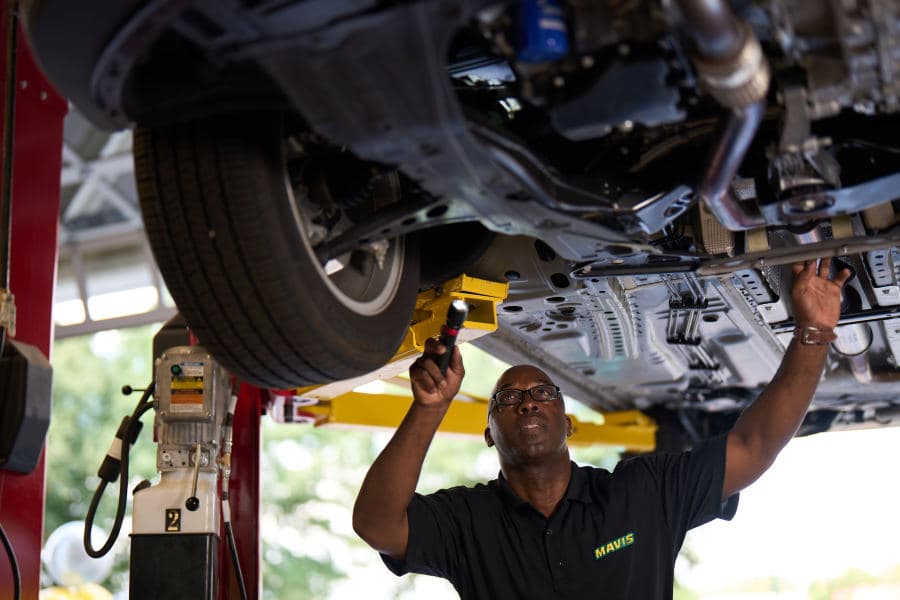
Separate from tire or rotor issues, this type of vibration doesn’t often come and go, it’s generally consistent and typically gets worse over time. With the vehicle raised, a qualified mechanic will generally inspect your car for looseness by physically shaking the wheel and suspension components. It’s a thorough process, but it can help pinpoint what’s wearing out and what may need to be urgently replaced.
If your steering wheel has been shaking even after purchasing new tires or having the wheels balanced, suspension wear can often be the root cause. Replacing those worn components makes a significant difference to the driving experience. Remember, it’s not just about your comfort. Correcting the issue has a lot to do with control and safety of the vehicle as well.
For more on suspension wear, see our guide on Signs Your Car Needs New Shocks or Struts.
Wheel Bearings: The Hidden Culprit
Sometimes the steering wheel vibration you experience isn’t stemming from your tires, brakes, or suspension. No, they’re coming from a small but essential part called the wheel bearing. Wheel bearings have an important job, one that essentially boils down to allowing the wheel to spin freely while carrying the weight of your car. When a wheel bearing begins to come undone, it can create a deep humming noise or low growl you feel via the steering wheel, especially as your speed increases.
If your car shakes when driving at higher speeds, or you hear a rhythmic rumble that changes when you turn slightly left or right, this is a classic hallmark of a worn or damaged wheel bearing. The noise and vibration can grow in intensity. A bad bearing can eventually seize, causing serious safety issues in the future by reducing your braking and steering ability. In extreme situations damaged wheel bearings can allow your tire and wheel to detach from the vehicle while driving.
Whereas tire balance or rotors problems may disappear with speed or braking, wheel bearings operate differently. The sound tends to remain consistent or change slightly with wheel load, not wheel speed. That’s why a mechanic will generally test for play or roughness by spinning each wheel from a lifted position.
Fix Your Steering Wheel Vibration: Visit Mavis Today
Got a steering wheel that shakes and seemingly has a mind of its own? We wouldn’t recommend taking a chance when it comes to your safety behind the wheel. Save yourself the heartache of a massive repair bill in the future by addressing the issue early. At Mavis, we offer free diagnostic inspections to identify the cause; whether it's tire balance, alignment, brake rotors, or suspension wear. Our certified technicians will show you what's causing the shake and provide a clear estimate before any work begins. Stop by your nearest Mavis location today.