Shocks vs. Struts: What's the Difference?
By Dan Krauss
Published 01/08/2026
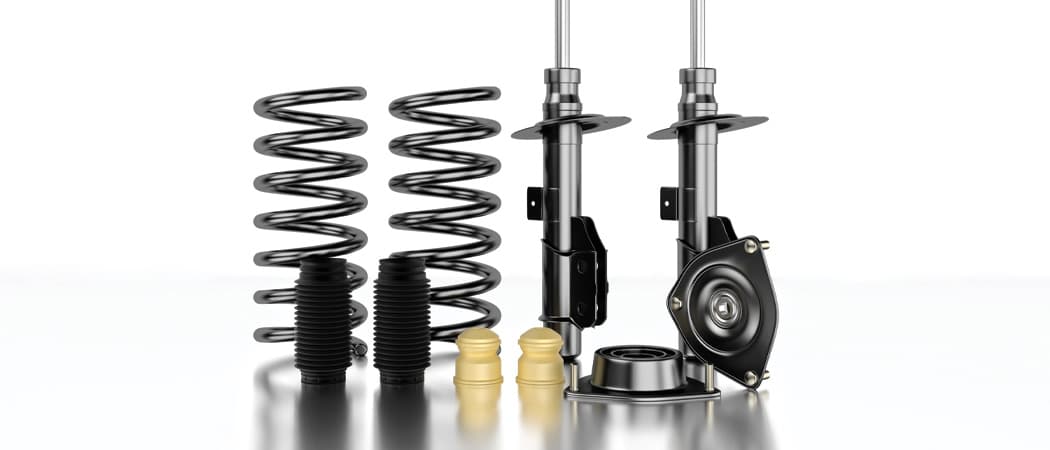
You’ve probably heard the terms used interchangeably: “shocks and struts.” Both live in your suspension and both control how the car moves over bumps, but they play different roles when it comes to structure, steering, alignment, and repair cost. If you’re trying to figure out what that means for maintenance, you’re in the right place.
Both shocks and struts are dampers that control bounce motion. A strut is also a structural component of the vehicle’s suspension while a spring is the thing that supports the weight of the vehicle. Both shocks and struts impact how your car feels, tire wear and performance. However the cost of repair could differ significantly between shocks and struts.
Suspension parts aren’t just about comfort. They also play a key role in controlling the vehicle, ensuring the tires stay planted when the pavement gets rough and whether the car follows your steering without drama. Worn shocks and struts lengthen stopping distances over uneven roads and upset stability control. Knowing if you have shocks or struts helps you understand symptoms and set realistic expectations for when replacement is necessary. Shocks and struts have a tendency to wear in part because they are constantly dampening motion and converting motion into heat.
This guide will explain what shocks are, what struts are, how they differ, what symptoms to watch for, and how to tell what’s under your car without crawling underneath for an hour.
What Are Shocks?
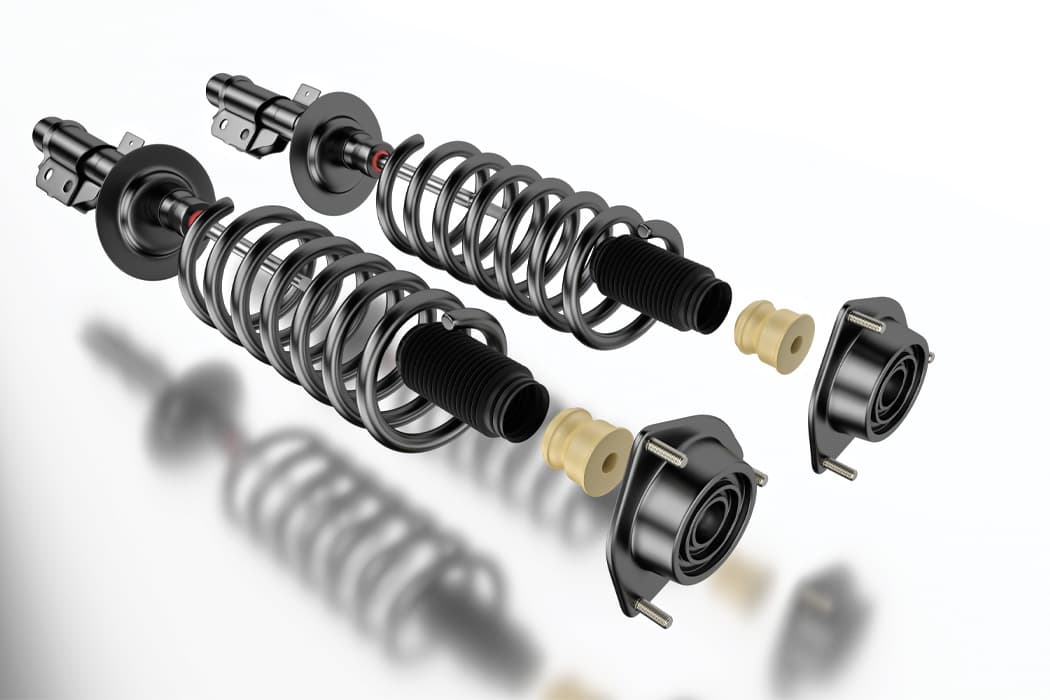
A shock absorber, often just called a shock, is a hydraulic or gas‑charged damper. Its job is simple: resist spring motion so the car doesn’t pogo after a bump. Springs store and release energy. Without damping spring action, the car would bounce.
Shocks are not structural. They don’t carry the vehicle’s weight. They also don’t set ride height or hold the wheel in position. You’ll normally find them mounted near a separate spring. Because the spring lives elsewhere, the shock itself can be slim and relatively easy to replace.
Modern shocks come in a few flavors:
Twin‑tube: common, durable, usually budget‑friendly.
Monotube: larger piston area for better heat control; often used in performance and heavy‑duty applications.
Adaptive/active: electronically controlled valving that changes firmness in real time when the vehicle needs it.
Where you’ll see shocks:
Many body‑on‑frame trucks and traditional SUVs use shocks at all four corners.
Plenty of modern vehicles use rear shocks paired with separate rear springs, even if the front uses struts.
Some older cars and specialty suspensions use shocks all around.
Shocks are often easier and less costly to replace than struts because they don’t include spring perches or structural mounts. Access tends to be simpler, and you don’t disturb alignment angles simply by swapping a shock on a corner that uses separate springs.
What Are Struts?

A strut (a version of which is often referred to as a MacPherson Strut) is a structural suspension component that integrates multiple jobs into one assembly. It damps motion like a shock, and it keeps the wheel in place relative to the body. The steering knuckle bolts to the strut body, so the strut’s position will also influence wheel alignment.
Because a strut ties into the steering and alignment geometry, it does more than just control bounce. It helps determine how the car turns and tracks, and also how readily the wheel returns to center. When a strut is replaced, you disturb the structure that defines those angles - that’s why a wheel alignment is almost always needed after strut work.
Where you’ll see struts:
The front of most modern front‑wheel‑drive cars and crossover vehicles.
The rear of many compact and midsize vehicles, depending on the vehicle.
Some performance and luxury models use more complex multi‑link layouts but still incorporate strut‑like assemblies.
Struts are more complex to replace than shocks. You’re either swapping a complete, loaded strut, with spring and mount pre‑installed, or transferring springs and mounts from one strut to another by using a spring compressor. Labor time is higher. Parts costs are usually higher. And you’ll need to have a wheel alignment done to dial the geometry back in spec.
Key Differences in Design and Function
Sometimes a side‑by‑side breakdown is the clearest way to see the gap between shocks and struts.
Role in the Suspension
Shock: Nonstructural component that controls up and down motion.
Strut: Controls motion and forms part of the suspension’s structure.
Effect on Alignment and Steering
Shock: No direct effect on wheel alignment angles.
Strut: Directly tied to alignment and steering feel. Replacement almost always calls for a post‑service alignment.
Replacement Complexity & Cost
Shock: Usually straightforward access; fewer parts involved; lower labor time.
Strut: Involves spring perches, top mounts, and attachment to the steering knuckle; more labor; alignment afterward.
Common Locations
Shock: Rear of many vehicles; trucks/SUVs all around; older designs.
Strut: Front of most modern FWD vehicles; often rear as well.
Impact When Worn
Driving with worn shocks or struts can be very dangerous
Shock: Excess bounce, rear hop, trailer sway, cupped tire wear on the affected axle.
Strut: Nose dive, body roll, wandering or tramlining, uneven front tire wear tied to geometry drift, clunks over steering inputs if mounts are failing.
How Do I Know If My Car Has Shocks or Struts?
You don’t need a lift to get a good idea of what’s installed, just a safe spot to look and a bit of orientation.
Check the owner’s manual. Most manuals list the suspension type. If you have a build sheet or window sticker, it may call out the suspension layout.
With the engine off and parking brake set look behind the wheel. If you see a skinny cylinder near a separate spring, that’s a shock. If you see a large assembly with a spring wrapped around it and a mount at the top of the strut tower, that’s a strut. Check the front and back wheels. On many cars you’ll find front struts and rear shocks. That mix is common and normal.
When in doubt, ask a technician. We can identify the setup in seconds and let you know what that means for maintenance and costs.
Driving Symptoms When Shocks or Struts Are Worn
Shocks and struts fail in similar ways because both are essentially motion dampers. The symptoms you feel depend on which corners are worn and type of vehicle.
Some clues you’ll notice from the driver’s seat:
Excess bounce after bumps - The car should settle quickly. If it keeps oscillating, damping is weak.
Nose dive when braking - The front loads up more than it used to. On rough roads, stopping distances can increase.
Body roll in turns or a floaty feel on the highway - The car feels light and imprecise at speed.
Rear hop or trailer sway - Common with worn rear shocks on trucks and SUVs.
Wandering or poor tracking - The wheel needs constant small corrections. Often points to tired front struts or worn steering components.
Knocks or clunks over bumps or when you turn the wheel - Mounts or bushings may be failing.
Cupping or uneven tread wear on your tires
What an expert technician might notice upon inspection:
Oil mist on the damper body - A sign the internal seal is leaking.
Cupped or scalloped tire wear - The tire bounces and can’t stay planted.
Uneven shoulder wear on front tires - A hint that front geometry is moving can often be a strut or upper mount issue, or an alignment that won’t hold.
How to Check: At Home vs. In the Shop
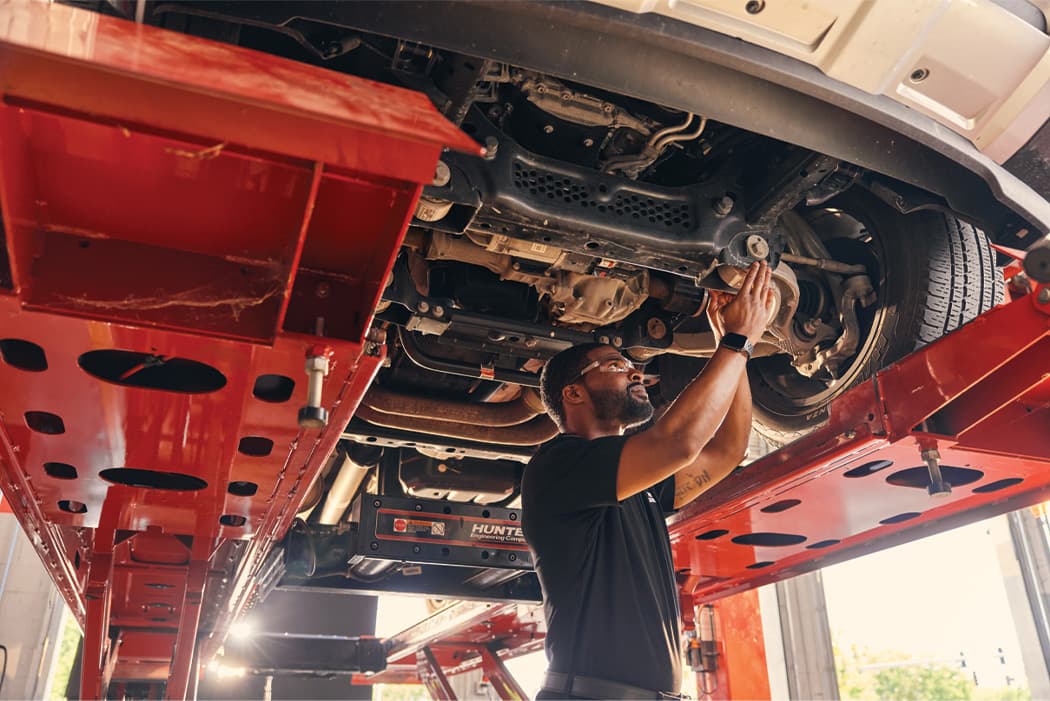
You can learn a lot without tools, then let a technician confirm and pinpoint the cause. Treat driveway checks as scouting. If what you see or feel suggests trouble, the shop visit closes the loop.
At home, start by parking on level ground and taking a slow look at each corner. A vehicle that sits noticeably lower at one wheel deserves attention. Press down and release at each corner; one controlled bounce is normal, a lingering oscillation is not. Scan the damper body for a light film of oil that hints at a leaking seal. Run your palm across the tread to feel for washboard‑like highs and lows; that texture is cupping from poor control. On a short drive, listen for a clunk you can reproduce over the same bump and note any wandering or darting under braking. Those observations give a technician a great head start.
In the shop, the process begins with putting the vehicle in the air, we inspect for leaks, torn dust boots, scored shafts, rusty spring perches, broken coils, and collapsed mounts. We check ball joints and tie‑rod ends for play and look at control arm bushings for slack. Tires get a close read for abnormal wear, and we listen for wheel bearing growl. Where it applies, we measure ride height. If struts are involved, we’ll determine whether a complete loaded strut assembly makes sense or if your springs and mounts are healthy enough to reuse. The right path can also depend on vehicle age, mileage, and budget.
Replacement: Best Practices That Pay Off
Whether you’re replacing shocks or struts, a few principles protect your tires and your wallet.
Replace in axle pairs - Can you replace just one shock or strut? We recommend doing the fronts together or the rears together. New damping on one side and tired damping on the other can make the car feel unsettled and can create uneven tire wear.
Mind the mounts - On strut cars, the upper mount and bearing allow the assembly to turn smoothly. If they’re noisy or loose, replace them with the strut. The same goes for dust boots and bump stops. Small parts that keep new components healthy.
Torque matters - Many fasteners should be tightened at ride height so bushings aren’t pre‑loaded in the wrong position. We handle that on the lift, but it’s worth knowing why it matters.
Align afterward when struts are touched - Because struts help manage steering, any strut swap is followed by an alignment. On shock‑only corners, alignment isn’t usually disturbed unless other steering or suspension work is done.
Costs: What to Expect
Every vehicle is different, so labor varies widely. That said, some patterns hold true across the board.
Shocks generally cost less per corner to replace than struts because the parts are simpler and access is easier. On many vehicles, shock replacement does not require alignment, which keeps the overall price lower.
Struts run higher due to the structural role and the additional parts involved, such as spring perches, mounts, and bearings. Sometimes choosing loaded struts is the right path where the part price goes up but labor time can go down, and you leave with new supporting hardware. An alignment afterward is part of the plan.
Related parts can add value now and save money later. If a sway bar link boot is torn or a mount is noisy, doing it while everything is apart avoids duplicate labor.
When you’re ready, swing by for a suspension check. We’ll road‑test it and show you exactly what’s worn. You’ll leave with a plan and a car that feels right again.