Top 10 Car Noises You Should Never Ignore
By Dan Krauss
Published 01/08/2026

Your car makes a lot of noise during normal operation and all unusual sounds should be diagnosed by a professional, but certain sounds signal real problems. A squealing noise from brakes, humming noise from tires, engine knocking noise, or rattling noise under the car, are all common car noises you should never ignore. These sounds often indicate worn components or failing systems.
Today, we’ll take a closer look at the top 10 car noises you should never ignore, explaining what each one could indicate, how urgent it really is, and what to do about it. This is essentially your cheat sheet for decoding these sounds before they magnify into more expensive repair bills. Let’s dive in.
Why Paying Attention to Noises Matters
Each noise your car makes is a potential clue, and overlooking them can cost you later. Modern vehicles are engineered to run quietly and smoothly, so when a car starts making a weird noise, it’s not wrong to interpret it as an early warning sign that something may be off. This could be compared to a slight sore throat, which may indicate a bad cold is on the way. You might think you’re imagining it at first, then before you know it, it’s impossible to ignore.
Catching these common car noises early can offer you invaluable peace of mind by preventing more costly repairs down the road. A squealing noise from brakes today might only indicate worn brake pads, but left unaddressed, it could lead to rotor damage or even complete brake failure. That faint humming noise from tires could be a sign of uneven tread wear or a failing wheel bearing, both issues that become increasingly more dangerous and expensive the longer they go unchecked.
Here’s the truth: cars don’t often break down out of nowhere. Before you find yourself sidelined, those underlying issues with your car present themselves subtly at first through knocks, rattles, and squeals. Listening to your car and acting quickly can spell the difference between a relatively cheap fix and an expensive overhaul.
What Noises from My Car Should I Never Ignore?
The most critical car noises include; squealing or grinding from brakes, humming or growling from wheels, clicking when turning, engine knocking, squealing under the hood, whining when steering, rattling under the car, thumping from tires, and hissing after shutdown. Each points to specific component wear or failure that requires inspection.
10 Common Car Noises Explained
Next, we’ll explore ten of the most important car noises you should never ignore, explain what might be happening when you hear them, and provide you with a sense of how urgent they are to address. While most mechanics can quickly diagnose the problem, catching the early warning signs starts your ability to identify that your car may have a problem.
1. Squealing or Screeching While Braking
Let’s start with one of the most common car noises you should never ignore: the sharp, high-pitched squealing noise from brakes. This is one sound that’s near impossible to ignore. When you hear this sound, you will know something is wrong. Initially, it might only happen here and there, maybe on cold mornings or after rain. But if it’s becoming part of your routine drive, your brakes are telling you something important.
The most common cause of the squealing noise from brakes is worn brake pads. The majority of pads are designed with a small metal wear indicator that emits a squeal as the material thins. In some respects, it’s essentially an early warning system stored on your car. If you don’t address it in time, that squeal can swiftly transform into a grinding noise, which often means that the pad material is worn through and metal is scraping against metal. Not only does that dramatically reduce your stopping power, but it can also cause considerable damage to your rotors, leading to expensive repairs.
Occasionally, a car making weird noise like this could also suggest an issue with moisture, rust, or potentially low-quality brake pads that vibrate as they make contact. Either way, you won’t want to shrug it off. It might go without saying, but just so it’s top of mind, brakes are your car’s most important safety feature, and that squeal is your first sign they need attention. Be sure to schedule a brake inspection as soon as you notice the noise.
For a complete guide to your vehicle’s brake service, see our Brake Repair 101 hub.
2. Grinding Noise While Braking
What happens if that squealing noise from brakes turns into a harsher grinding sound? It’s time to stop driving and have your car checked. Of the few different car noises you should never ignore, this one arguably tops the list. A grinding or growling sound when you hit the brakes often means the friction material on your brake pads is entirely worn away, and now metal is coming in direct contact with metal. In short, your brakes may not be working.
Whenever this happens, your stopping distance can significantly increase and the damage can spread in a hurry. The rotors, the smooth discs your brake pads clamp onto, can become deeply gouged or warped. If this happens, you can’t simply have them resurfaced. No, they’ll likely need to be replaced altogether, which translates to more strain on your wallet. And because those sensitive braking components work as a team, ignoring the sound can also put significant stress on your calipers and brake lines over time.
Many drivers mistakenly associate this example of a car making weird noise with a vehicle that’s been sitting for an extended time. You certainly can’t fault the logic, considering that a bit of rust on the rotors can cause brief grinding until it wears off. But if the noise sticks around beyond the first few stops, it’s more than just surface rust. Instead, it’s a clear warning sign that something is amiss within the braking system.
At Mavis, we regularly see vehicles where drivers continued driving with grinding brakes, thinking it was just rust. By the time they come in, what could have been a $300 brake pad replacement has become a $1000+ job with new rotors and sometimes caliper work.
A grinding noise means you’re beyond the point of a minor issue now. We advise having a professional inspect your brakes as soon as possible. Waiting until the grinding noise sets in can multiply your repair bill several times over. It’s better to be safe than sorry.
3. Humming or Growling from Wheels
A low humming noise from tires probably seems like no big deal at first, something you only notice with little road noise. In reality, this is another one of those car noises you should never ignore because it can often mean you have a worn wheel bearing or uneven tire wear. These are things that can have a big impact on your safety behind the wheel.
Wheel bearings, which help the wheels spin freely, are the type of thing you shouldn’t notice when they’re working effectively. When they start to fail, that faint hum can reach a fever pitch, emitting a steady growl that fluctuates in pitch depending on your rate of speed. If that noise deepens or grows louder when you turn slightly, that’s another indication it’s a bearing issue. Ignoring it is downright dangerous because a failed bearing can contribute to wobbly wheels, vibrations, or even seize up at highway speed.
To be sure, not every hum means a bearing is on the verge of failure. Sometimes the culprit is simple tire cupping, a form of uneven tread wear that makes your tires “sing” while driving. Either way, both problems affect your car’s stability, handling, and overall longevity of your tires. Are you hearing a consistent hum? Schedule a tire inspection to properly diagnose the issue.
For more on tire wear patterns, check our Tire Tread Patterns guide.
4. Clicking Noise When Turning
What if your car makes noise when turning? This can often sound like a sharp, rhythmic clicking or popping noise which seems to happen in time with your wheel movement. Generally, this means you’re dealing with a worn CV joint (constant velocity joint). These joints attach your transmission to your drive axels, flexing as you maneuver and enabling a smooth power delivery even as your suspension moves up and down. Gradually, the grease within the CV joint can leak out if the protective boot tears, making the metal parts susceptible to grinding against each other.
The clicking noise you hear is basically metal-on-metal friction. What usually begins as a faint noise on tight turns eventually swells to a much louder noise as the damage becomes worse. If you ignore it, the CV joint becomes increasingly susceptible to all out failure, leaving you stranded or unable to properly steer. That certainly qualifies as yet another of those car noises you should never ignore.
To be clear, clicking noises can also occur as a result from other front-end issues, such as loose hubcaps, low power steering fluid, or worn suspension components. If the sound is consistent every time you turn, especially when accelerating out of them, have it checked as soon as possible.
5. Knocking from the Engine
Engine knocking is another serious sound your car can make. We describe it as a deep, rhythmic tapping or rattling noise under the car hood, and it definitely fits the bill as one of the most serious car noises you should never ignore. This sound means your engine’s internal combustion process isn’t firing correctly, often a result of low oil, bad fuel, worn bearings, or mistimed ignition.
Overlooking the engine knocking sound can cause serious damage, the kind your engine doesn’t generally recover from in the future. That’s what makes regular oil changes, high-quality fuel, and timely tune-ups so essential in terms of your ongoing vehicle maintenance.
6. Squealing Under the Hood
If you hear a high-pitched squeal as you start the car, accelerate, or activate the AC, chances are you have a worn or loose serpentine belt. This is one more of those car noises you should never ignore because that single belt is responsible for powering some of your car’s most essential systems: the alternator, power steering pump, and air conditioning compressor. That squealing noise from under the hood is often the result of loosening belt tension or the rubber surface glazing over from age.
In terms of urgency, this noise falls squarely under the “don’t panic, but don’t ignore it” category of common car noises explained. Replacing a belt or tensioner is often quick and inexpensive, especially compared to what you might shell out by neglecting the repair.
7. Whining or Moaning When Steering
If your car is making a weird noise that can only be described as a whine or a low moan as you turn the steering wheel, listen in close. Your power steering system could be calling for attention. This is another of those car noises you should never ignore because while it may start out faintly, it can soon have a huge impact on your car’s overall safety and handling.
A whining or moaning noise when steering can usually mean you’re low on power steering fluid. That fluid is responsible for keeping pressure in the system steady, adding lubrication to the steering pump. Whenever it gets low, sometimes from a slow leak, the pump starts to draw in air, creating a distinct groan sound. In other cases, the sound could be caused by a failing steering pump or worn-out hoses that can’t maintain pressure. Ignoring it can cause your steering to become more rigid and stiff, making it exceedingly more difficult to control your car, no matter how slow you’re traveling.
8. Rattling Under the Car
If you’re hearing a rattling noise under the car, especially pronounced when idling or accelerating, something is probably loose. It can start as a small buzz and quickly evolve into a bigger, costlier issue.
Among common car noises explained, this one frequently leads back to issues with the exhaust system. Heat shields, those thin metal guards that protect parts from exhaust heat, can rust and loosen, creating a tinny sounding vibration. A rattling noise can also stem from a loose exhaust hanger, a damaged catalytic converter, or broken muffler baffle.
9. Thumping or Rhythmic Flapping
Have you recently noticed a steady thumping or rhythmic flapping noise that increases tempo as your car accelerates? Don’t ignore it. What often sounds like a flat spot or something slapping against the pavement is generally caused by tire issues. A humming noise from tires may suggest uneven wear, but a thump often indicates something more significant. In some instances, this could be debris that has become stuck to the tire or a damaged spot on the tread after hitting a pothole.
If you hear the flapping noise in your car, pull it over and check your tires right away. Blowouts can happen any moment when driving on failing tires, presenting a huge safety issue for you and those around you. It’s still a safe bet to have a trusted professional inspect your tires and suspension as soon as possible. A pit stop at your local Mavis shop certainly beats finding yourself stranded on the shoulder of the road.
10. Hissing After Shutdown
Hearing a hissing sound after shutting off your car can seem relatively minor, but it’s another example of the car noises you should never ignore. That gentle hiss could be a sign that something’s still under pressure when it shouldn’t be.
In most instances, the sound stems from the cooling system. When coolant leaks onto hot engine parts or releases through a small crack or loose hose, the resulting evaporation can create a hissing noise. You may even catch a faint sweet smell, a clear sign that it’s coolant. One more possibility is a vacuum line leak, which can affect your car’s air-fuel-mixture and trigger a rough idle or possibly check engine light.
Although it may not be as threatening as an engine knocking noise or a rattling noise under a car, a consistent hissing noise isn’t the type of thing to overlook. If the sound lingers or you notice steam, temperature spikes, or fluid dripping under the car, it’s time to have it checked thoroughly by a qualified mechanic.
Can I Keep Driving If My Car Is Making Noise?
It depends on the noise. Grinding brakes, engine knocking, severe rattling, or thumping from tires require immediate attention, you should pull over safely and have the vehicle towed if necessary. Squealing belts, minor humming, or light rattling may allow you to drive cautiously to a repair shop, but don't delay the inspection.
Don’t Tune Out What Your Car’s Telling You
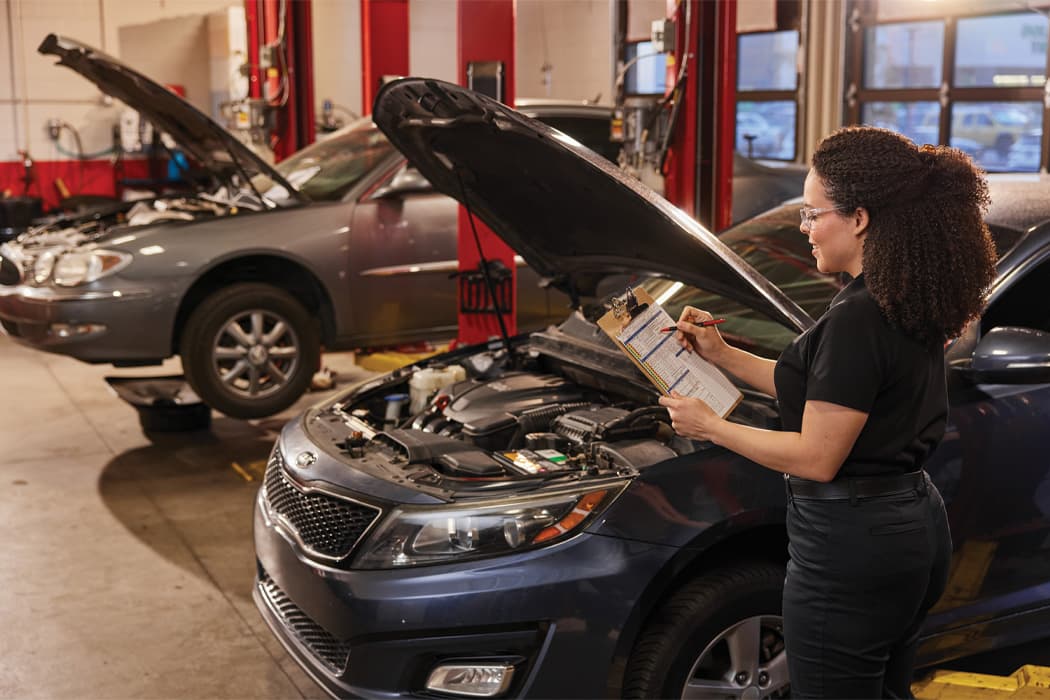
Cars have a language all their own. To learn it, all you really need to do is listen. From a squealing noise from brakes to a humming noise from tires, every sound is potentially an opportunity to diagnose an issue before it becomes a bigger headache in the future. A quick visit for a diagnostic check or free inspection can make all the difference, this makes sure your car continues to run smooth and safely, no matter what the road throws at you.
If your car is making any of these sounds, don't ignore the warning signs. At Mavis, we offer free diagnostic inspections to identify the source of unusual noises and provide clear repair recommendations. Our technicians can diagnose brake, tire, engine, and suspension issues quickly and accurately. Visit your nearest Mavis location today for a thorough inspection.