Everything You Need to Know About Your Tires' Speed Rating
By Mavis Tire Team
Published 04/25/2025
There are a lot of things to consider when it comes to purchasing a set of new tires. There's the brand, the size, the price, and of course, the speed rating.
Virtually all passenger tires today are assigned a speed rating. However, the average driver doesn't give it much thought—if they even know that it exists.
Regardless of your tire knowledge, the folks at are experts on all things tire-related, and speed ratings are very important. This is especially true when it comes to high-performance vehicles.
To learn more about your tires' speed rating and why it matters, keep reading.

What Exactly Is a Speed Rating?
A tire's speed rating indicates the highest speed that a tire can safely maintain over time as well as the fastest speed it can handle before its performance begins to dwindle. Essentially, the higher the speed rating, the better control your car will have at higher speeds.
The same is true for lower speeds.
These ratings do not, however, determine whether a vehicle can be safely driven at the designated maximum speeds during inclement weather or poor road conditions.
Speed ratings also don't indicate how well a tire can handle turning corners, nor is it a recommendation to drive fast.
How Do Manufacturers Decide on Speed Rating?
The speed rating system for tires was initially developed in Europe. As manufacturers began developing bigger and higher quality tires, it became necessary to regulate each tire's performance at standard speeds to ensure safety when it comes to grip, cornering ability, ride comfort, durability, and of course, maximum speed.
Today, a tire's certified speed rating is designated by a letter from A to Z, ranging from 3 mph to 186 mph and greater.
To decide on speed ratings, manufacturers will simulate different speeds and loads for each type of tire. The tire must be capable of sustaining a specific speed regarding industry standards to receive the intended rating.
However, it's important to remember that these tests can't simulate every condition a driver will encounter on the road. That's why it's necessary to think of the speed rating as an indicator of the tire's capabilities under normal conditions—fully inflated, a properly running vehicle, good weather and road conditions, etc.
Therefore, you'll need to take into consideration that the real-life speed capability may be less than the indicated rating as factors such as deflation, wear and tear, vehicle conditions, alignment, weather and road conditions, tire damage, load, and the duration of certain speeds come into play.
How Do I Find My Tires' Speed Rating?
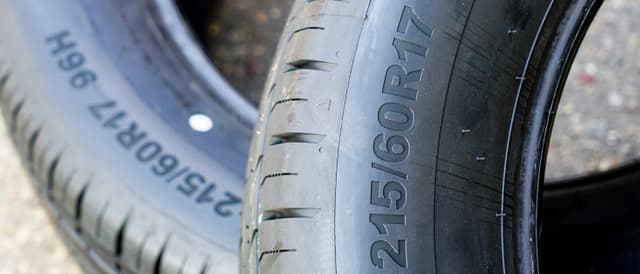
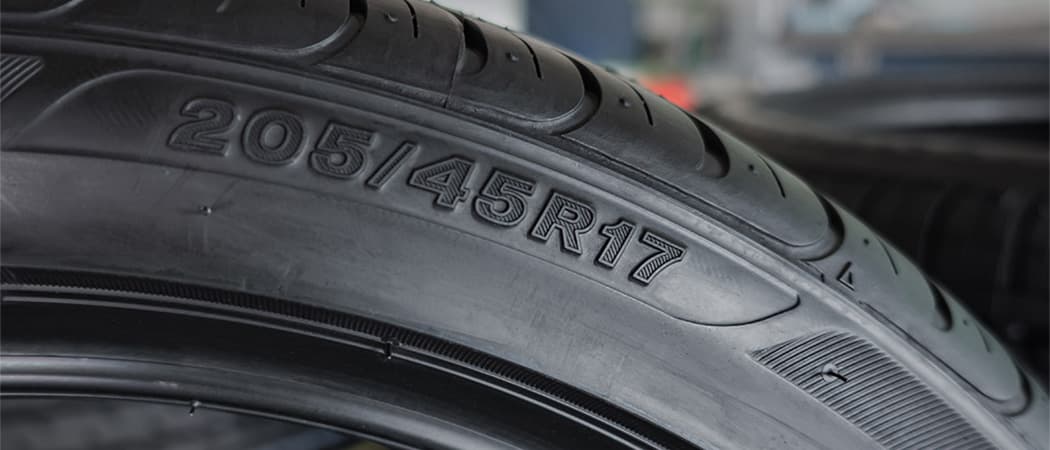
If you're trying to figure out what speed rating has been assigned to your tires, the first place you want to look is the sidewall of your tire. The speed rating will be right after your tire size. You can also check your driver's door jamb. There will be a label with all of your tire information on it. Lastly, you can check your owner's manual. The vehicle manufacturer will include all the information you need to know about your car in there, so you'll want to keep it handy.
Once you know what to look for, it's easy to spot as it's usually the last piece of information in a tire's code sequence located on its sidewall.
For example, the typical tire code reads P205/60R16 82S.
82S is that last piece of code, with the S indicating the speed rating. In this case, the S indicates that your tires can handle up to 112 mph. (Just remember, it's a safety rating, not a recommended travel speed!)
It should also be noted that the number set next to the speed rating is the load index. This number indicates the tire's load-carrying capabilities. In this example, the 82 indicates that each tire can take on up to 1,047 lbs. (This index can also be found in your owner's manual).
What Rating Should I Look For?
It is always recommended that you only replace your speed-rated tires with tires with an equivalent or greater speed rating.
For example, if the manufacturer of your car recommends a V, you'll want to replace it with either another V or a W, Y, or Z.
You never want to purchase tires below the manufacturer's recommended speed rating for your make and model. Another thing you want to avoid is mixing and matching higher and lower speed ratings.
Tires with different speed ratings installed on a vehicle will end up limiting the speed capability of the vehicle to the lowest-rated tires.
If you have more questions about the speed rating for the tires on your vehicle, come see the experts at . Schedule a service at your local Mavis and our tire experts will ensure you have the right tires on your vehicle.