Help! My Brakes Are Making Grinding Noises
By Steve Ribble
Published 04/20/2026
You tap the pedal and hear a harsh scrape, a gravelly grind, your brakes might be metal on metal. If you've got brakes making grinding noise or notice a grinding noise when braking, that's your car telling you the brake system needs attention now. Grinding means hard contact, which is usually worn brake pads grinding against rotors, and the damage spreads fast.
The two most common questions after this are why are my brakes grinding? And how urgent is it? It’s highly urgent. Grinding means hard contact or damage somewhere in the brake assembly, and the damage can cost you more the longer you wait. This guide explains the likely causes, how serious each one is, and exactly what to do next to protect you and your car.
Squeak vs. Grind: Why the Sound Matters
These two sounds get mixed up all the time, and telling them apart helps you decide what to do next. A quick listen can separate a nuisance you can schedule later from a problem that requires your attention immediately. A good rule of thumb: if it squeaks, you likely have early wear or surface film; if it grinds, you’re hearing hard contact that needs immediate attention.
Squeaking is usually a high‑pitched chirp. You’ll hear it at light pedal pressure or when rolling at low speeds. Common reasons include morning surface rust, cheap pad compounds, or the intentional wear indicator tab that squeals to tell you the pads are almost worn out.
Grinding is lower and harsher. Think about a scraping metal sound, gravel in a grinder, or a rumbling growl that follows wheel speed. It often means the pad’s friction material is gone and the metal backing plate is contacting the rotor. It can also mean a damaged rotor, a stuck caliper that’s damaging one side, or debris lodged between the pad and rotor. While there are a few mild cases, a small pebble, or light rust after sitting, grinding usually requires immediate attention.
Bottom line:
Squeaking brakes = early warning or nuisance.
Grinding brakes = stop and inspect now.
Common Causes of Brake Grinding
We’ll start with the issues that most often lead to serious damage, then cover the ones that can sound scary but are sometimes simpler to resolve.
1) Pads Worn Down to the Metal Backing Plate
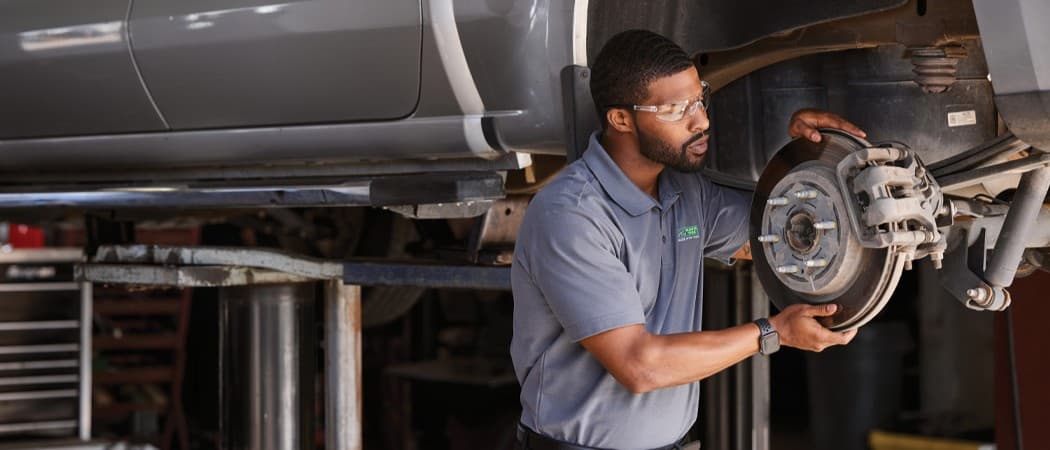
Brake pads have a steel backing plate and a layer of friction material mounted to it. Many drivers describe a grinding noise once that friction layer is worn out. When the friction material wears out, the backing plate makes direct contact with the rotor (metal on metal), which causes the grinding noise. At Mavis, we see metal-on-metal contact weekly, often from drivers who thought they had just a few more miles before service. The rotor damage we find almost always pushes the repair cost higher than it would have been with timely brake pad replacement.
How it shows up: Grinding noises that get worse when you press the brake pedal is your first sign. You may feel a vibration through the pedal or steering wheel and the stopping distances increase. The car might also pull to one side because one pad is worn more than the other which could indicate a caliper failure.
Why it matters: With metal scraping metal, the rotor gets gouged and damaged fast. Heat skyrockets, and the caliper piston and seals are exposed to temperatures that they weren’t designed for. Leave it too long, and you can damage other components, driving up the cost.
2) Damaged, Warped, or Severely Scored Rotors
Rotors take a tremendous amount of abuse over time from just normal braking. Overheating, warpage, or extended metal‑to‑metal contact can groove or distort them, causing them to make a grinding sound, pulsate or pull to one side when braking. All that requires them to be serviced.
How it shows up: A steady grinding noise that you hear with wheel speed and pulsing worse at higher speeds in the steering wheel or pedal.
Why it matters: A rough rotor can damage a fresh set of pads, and a warped one can shake the steering wheel or pedal reducing control of the vehicle during braking. Strong braking on an undersized or compromised rotor can crack it, which is a safety factor while you are driving.
3) Stuck or Seized Caliper / Sticking Slide Pins
Calipers must move freely. When a piston seizes or the slide pins corrode, one pad can stay clamped against the rotor causing the pads to unevenly wear. Constant contact generates heat and grinds the pad into nothing resulting in a metal-on-metal situation.
How it shows up: Persistent drag, burning smell after a drive, one wheel much hotter than the others, and a pull to one side when braking are signs the caliper is sticking or seized. The grind can be a low growl or a harsh scrape as the pad wears unevenly and you can hear the noise even when you are not braking.
Why it matters: Heat from a dragging brake caliper damages pads, rotors, caliper seals, and even wheel bearings. It also hurts fuel economy and can significantly reduce braking performance.
4) Debris Caught Between Pad and Rotor
Small stones, rust flakes, etc., can wedge between the pad and rotor. It’s common after driving on gravel or through construction zones or even normal roads.
How it shows up: A sudden grinding or scraping that appears out of nowhere but then fades or disappears after a few stops as the debris dislodges or falls out could have been some sort of debris.
Why it matters: Even a small pebble can score the rotor if it stays trapped, so if the sound persists, don’t wait, go and have your vehicle looked at by Mavis.
5) Missing or Worn Hardware (Shims, Clips, Anti‑Rattle Parts)
Pads rely on small clips and shims, so the pads sit in the caliper brackets correctly and quietly. When those parts rust away, go missing, or weren’t installed correctly, the pad can contact the rotor at a bad angle and make a grinding or scraping noise and cause the brakes to fail quicker than anticipated.
How it shows up: Grinding at low speeds, especially over bumps, could be an indication of a hardware or shim problem, so it is important to get this checked before it causes major damage.
Why it matters: Misaligned pads won’t wear evenly and can damage rotors over time. Missing hardware also increases brake noise and vibration.
6) Moisture or Surface Rust After Sitting
If the car sits overnight in damp weather, or longer outside, light rust can form on rotor faces. The first few stops can sound rough as pads clear the rust film.
How it shows up: A brief coarse sound in the morning, then quiets down after a couple of stops. Often you’ll see a reddish film on the rotor that fades to bright metal.
Why it matters: This one is generally harmless. If grinding lingers after a short drive, though, you’re dealing with more than surface rust and need to get your vehicle checked.
Why Grinding Brakes Are Dangerous (and Expensive if Ignored!)
Grinding noise often signals that there is a problem in your brake system that you need to have it looked at immediately. When you keep driving with that sound, three problems stack up fast:
Stopping power drops and control of the vehicle during braking degrades. Pads that are down to metal don’t grip like they should. Pedal feel can stay firm while actual deceleration falls off and stopping distance increases.
Damage spreads causing heat and abrasion beyond the pad/rotor. Caliper seals can harden, slide pins seize, and wheel bearings or ABS sensors can be damaged if you don’t get your vehicle into Mavis.
Costs climb higher than it might have been just to replace the pads and a simple rotor resurface. Delaying it, and you will be needing rotors, hardware, and potentially a caliper.
If you hear grinding and feel a pull or vibration under braking, you should stop driving and call Mavis. The fix is almost always cheaper (and safer) than what happens next.
What To Do Right Now
When you hear grinding, think safety, stop and verify. Here’s the simple playbook.
Ease off and find a safe place to park.
Avoid hard braking if you can. Use extra distance from cars ahead.
Look and listen. With the car safely parked, peek through the wheel spokes. Do you see deep grooves on the rotor? Are there any metal flakes on the external part of the wheels? Do you spot a small rock wedged near the pad? If you hear steady grinding at very low speed, it’s likely not just light surface rust.
Don’t push through it. The noise is the warning. Continuing to drive rarely makes a brake grind go away; it usually damages additional parts.
Come to Mavis for a free brake inspection. No appointment is required. We’ll check the brake pad thickness, rotor condition, caliper function, and hardware.
Ask for a clear estimate before repairs. We’ll outline pad/rotor service, hardware needs, and whether a caliper is compromised before any work begins.
How We Diagnose Grinding - What a Tech Checks
A proper inspection is thorough but quick. Our goal is to answer three things fast: what’s rubbing or dragging, how much damage has it caused, and what it will take to stop the noise safely and repair the vehicle.
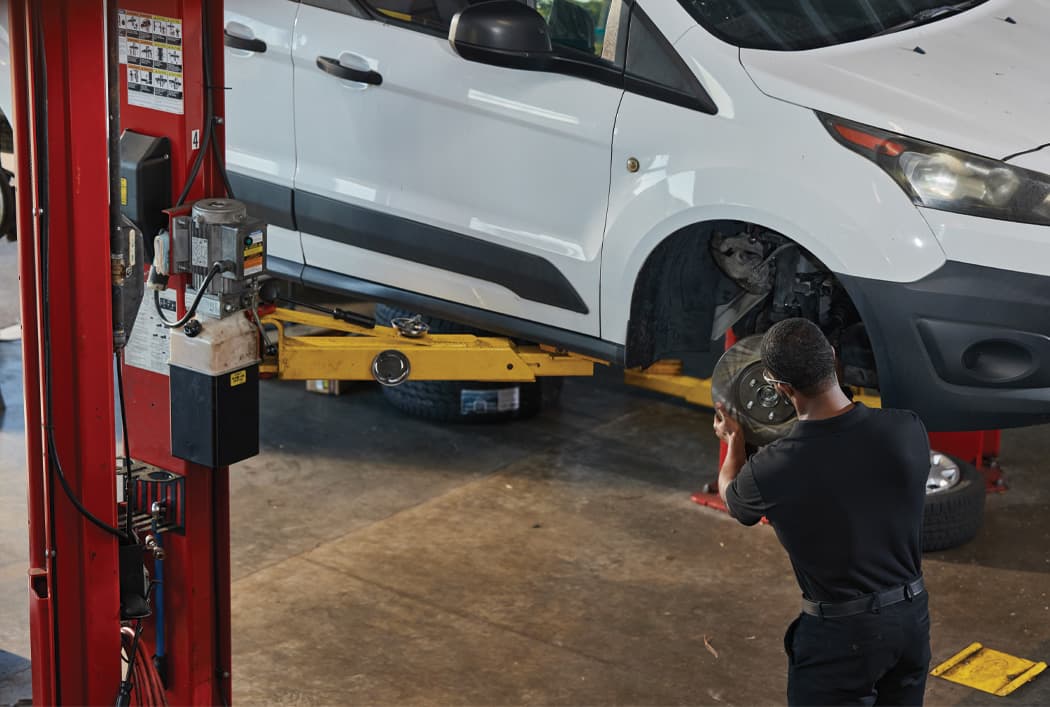
Wheel‑off inspection - Pads come out so we can measure thickness and look for tapered wear. Rotors get checked for thickness, surface condition, and runout. We inspect hardware for missing clips or shims.
Caliper function - We test piston movement and slide pins, and look for torn dust boots or fluid leaks. If one wheel is hotter, if so, we track down the issue.
Debris and shield check - Sometimes a bent dust shield or trapped stone is the entire story. We clear it and do a road test again to confirm the noise is gone..
Hydraulic health - If we find heat damage, we consider the condition of the brake fluid and hoses, and recommend a fluid exchange when contamination is evident or excessive heat or mileage.
You’ll get options laid out: what’s required for safety today, what’s smart to do while we’re in there like new hardware, and what can wait.
What the Fix Usually Involves
Here are the most common services you’ll see on a grinding‑noise estimate and the reason each one is on the list.
Pads and rotors together. If pads are worn out or grinding, rotors are often damaged. We will replace pads and install new rotors as needed. New pads on a damaged rotor won’t seed in correctly and the noise can return.
Caliper service if there’s drag. A dragging caliper needs attention, clean and lube slides at minimum, or replace the caliper if the piston or seals are compromised.
Fresh hardware. New clips and shims make sure pads sit square and move freely. Skipping hardware saves a little now and costs more later by causing the brakes to wear faster.
Brake fluid exchange when overheated. Heated up brakes, breakdown brake fluid. If we see evidence of boiling or contamination, exchanging the fluid restores consistent pedal feel and protects internal parts.
For a deeper look, or if your symptoms don’t quite match, these guides will help you zero in fast:
What Happens If You Don’t Fix Your Brakes
How to Prevent Grinding Noises in the First Place
A few simple habits keep brake noises from becoming brake repairs. Don’t ignore early squeals, wear indicators are designed to get your attention before the friction layer is gone. Choose quality pads and rotors, also include the proper hardware so the pads sit square and move freely. Build inspections into your routine by checking pad thickness and rotor condition during tire rotations; catching a sticky slide or uneven wear early prevents heat damage. After gravel roads or construction zones, a quick rinse helps clear dust shields and calipers of small stones and grit that can lodge and score the rotor. And keep brake fluid fresh on schedule so it resists boiling and corrosion, which protects calipers, ABS components, and overall braking performance.
Grinding is your car’s way of saying stop and check me now. If you're wondering how to fix grinding brakes, the real solution starts with an inspection to address the underlying cause, not hoping the noise fades. The fix might be as contained as pads and rotors, or it might include a caliper if heat had time to do its work. Either way, you’re far better off handling it today than adding parts tomorrow. Pull over somewhere safe, avoid hard stops if you can, and book an inspection.
At Mavis, we offer free brake inspections so you know exactly what's causing the grinding and what it will cost to fix. Our technicians will show you the damage, explain your options, and get you back on the road safely.