5 Reasons Why Your Brake Pedal is Stiff
By Ryan Boccaccio
Published 06/24/2026
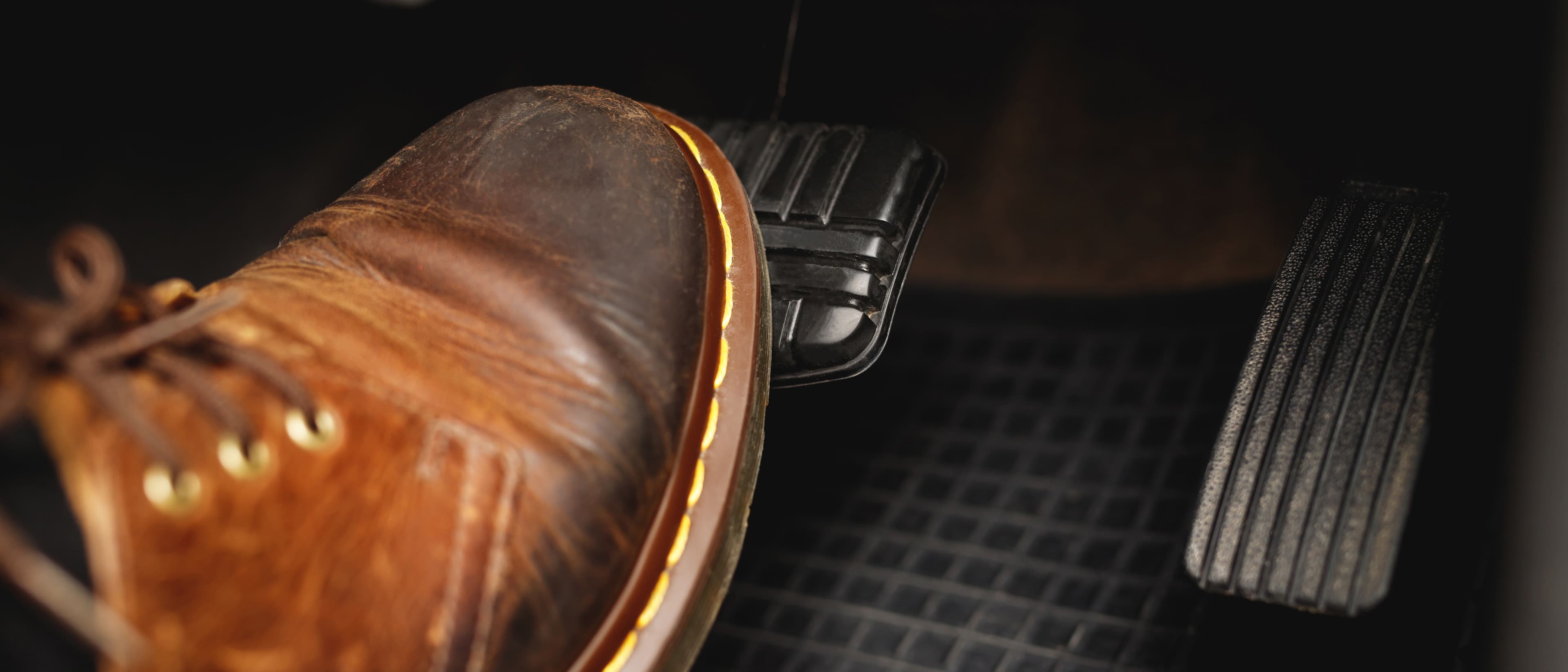
If you’re driving with a stiff brake pedal, it may feel like you have to practically stand on the pedal to slow down or stop your vehicle. Your leg works harder, yet the car doesn’t slow the way you expect and the brake pedal is hard to push down. Unlike a soft or spongy brake pedal, a stiff or hard brake pedal is a serious safety hazard that should be serviced as soon as possible. Let’s explore what could be the cause of a hard brake pedal and what to do next.
What does a stiff brake pedal feel like?
Modern passenger vehicles use power brakes to reduce the effort needed at the pedal. A healthy system uses engine vacuum, or a dedicated pump/hydraulic assist, to help you apply force to the master cylinder, which then pushes brake fluid to the calipers. With the engine running, the pedal should move with a firm, controlled feel. If it’s very hard, or takes far more effort than usual, hydraulic assistance is likely missing.
Here’s a quick driveway check you can perform when parked to tell if there’s a problem worth investigating: with the engine off, press the pedal several times to remove stored vacuum. Hold gentle pressure on the pedal and start the engine. In a healthy system, the pedal drops slightly as brake assist comes online. If nothing changes, you’ve got a straightforward problem to diagnose.
What Causes a Stiff Brake Pedal? 5 Common Reasons
1. Brake booster issues
In most cases, a stiff brake pedal is caused by problems with the brake booster. Brake boosters multiply the force applied to your brake pedal, and they work in tandem with the hydraulic fluid in the brake lines. A faulty brake booster can no longer maintain vacuum pressure.
The brake booster is connected directly to the engine’s intake manifold via a vacuum hose, allowing the process of drawing air into the engine to also draw air from the front chamber of the brake booster via a check valve. This system, also known as power brakes, allows you to stop a two‑ton vehicle with just your foot. Most vacuum‑assisted power brakes function because of engine vacuum, but sometimes, a tear will develop on the diaphragm or the check valve may break. In both cases, the brake booster may no longer create a vacuum and will fail to supply power to the master cylinder.
Hard‑pedal symptoms: high effort with the engine running, a hissing sound near the driver’s side firewall, longer stopping distances on rough pavement, and a pedal that doesn’t drop when you start the engine after pumping it with the engine off.
What a tech does: verify vacuum at the booster, test the one‑way check valve, inspect the pushrod and booster seal, and confirm the master cylinder isn’t binding. If the diaphragm is torn or the valve won’t hold, a replacement is necessary. On many vehicles, a booster swap is followed by a road test and a fluid bleed if the master cylinder was disturbed.
2. Failing vacuum pump or power steering pump
Some vehicles have different types of brake boosters. In some cases, the brake booster can be a mechanical or electrically driven vacuum pump instead of using the engine intake manifold to create a vacuum. Some vehicles may also have a hydraulic brake booster that uses direct hydraulic pressure generated by the power steering pump instead of engine vacuum.
If you have a stiff brake pedal and the vehicle has a vacuum pump or hydraulic brake booster, common issues could be a missing serpentine belt, a failing electric pump, or low power‑steering fluid.
Hard‑pedal symptoms: brake assist fades at idle, the steering gets heavy at the same time on hydro‑boost cars, the battery light joins the party if a belt is gone, or the pump whines. Electric‑pump cars may set a warning on the dash and disable assistance.
What a tech does: confirms pump output and power supply, inspect the serpentine belt and tensioner, top off and bleed power‑steering fluid on hydro‑boost systems, and scan for related fault codes on electric‑assist systems.
3. Cracked, broken vacuum hose, or a leaking check valve
A vacuum hose connects your brake booster to the engine, through which air is drawn to create a vacuum. Often, the loss of vacuum that leads to a stiff brake pedal is caused by a broken vacuum hose. Age hardens rubber. Heat and oil vapors don’t help. Small splits become big leaks.
Hard‑pedal symptoms: a sudden change in pedal feel after a loud hiss, a brake pedal that’s hard in the morning and improves a bit after driving, and sometimes a rough idle because of the vacuum leak. A failed check valve can mimic a split hose; it lets vacuum bleed off when the engine is shut down.
What a tech does: inspect the hose end‑to‑end for cracks, collapse, or loose fittings, test the check valve for one‑way function, and verify that the engine vacuum meets spec. The fix is straightforward: replace the failed hose or valve and re‑test.
4. Seized brake caliper or a caliper that won’t slide
Another potential cause of a hard or stiff brake pedal is seized brake calipers. Brake calipers are one of the most essential components of your vehicle’s braking system. The main job of a brake caliper is to push your brake pads against the rotor when you attempt to stop your vehicle. Sometimes, brake calipers can become stuck, preventing them from engaging and positioning your brake pads correctly. The result may be a hard brake pedal.
Hard‑pedal symptoms: the car pulls during braking, one wheel runs hot, you smell burning at a stop, or the pedal feels firm yet stopping distances grow. Sticking slide pins can hold a pad tight to the rotor; a seized piston can keep pressure on even after you release the pedal.
What a tech does: measure pad thickness on both sides of the rotor, check caliper slides for free movement, inspect dust boots and piston condition, and verify brake hose condition. An internally collapsed hose can act like a one‑way valve and mimic a seized caliper. The fix ranges from cleaning and lubrication to caliper replacement, plus fresh hardware and a fluid bleed.
For more, see Signs of a Sticking Brake Caliper.
5. Sludge or contamination in the brake lines
Your hard brake pedal may be due to sludge in your brake lines. Brake fluid absorbs moisture, which may enter the brake system from exposure to the air. Over time, the presence of water will cause sludge to build up, limiting the movement of the brake fluid and causing a stiff brake pedal.
Hard‑pedal symptoms: the pedal feels wooden, performance gets worse in cold weather, and the brakes release slowly after a stop. In advanced cases, corrosion inside the master cylinder or ABS modulator reduces smooth flow.
What a tech does: inspect fluid condition, look for rust at caliper bleeders, and perform a controlled brake fluid exchange. If contamination is severe, upstream components may need attention. Regular fluid service helps prevent a repeat.
Is it safe to drive with a stiff brake pedal?
No. It’s not safe to drive with a stiff brake pedal, and it can be a serious hazard to you, your passengers, and other drivers.
If it’s difficult to press down on your brakes because of a hard brake pedal, coming to a complete stop or stopping in time at a red light may be difficult. If the pedal goes hard while you’re already moving, slow gently, use extra distance, and pull to a safe spot. If the assist has failed, pressing harder won’t restore it. Call for help rather than trying to muscle it to the shop. When in doubt, tow your vehicle.
Risks of ignoring a stiff or hard brake pedal
A stiff brake pedal is the system telling you it has lost assist or is binding. Ignoring it raises risk quickly.
Longer stopping distances. On rough or uneven roads, that margin grows even more
Brake failure risk. A failing booster or pump can quit entirely; a seized caliper can overheat and fade.
Damage to other parts. Dragging calipers, glaze pads and rotors. Vacuum leaks create poor engine performance. Dirty fluid corrodes sensitive components.
Accident risk. Emergency stops demand full braking power and stable control.
Fixing the cause restores normal pedal effort and keeps the rest of the system healthy.
For more, see What Happens if You Don’t Fix Your Brakes
How Mavis technicians diagnose a hard brake pedal
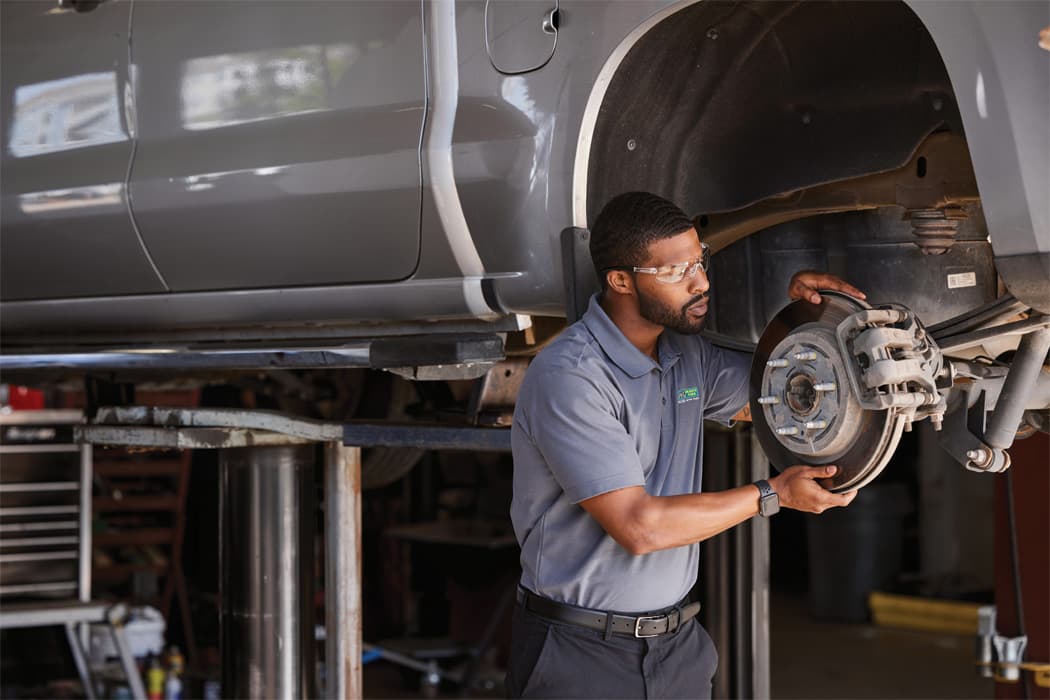
A proper diagnosis is fast and methodical. Here’s what you can expect when you bring your car to us.
Road test and pedal feel: confirm high effort, note any pull or noise, and watch for warning lights.
Vacuum/assist check: verify engine vacuum, test the booster check valve, and perform the start‑up drop test. On pump‑equipped vehicles, we check pump output and electrical supply.
Hose and connection inspection: look for splits, collapse, loose clamps, and oil‑soaked rubber that has turned brittle.
Caliper and hardware: check slide pins, piston movement, dust boots, pad thickness on both sides, and rotor condition. Verify that rubber brake hoses aren’t internally collapsed.
Fluid and hydraulics: test fluid condition, inspect the master cylinder for binding, and evaluate ABS modulator operation if symptoms point that direction.
After we identify the cause, we’ll explain the options and the order of operations.
A hard brake pedal is more than a nuisance. It’s your car telling you assistance is gone or something is binding. The fix is straightforward once you know which of the five causes is at work. Schedule a free brake inspection at your nearest Mavis. We’ll confirm the cause, show you the parts, and get you back to the easy, confident pedal feel you should expect.
Stiff Brake Pedal - Common FAQs
Read Next


just don't want to deal?
We get it, and can handle everything
Our in house tire experts are always available to help you find a great tire.

just don't want to deal?
We get it, and can handle everything
Our in house tire experts are always available to help you find a great tire.