When Should I Replace My Tires?
By Korey Smith
Published 08/22/2025
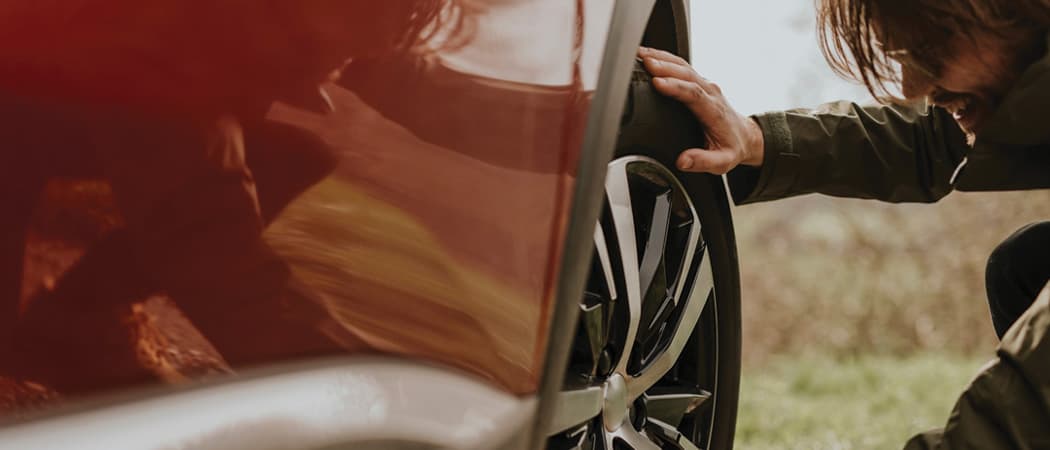
How much do you trust your tires? Out of all the advanced safety features on your car, your tires are the very thing that connect you to the road. The health of your tread (the material that provides essential traction and grip) is easy to overlook because it wears out quietly over time. If you’ve ever had to deal with sudden tire failure, you know that situation is anything but quiet or convenient. You’re not expected to guess when those wheels have reached their retirement age. There are many signs to indicate when tires are unsafe, you just need to know what to look for in your tread.
We will take a closer look at some of the most common signs you need new tires, ranging from visibly low tread depth to worsening traction. Along the way, we’ll provide some practical tips on how to check tire wear in a pinch to better prioritize your safety and enjoy a smoother overall driving experience. If you’ve recently found yourself wondering how to know if tires are bad or when you should get new ones, we’ve got it all covered here.
Tire Replacement Signs: Visual Checklist
A quick visual inspection can help you more confidently diagnose when to replace tires. Let’s start by taking a peak at your tread and walk through a few important things you might be seeing in the process.
Tread Depth
The first thing you’ll likely notice on your tire is the different patterned grooves. This is what’s referred to as the ‘tread’, one of the most crucial aspects of your vehicle’s ability to drive safely. The tread depth is a measurement of the amount of rubber material remaining. Notably, the majority of new tires feature a standard tread depth of 10/32” to 11/32” (roughly a third of an inch).
The tread depth will naturally wear down over the life of your tires due to constant friction. Eventually, the reduced tread depth can start to compromise your vehicle’s ability to grip the road properly. That gradual loss in traction is something you might especially notice anytime you’re driving in wet or slippery driving conditions. From a legal perspective, any tread depth measuring at or below 2/32” (roughly 1.6mm) can result in fines for creating an unsafe environment on the road.
Uneven Wear
Another visual clue that signals when to replace tires is uneven tread wear. Uneven tread wear essentially means the rubber tread pattern is wearing down at different rates. This process can be caused by a host of different things: misalignment issues, underinflated tires, and other problems with the vehicle’s suspension system. Maintaining a regular tire rotation service schedule can help you prevent these issues before it results in uneven and dramatic tread loss. While professional mechanics can often determine the exact cause of uneven tread wear by visually inspecting the pattern, initially identifying an issue is something many drivers can easily manage themselves.
Sidewall Damage
Damage to the sidewall of your tire, such as cracks, cuts, and bubbles, is something to keep an eye out for as you drive. Although the issue can sometimes boil down to minor cosmetics, more severe sidewall damage can be a direct precursor to complete tire failure.

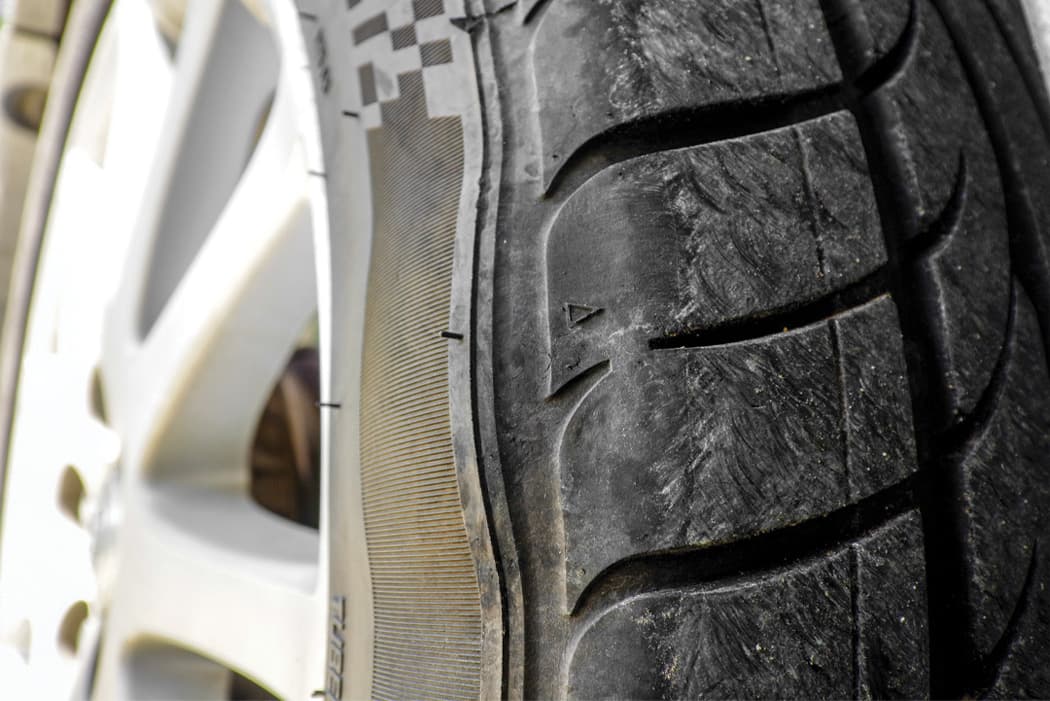
Sidewall damage develops from hitting potholes, curbs, and other debris you encounter on the road. Older tires are also more susceptible to sidewall damage as the rubber compounds break down due to prolonged exposure from UV rays or cleaning agents, which effectively dry them out. Finally, driving on underinflated tires or exceeding the vehicle’s weight capacity can create considerable stress on your tires that leads to sidewall damage.
Bulges & Blisters
Have you noticed any visible bulges or blisters along your tire’s sidewall? This is one of the most clear indications of when to replace tires because it directly precedes tire failure. These unusual bumps and lumps develop from internal damage within the tire, sometimes as a result of making contact with a pothole or curb. Bottom line, weakened tire integrity can quickly lead to a blowout, compromising your safety behind the wheel.
Signs You Need New Tires: Performance Issues
Outside of visually inspecting your tires, other subtle driving changes can also serve as important tire replacement signs. Next, let’s discuss some of these common performance issues in more detail so you can better identify them in the future.
Vibrations
One of the less subtle signs you need new tires would be strong vibrations and shaking as you drive, particularly when traveling at a higher rate of speed. There are plenty of underlying reasons for this, but they’re all essentially bad news: unbalanced tires, misalignment issues, and worsening damage to the tread. In terms of how to know if tires are bad, experiencing vibration from the steering wheel is especially telling. Vibrations in your seat or the floor can sometimes be a result of problems with your rear tires.
Increased Stopping Distance
Your tires work hard each and every time you drive. Even routine braking takes its toll on the tread, reducing the depth and shrinking the contact patch, which is the actual portion of the tire that makes contact with the road. Worn tires means they’re less capable of gripping the road beneath you, whereas that grip and friction is important for routine braking. It's imperative for abrupt emergency stops that you can’t necessarily predict. If you notice your stopping distance gradually increasing, it’s time to consider a new set of tires.
Traction Loss
Traction loss is a major safety concern that can indicate you need to replace your tires. As the grooves on your tread become more shallow over time, this limits how efficiently your tires can flush out things like snow, water, and debris from the contact patch. When the contact patch is full, you lose traction and control over the road. Your tires may be dangerously worn if you’ve had more frequent issues with slipping and hydroplaning.
*Have you noticed any of the above signs? You’re definitely not imagining things. Considering how integral your tires are when it comes to overall safety, it’s always worth having your vehicle inspected when you’ve identified one of these related performance issues.
How to Tell if Tires Need Replacing
Despite what many may think, tires aren’t very complicated in terms of their outward appearance. However, just because your tires look fine doesn’t necessarily mean they’re safe.
While we understand that you may not have time, you are always welcome to stop by at a Mavis location for a free tire inspection. But if you are really busy, learning how to check tire wear on your own can be very helpful, so let’s walk through it.
Tire Wear Bars
Tire wear bars, also known as tread wear indicators, are those small, raised bars that run perpendicular to the grooves in the tread. The wear bars generally measure at a depth of 2/32 of an inch, the legal minimum in many areas around the country. So, when the tread pattern wears down to the same level as your wear bars, it’s likely time to replace your tires.
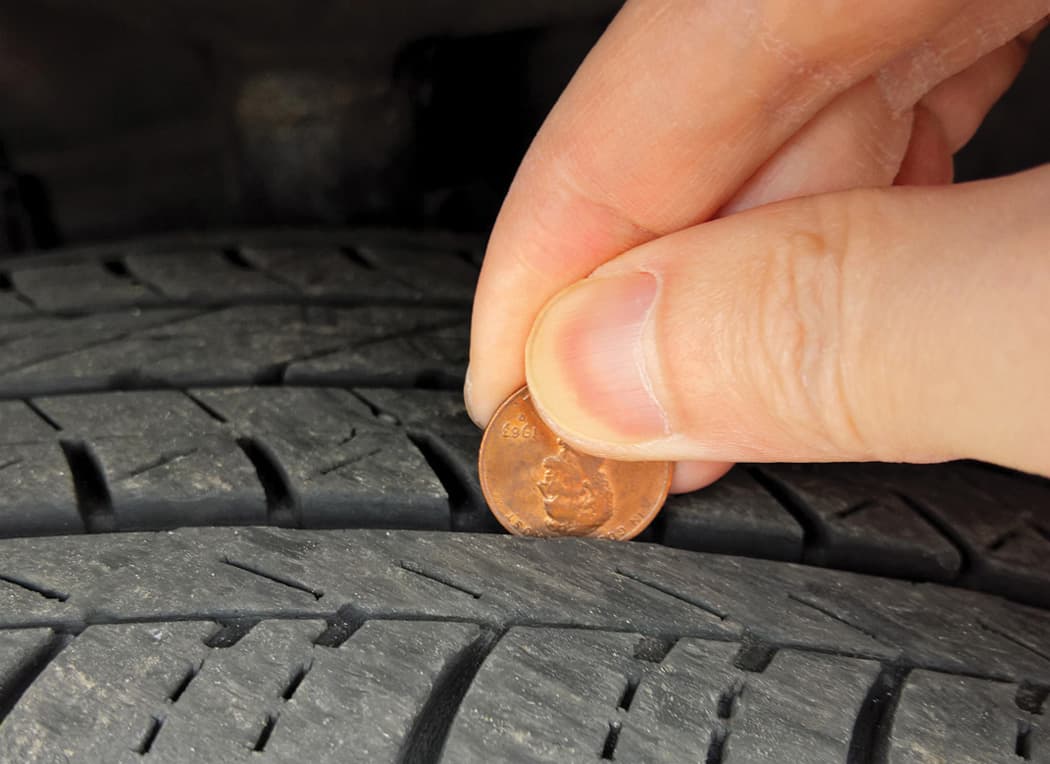
The “Penny Test”
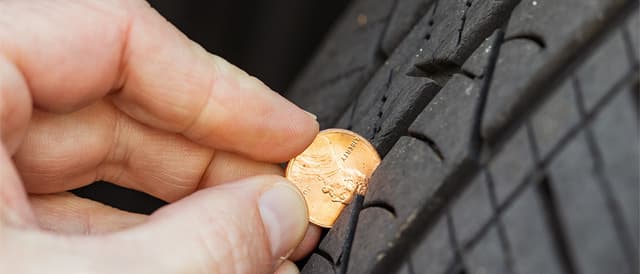
The penny test is a quick and reliable method of measuring the depth of your tires. Simply insert the coin, with Lincoln’s head facing down, into the tread groove. If the top of his head can still be seen, the tread is almost certainly worn below the 2/32 legal limit, indicating an urgent need for replacement tires.

*When it comes to a safe driving experience, it never hurts to consult the experts. At Mavis, our licensed technicians can quickly check for signs of uneven tread wear, structural damage, improper air pressure, and factor in age to help you accurately determine when to replace tires.
When Are Tires Unsafe: A Closer Look at Aging Tires
Another key factor that helps determine when to replace tires is their age. Even well maintained tires have a certain shelf life. Regardless of how the tread appears, experts recommend tires be replaced somewhere between 6 and 10 years as a general rule of thumb. Over time, the rubber material will degrade due to a variety of chemical and physical factors. This mainly translates to prolonged exposure to heat, UV rays from the sun, oxygenation, and the natural friction that occurs from everyday contact with the road.
How to Know if Tires Are Bad Due to Aging
Find the DOT Code
A quick way to determine the age of your tires is to look for the DOT symbol, often found on the tire’s sidewall. Department of Transportation (DOT for short) codes are a short string of letters and numbers that indicate when the tire was originally manufactured.

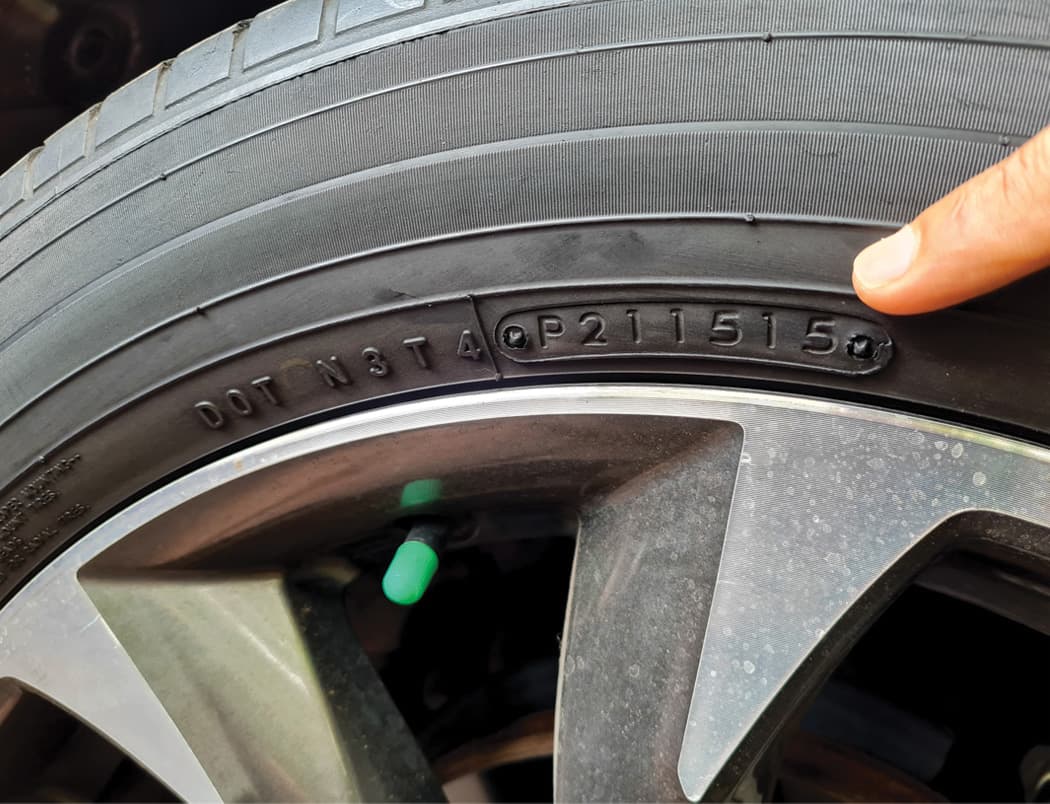
To read a DOT code,
Locate the last four numbers to determine the tire’s manufacturing date.
The first two numbers indicate the week of the year, the last two numbers indicate the year.
For example, a DOT code of 1024 indicates that the tire was produced on the 10th week of 2024.
Look for Signs of Dry Rot
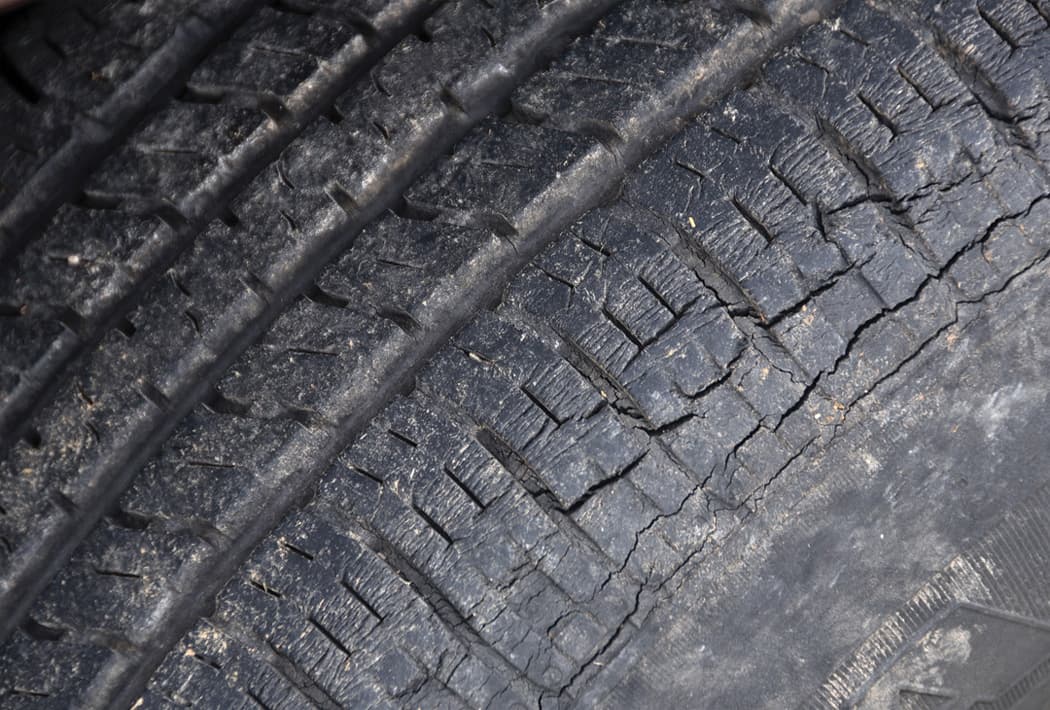
Dry rot, a condition frequently associated with aging tires, gradually sets in over time due to the degradation of the rubber material. As the rubber compounds start to dry out and deteriorate, your tire can exhibit visible cracks and fissures along the sidewall.
Constant exposure to the elements introduces several factors that contribute to developing dry rot. Prolonged exposure to direct sunlight and extreme temperatures can reduce moisture in the rubber. Using nonapproved chemicals to clean your tires can have the same effect. As the tire continues to dry out, it becomes increasingly brittle and vulnerable to developing cracks. A brittle tire with that kind of structural damage is a considerable safety risk.

When to Replace Tires Immediately
Some tire damage requires more immediate action because the risk of a blowout becomes exponentially higher. Ideally, you shouldn’t drive on any tires that have the following types of structural damage:
Sidewall Bubbles
Visible bubbles on the sidewall is an obvious indication of something structurally wrong within the tire. When you can’t trust the structural integrity, the potential for tire failure is always there.
Deep Cuts or Exposed Cords
One of the more unmistakable tire replacement signs are deep cuts and punctures which expose the inner cords of the tire that can't be repaired. Immediate replacement is advised here.
When Should I Get New Tires: Replacing One or Multiple
Although one damaged tire can have a sweeping effect on other parts of the vehicle, there are some additional considerations to be made regarding inevitable replacement. A common question for drivers is, do I replace one tire or multiple? Let’s review your replacement options.
Front vs. Rear Tire Replacement: Replace in Pairs
Experts often recommend replacing tires in pairs on the front and rear axles due to compelling safety and tire longevity reasons. In scenarios where only two tires are replaced, the brand new tires with the greater tread depth often move to the rear axle to provide protection from oversteering that makes the vehicle hard to control. Experts generally prefer to move the older tires to the front axle because the resulting understeering, pushing the car forward, is more easily corrected by easing off the accelerator.
Unless your other tires are relatively new, replacing pairs, or entire sets, can actually be more cost-effective in the long run because more even tread depth helps reduce strain on individual tires.
AWD/4WD Tire Replacement: Replace All Four
For drivers with all-wheel drive or four-wheel drive (AWD/4WD) vehicles, experts highly recommend replacing all tires at the same time. Any incongruencies between the tread depths can cause serious problems for your drivetrain, often leading to expensive repairs on the differentials and specialty components under the hood. With AWD/4WD, uniform is best.
Get Your Tires Checked
So, when should you replace your tires? Let’s do a quick recap of the most common tire replacement signs,
You have a tread depth around 2/32.
You notice visible cracks and bulges in the sidewall.
You see the tread has uneven wear.
You feel unusual vibrations or a loss of traction when driving.
Your DOT code indicates the tires are six years old or more.
Don’t leave safety to chance. If you’re noticing any of these signs, stop in for a free tire check at a Mavis location near you.