Tire Pressure Basics: Safety, Performance & Tire Life
By Thomas Sexton
Published 09/12/2025
If we could give every driver one quick tip to make their car safer, cheaper to run, and better to drive, it would be to check your tire pressure regularly. In terms of car maintenance you can easily manage yourself, there aren’t many things that provide the same return on investment as learning how to check tire pressure - as well as making sure your tires maintain the original equipment manufacturer’s recommended PSI range.
We’ve all experienced those low tire pressure symptoms. For example, you turn on the engine on a cold morning and notice the TPMS light pop up on your dashboard display. Perhaps you’ve recently noticed your steering feels a bit more sluggish and your car tends to pull to one side of the road during long commutes. Or, you’re spending more time fueling up at the gas station. Fortunately, tire pressure is easy to correct with a little practical guidance. This is a two-minute job that pays you back every single mile.
This simple tire pressure guide provides all the essential tire pressure maintenance tips you need to capably manage this area of your vehicle maintenance, optimize personal safety, and better understand how different PSI ranges affect the overall driving experience. Let’s get into it.
What Is Tire Pressure and Why Does It Matter?
By definition, the term tire pressure refers to the amount of air within a tire. You’ll most often see this amount expressed using a metric called PSI, or “pounds per square inch”. The OEM (Original Equipment Manufacturer) PSI recommendation for your vehicle can generally be found on a sticker inside the driver’s side doorjamb, the interior of the vehicle glove box, and within the owner’s manual. No matter what vehicle you drive, maintaining the correct tire pressure is essential for safety, fuel efficiency, and getting the most life out of your tires.
You can think of tire pressure like the shoes you wear on your feet. Wearing the right size shoe makes you feel comfortable, steady, and ready to go. Going up or down a size may not sound like a big difference, wearing the wrong size shoe creates obvious discomfort and can eventually lead to more serious problems for you if you ignore it too long. In a similar way, driving on tires above or below the OEM recommended PSI range can significantly affect how your car drives.
Why Tire Pressure Matters: Key Considerations
Safety
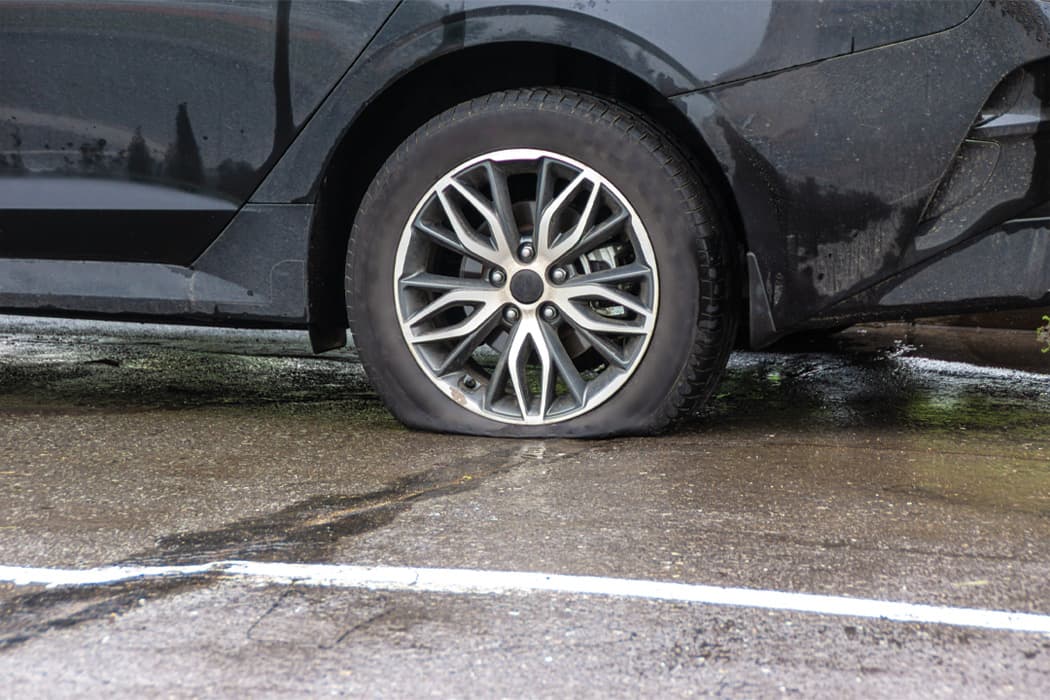
The most critical consideration around tire pressure has to do with safety. What happens if tire pressure is too low or high? You’ll start to notice things like a loss in traction and gradual increases in stopping distance when braking. In more serious cases, driving outside the OEM recommended PSI for tires can lead to a blowout.

Performance
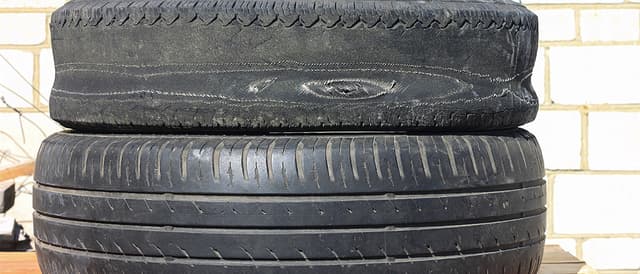
Tire pressure issues also affect your vehicle’s performance. Underinflated tires can contribute to things like slower handling, reduced braking, increased rolling resistance, and worse fuel economy. Overinflated tires can lead to other issues like a bumpier ride, worse grip of the road, and the type of uneven tire wear which can cause a blowout.
Efficiency
Tire pressure and fuel efficiency are closely linked. The increased rolling resistance caused by underinflated tires effectively makes your vehicle work harder, eating up more fuel in the process. Tires make less efficient contact with the road when overinflated, resulting in worse handling and potentially reducing the life of your tires over time.
Tire Life
A set of new tires should typically last you somewhere between 3 to 5 years. The lifespan of your tires is largely dependent on your personal driving habits and a few key factors including maintaining the optimal PSI as laid out by the manufacturer. The earlier you address overinflation and low tire pressure symptoms, the longer your tires can run.
How Do I Find the Correct Tire Pressure For My Car?
There is no one size fits all solution when it comes to tire pressure settings. There are vehicles that come in so many shapes and sizes. From compact sedans to full-size SUVs, the ideal PSI number can vary widely to account for differences in weight and towing capacity. Following the right PSI effectively just means adhering to the level the OEM originally designed for your vehicle.
With all of this in mind, here’s where to find the PSI value for your specific vehicle:
1. Driver’s Side Door
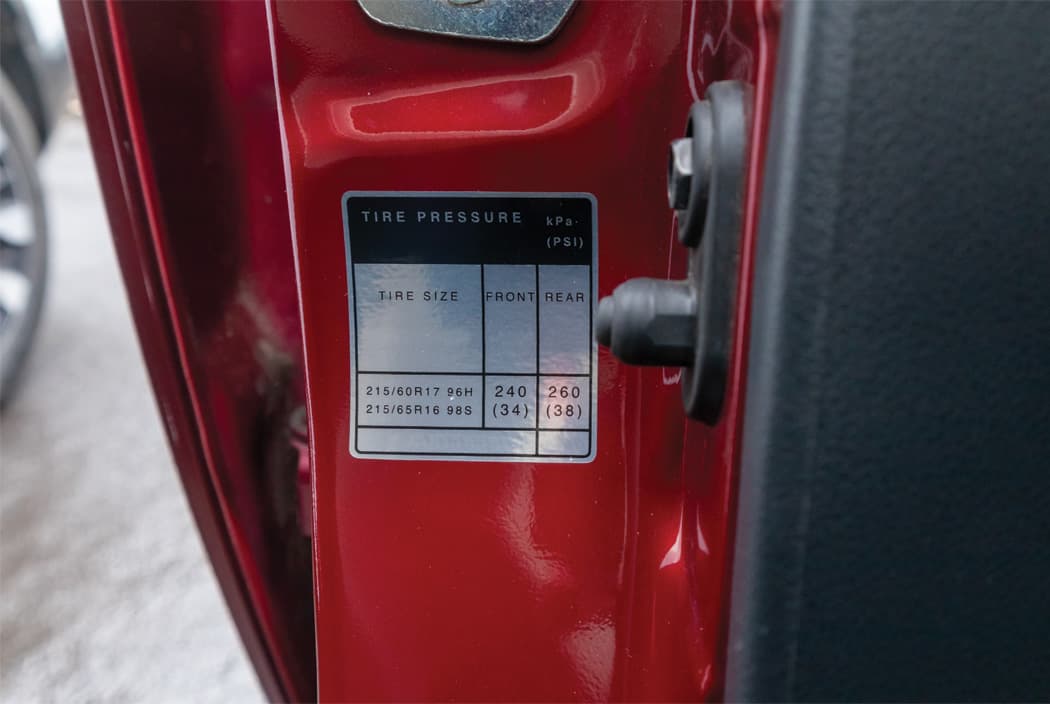
You can typically find the PSI sticker (also referred to as a placard) on the driver’s side doorjamb or door frame. This placard should list the recommended tire pressure for your vehicle’s original tires.

2. Vehicle Owner’s Manual
The owner's manual for your vehicle is loaded with crucial information regarding maintenance intervals and the OEM recommended PSI levels. If you don’t have a physical copy of the vehicle owner’s manual, you can easily source this information online.
3. Glove Box
Manufacturers will often include another placard with your vehicle’s recommended PSI levels within the glove box. You may need to sift some things around to locate it.
Should I Inflate to the Number on the Sidewall?
Professionals will advise you not to inflate the number on the sidewall - this is because it is often significantly higher than the OEM recommended PSI. Inflating your tires to the sidewall PSI can result in overinflation and significantly increase the likelihood of tire failure.
Just to make it clear, let’s lay out the key differences between the OEM recommended tire pressure you find on the doorjamb versus the PSI level listed on the tire’s sidewall.
OEM Recommended PSI
Located on the driver’s side doorjamb, owner’s manual, & glove box
Prioritizes performance and safety
The range you find posted on the doorjamb and elsewhere is originally set by the vehicle manufacturer. This range aims to strike the best balance between a smooth driving experience, handling, brake performance, fuel economy, and the longevity of your tires.
Maximum Tire PSI
Located on the sidewall of the tire.
Prioritizes structural integrity of the tire.
The range you find posted on the sidewall of the tire is originally set by the tire manufacturer. This range specifies the maximum pressure the tire can safely withstand and is generally not recommended for everyday driving conditions.
Low Tire Pressure: Causes, Symptoms, and Risks
More often than not, tire pressure issues are a result of underinflation. Here, our tire pressure guide will explore the different causes, symptoms, and risks associated with underinflated tires.
What Causes Low Tire Pressure?
Temperature Drops
Big shifts in temperature can cause tires to lose pressure. This is the reason tire pressure in winter can result in underinflation and you see your TPMS light activate on the first cool morning of fall. As a rule of thumb, tires lose approximately 1 PSI for every 10°F drop in temperature.
Leaks & Punctures
Leaks or punctures in your tire may sound like an obvious cause for underinflation but the caveat here is they can be tricky to officially diagnose. If you lose pressure shortly after refilling your tires, it never hurts to visit a Mavis location near you for a more thorough inspection.
Damaged Valve Stems
The valve stem is a small, tube-like component on the tire that allows you to add or remove air as needed. When damaged, the valve stem can gradually leak air and result in underinflated tires.
Bead Leaks
Leaks can also develop around the tire bead, the area of the tire that meets the wheel and acts as a seal between the tire and the rim. Bead leaks can develop as a result of corrosion, damage, and debris.
Low Tire Pressure Symptoms
Underinflated tires can quickly lead to a variety of performance and safety issues. Be sure to check your tire pressure if you experience any of the following low tire pressure symptoms:
Sluggish handling
Poor fuel economy
Increased stopping distance
Uneven wear on tire edges
Active TPMS light
Risks of Underinflated Tires
Although underinflated tires are a common issue virtually every driver will experience at some point during the calendar year, there is always a certain level of risk involved when it comes to driving outside the OEM recommended PSI. The risks of driving on underinflated tires essentially boil down to this:
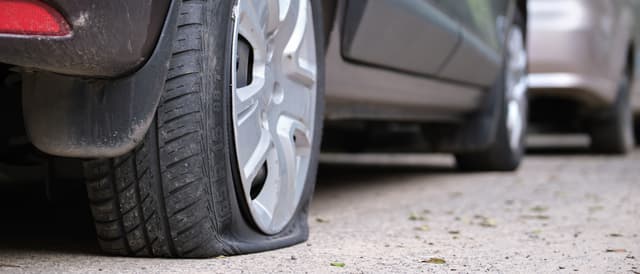
Reduced handling and control of the vehicle
Increased stopping distance
Higher risk of tire failure
Worse fuel economy
Uneven tire wear
Are your tires underinflated? Don’t risk an accident or prematurely wearing out your tread, stop by a Mavis location near you to bring your PSI back up to the recommended range.
Overinflated Tires: Causes, Symptoms, and Risks
Driving with too much air in your tires is unsafe and can also negatively affect vehicle safety and performance. Next, our tire pressure guide will explore the different causes, symptoms, and risks associated with overinflated tires.
What Causes Overinflated Tires?
Temperature Increases
Big swings in temperature are most often to blame for changes in tire pressure. As temperatures increase, it causes the air within the tire to expand and effectively increases the PSI. On the other hand, as temperatures drop, air contracts and gradually causes tires to deflate.
Friction
With respect to temperature change, the natural friction of the road causes tires to heat up. The built up heat will eventually make its way inside the tire and cause the air to expand. Driving long distances at a high rate of speed can make this effect more pronounced.
Manual Overinflation
One more common cause for overinflated tires is manual overinflation, which sometimes happens intentionally or otherwise. Although experts recommend sticking with the OEM recommended PSI, sometimes drivers hauling heavier loads will intentionally overinflate their tires. Drivers who may not have a good grasp on when and how often to check tire pressure may also unintentionally overinflate their tires at the air pump.
Overinflated Tire Signs
You can quickly identify overinflation if you know what to look for when driving or visually inspecting your tires between trips. Make it a point to check your tire pressure if you experience any of the following overinflated tire signs:
Harsh and bumpy ride
Reduced traction (caused by a smaller contact patch)
Accelerated tread wear on the center of your tires
Risks of Overinflated Tires
Similar to underinflated tires, there are always inherent risks involved when it comes to driving on tires that exceed the recommended PSI range set by the OEM. What happens if tire pressure gets too high? Here is a quick list of the associated risks of driving on overinflated tires:
Less control of the vehicle
Higher risk of tire failure
Uneven tread wear
Bumpy driving experience
More prone to tire damage from pot holes and debris
ABS interference
Are your tires overinflated? Don’t risk your safety and sacrifice a smoother driving experience, visit a Mavis location near you to bring your PSI back down to the recommended range.
How to Check Tire Pressure (Step-by-Step)
Tools
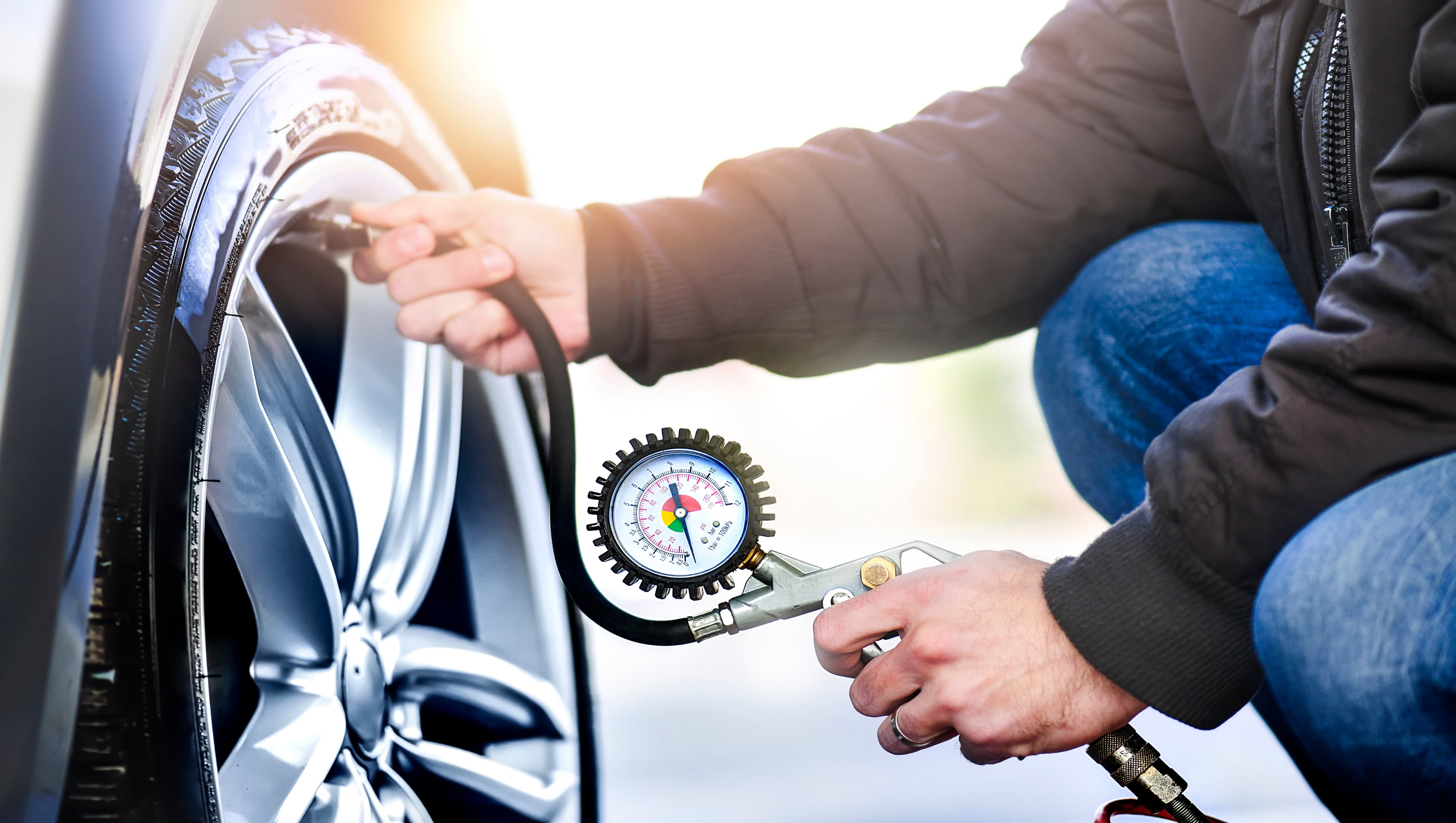
You just need a tire pressure gauge in order to check your tire pressure, digital or analog. Digital pressure gauges are touted for their accuracy and can be easier to read than analog. On the other hand, tried and true analog gauges don’t need batteries to operate.
Steps
Step 1
Start by parking your car on a level surface. Uneven surfaces can put more pressure on one side of the car, and this will impact your readings.
Step 2
A cold tire pressure reading can generally provide the most accurate gauge of your tire pressure. That’s why experienced mechanics often recommend checking your tire pressure first thing in the morning or after your tires have sat for a minimum of three hours.
Step 3
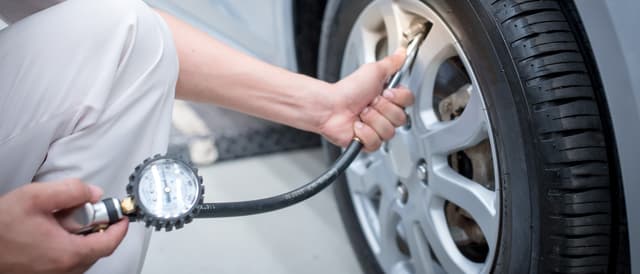
Remove the valve cap on the tire and press the tire pressure gauge down firmly.
Step 4
Don’t worry, reading the tire pressure is about as simple as checking the time on your phone. Once you have your reading, compare it to the recommended PSI pressure for your vehicle. This information should be listed on the driver’s side doorjamb, in the owner’s manual, or on a placard within the glove box.
Step 5
Adjust your tire pressure as needed.
Don't have a tire pressure gauge? Swing by your local Mavis location for a tire pressure check and professional guidance on maintaining optimal PSI.
Maintenance Tips for Year-Round Tire Pressure Health
Keeping on top of your tire pressure provides a smoother and safer all around driving experience year-round. In this next section, we’ll offer up the best tire pressure maintenance tips to help you prevent problems before they start and develop simple habits that pay off in terms of safety and savings.
Tip #1: Make Seasonal Adjustments
Tire pressure fluctuates often due to seasonal weather patterns and environmental conditions, so adjust accordingly.
In general,
Winter months → Add tire pressure
Summer months → Release tire pressure
Tip #2: Check Your Tire Pressure Often
The best and easiest way to prevent tire pressure problems is to routinely check your level. Professionals suggest you check your tire pressure at least once a month in addition to visually inspecting your tires for signs of wear and tear.
Tip #3: Consider Nitrogen vs. Air Tire Pressure
Can nitrogen improve tire pressure stability? The short answer is yes, the more complicated answer is that the air in your tires is already roughly 78% nitrogen so it’s hardly necessary to buy “premium” air. Compared to traditional oxygen molecules, nitrogen molecules are larger which makes them less prone to leaks. Maintaining your vehicle’s recommended tire pressure can be a reliable way to ensure you’re getting optimal fuel economy and handling.
Tip #4: Don’t Forget to Fill Your Spare Tire
It’s often a matter of “out of sight, out of mind” when it comes to spare tires. Each time you check your air pressure, make sure to include your spare and adjust the level accordingly to meet the recommended PSI.
Tip #5: Adjust for Heavier Loads
Carrying a heavier load? Some experts recommend increasing your tire pressure to better maintain the proper tire shape, improve stability, and prevent damage. Consider speaking with a tire technician beforehand to determine the best approach and never exceed the limit posted on the tire sidewall.
Tire Pressure Check Near Me: Visit Mavis Today!
Tire pressure has a critical effect on your vehicle’s safety and performance. Ensuring you maintain the OEM recommended PSI also promotes longer tire life. Whether you need a quick pressure check, tire inspection, or professional advice on maintaining optimal PSI, visit your neighborhood Mavis for comprehensive tire services today!