What Happens If You Don’t Fix Your Brakes?
By Ryan Boccaccio
Published 08/15/2025
Your brakes are one of the most important safety features on your car - but the damage from worn brakes isn’t always easy to see right away.
The problem usually isn’t knowing something’s wrong. It’s putting off the repair. Delaying brake service when you’re hearing squeaks, feeling a soft pedal, or noticing longer stop times can lead to much bigger and more costly problems down the road.
If your car’s making strange noises or something just feels off when you brake, don’t wait. Holding off might seem like you’re saving money, but it could end up costing you more - and putting your safety at risk.
Consequences of Not Fixing Brakes
Let’s take a closer look at the consequences of not fixing your brakes when they’re due for service.
Being able to recognize the warning signs of bad brakes is a great skill to have. Some of these signs include: requiring additional stopping distance, feeling shakes and vibrations in the cabin, and hearing unusual noises such as squealing or grinding.
Modern brake systems are complex, with each component playing a critical role in producing the stopping power and keeping you safe each time you’re behind the wheel. Those components include things like the brake pedal, master cylinder, brake lines, calipers, brake pads, brake rotors, and the specialty brake fluid that keeps things running smoothly.
When you own a vehicle, brake repairs are going to be inevitable. Natural wear and tear within your brake system happens every single time you drive. As the components within the brake system gradually wear out, it eventually opens the door to critical repairs.
What Happens if I Delay Brake Repairs?
Delaying brake repairs can have a very damaging effect on your overall brake system.When left unchecked, a fix that would normally cost $150 can turn into $1000 or more for brake repair costs. Some customers may think they just need new brake pads, only to discover that delaying brake repair also damaged their rotors, calipers, and even contaminated their brake fluid.
Here’s an example of how it works:
→ The brake pads wear out around 65,000 miles.
→ The brake rotors become increasingly exposed.
→ The resulting heat begins to cause damage to the brake calipers.
→ Damaged calipers scrape and mar the brake rotors, destroying them as well.
→ Contaminated fluids seep into other parts of the brake system.
Once you reach the metal-on-metal brakes stage, the damage accelerates rapidly. We've seen rotors completely destroyed in just a few hundred miles of driving with worn pads, turning a $200 brake pad replacement into a $800+ repair that includes new rotors and sometimes calipers.

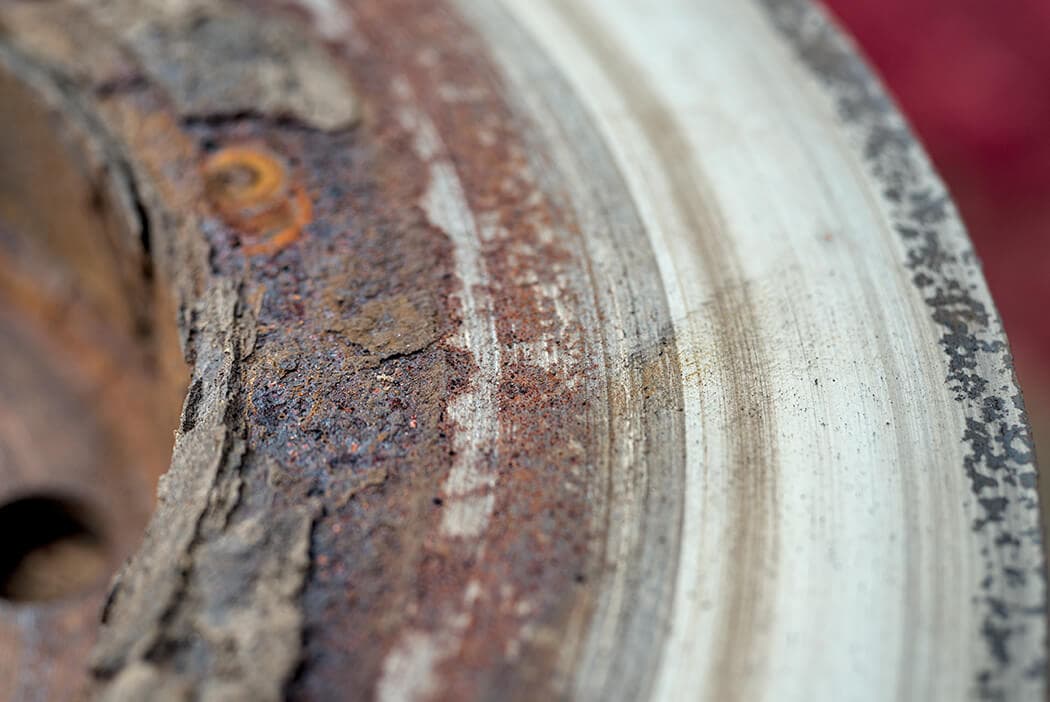
Heavily damaged and corroded disc brake rotor
This damage can extend outward to other parts of your vehicle that you may not even be aware of, including your tires. For example, faulty brakes can lead to alignment issues and uneven braking, causing your tire tread to wear out well ahead of schedule. Your car’s suspension and transmission can also suffer the ill effects of skipping brake service.
The bottom line: If you're hearing any unusual noises from your brakes, feeling vibrations when you stop, or noticing longer stopping distances, don't wait to see what happens next. The cost of ignoring brake problems always exceeds the cost of addressing them early.
What Happens if I Don’t Replace My Brake Pads?
While brake pads can generally last somewhere in the range of 30,000 to 70,000 total miles of driving, the financial consequences of not fixing brake pads can result in far more repairs costing much more money. Neglecting brake repair leads to slower response times when braking and significant damage to the other sensitive components within your brake system.

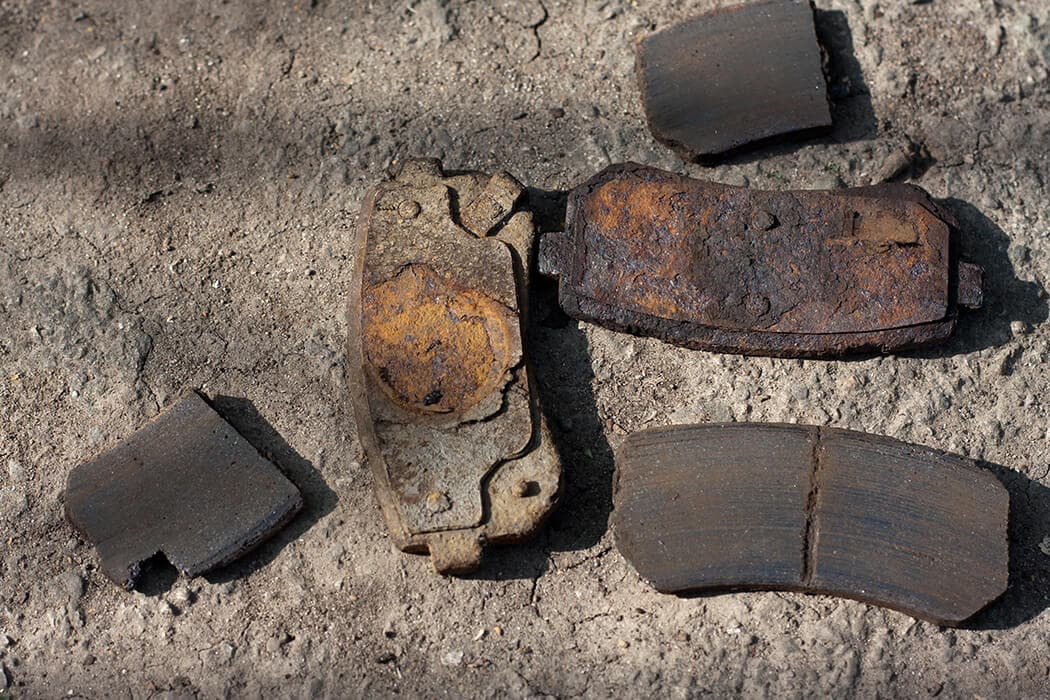
Broken, rusted, and completely worn brake pads
When the brake pads eventually wear out, the calipers become more exposed and can suffer damage. In the worst cases, the brake calipers may need to be replaced altogether. The typical cost of replacing brake pads is $150 per axle. If your brake calipers become damaged, the costs will rise significantly, potentially being $750 or more.
Is it Dangerous to Delay Brake Service?
Delaying brake repair services does present some serious practical safety issues. We’ll discuss the main safety considerations in more detail below.
Your stopping distance gradually increases
As natural wear and tear causes your braking performance to degrade, also known as brake fade, you may notice that it requires more time and distance to bring your car to a complete stop. Less responsive braking systems play a role in terms of safety and your ability to prevent an accident.
Your brakes perform worse in more demanding conditions
Whether you’re driving through the mountains or making your way through stop-and-go traffic, thinner brake pads mean your brakes become less efficient under the more demanding conditions where braking is essential. Your vehicle's ABS, or anti-lock braking system, may also be affected by worn brake components. The ABS system relies on consistent brake pressure and rotor surface quality to function properly. When rotors are warped or brake fluid is contaminated, your ABS can't do its job effectively, meaning you lose that critical safety net in emergency stopping situations. If your ABS warning light comes on, this could indicate that grinding brakes damage has progressed beyond just pads and rotors.
Weather conditions can become more hazardous
Driving on wet or slick roads already presents some serious safety issues. If your brakes aren’t in prime condition, those hazards can become exponentially more dangerous.
Your car can become less responsive
Unchecked brake issues that contribute to uneven wear can eventually lead to your car pulling to one side of the road, strong vibrations that can affect your steering, and less efficient response times overall. When you can’t predict how your car will respond to your driving conditions, this creates a legitimate safety issue.
Personal safety can be a hard thing to ensure when it comes to driving on older brakes. Prioritizing brake repairs isn't just about protecting yourself; it also keeps others safe as well.
Do I Need Brake Service?
The temptation to put off car maintenance is justifiable. However, if the financial component is what’s making you reluctant to schedule brake service, things tend to get more expensive the longer you wait. Don't leave your safety or expensive repair bills to chance. Whether you're dealing with squeaking, grinding brakes, or any other warning signs, schedule a brake inspection at your local Mavis Service Center today. A quick inspection now can prevent both safety risks and the escalating cost of ignoring brake problems!