How to Check Tire Pressure Safely & Accurately
By Chris Pittman
Published 08/03/2026
Checking your tire pressure isn’t exactly the most exciting part of car ownership, but it quietly makes a big difference in terms of your overall driving experience and in some cases safety.
For example, just a few pounds of air pressure in either direction can change the way your car handles, tire wear, heat buildup and even braking distance. That’s why tire pressure matters for safety: it’s not just about the tires themselves; it’s about how your vehicle responds to the road.
Learning how to check tire pressure is simple. In this guide, we’ll take a closer look at exactly how to check tire pressure safely and accurately. No matter if you’re doing it at home or topping off your tires at the gas station, keeping up on your tire pressure is an easy way to make sure you stay safe and in control on the road.
Why Tire Pressure Accuracy Matters
Tire pressure isn’t an arbitrary number. On the contrary, it directly affects how your tire performance and how your car behaves on the road.
When your tire pressure is too low, tires flex more and more of the tire tread surface makes contact with the road. These factors create additional friction and heat, both of which lead to rapid tread wear and potential tire failure. Steering can feel less responsive, braking distances can significantly increase, and gradually over time, you’ll wear down the outer edges of the tire faster than anticipated.
Alternatively, overinflated tires reduce the contact patch (the tread surface in contact with the road). This can make the ride feel harsher and decrease traction, especially at times when you rely on it the most–such as around sharp turns, during sudden stops and on wet roads.
Tire pressure is not just about protecting yourself from a flat, it’s about maintaining predictable handling and consistent performance every time you’re behind the wheel.
There’s also a long-term cost consideration. Incorrect tire pressure, be it too much or too little, can lead to uneven wear. This means you’re being shortchanged when it comes to tire longevity and will need to replace tires sooner than you would otherwise need to do. Under inflation can even affect fuel economy, as your engine has to work harder when tires aren’t operating at the optimal inflation level.
Here’s the main takeaway: air pressure accuracy matters. And getting the right reading isn’t really about being perfect, it’s more a matter of being close enough so that your tires can properly perform their job on the road.
When to Check Tire Pressure
To get the most accurate reading on your tire pressure, timing matters more than most drivers realize.
‘When to check tire pressure cold or hot’ is a common question we receive. Let’s remove any mystery: check your tire pressure when the tires are cold. This means the car hasn’t been driven for a few hours, or at least no more than a short trip.
Why are readings more accurate when tires are cold? Driving heats up your tires. As the air within your tires warms up, that air expands. This temporarily increases the pressure. If you check your tires right after a long drive, you’re sure to get a higher reading than what’s considered “normal” pressure. When you incorrectly assume their tires are overinflated, you may release air when you shouldn’t. Inevitably, after the tires cool off, you’re left running at pressure lower than what’s considered optimal.
Checking your tires while cold provides the most accurate baseline. It’s a surefire way to see where your tire pressure really sits and whether you need to make any adjustments.
To best determine how often you should check your tire pressure, follow this general rule of thumb: check them about once a month, plus before longer trips or big swings in temperature. Tires naturally lose a little air over time, even without a leak.
It doesn’t require tons of effort, but staying on top of tire pressure can help you sidestep bigger problems in the future.
Tools You Need to Check Tire Pressure
Checking your tire pressure doesn’t require much effort, but having the right tools makes for an easier time collecting an accurate reading.
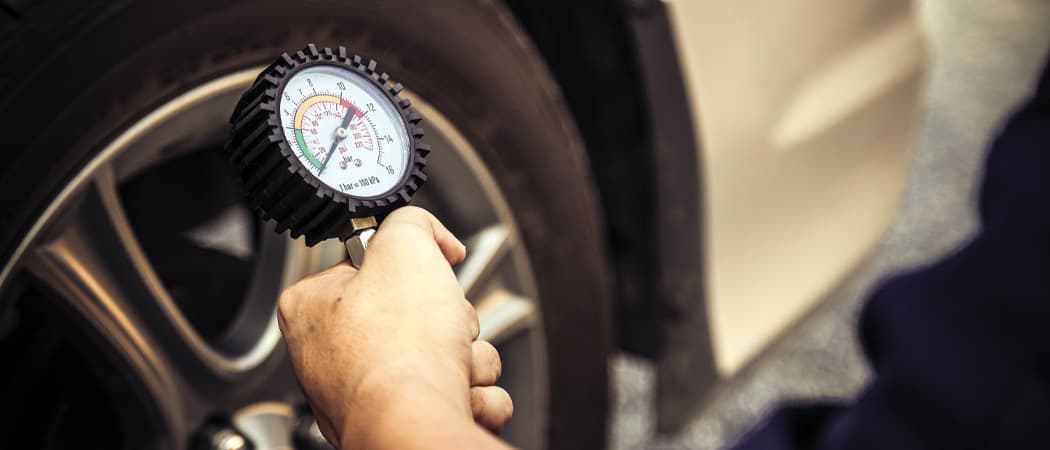
The main tool required to check tire pressure is a tire pressure gauge. Simply put, the tire gauge is designed to give you a quick, clear reading in a few seconds. You’ll typically run into two main types of gauges: manual and digital. Whenever people compare digital vs. manual tire pressure gauges, it’s really just a matter of preference.
The upside to manual gauges is that they have a simple design, they’re affordable, and they don’t require batteries. They typically have a small stick or dial that pops out to show the pressure. They’ve also been around forever, so it’s not hard to find a used one on the second-hand market.
On the other hand, digital gauges provide a clear number on a screen. They’re easy to read, especially in low light, and tend to remove some of the guesswork if you’re not used to how to read tire pressure gauge markings.
In terms of digital vs. manual tire pressure gauges, both types can be accurate when used correctly. The best tire gauge is really just a matter of whichever variety you see yourself using the most.
Beyond the gauge, you might also need access to air. This could be a small compressor at home or a pump at a gas station. Whichever way, the setup is pretty straightforward: check the pressure, add air if you need it, and check the reading after to make sure, you’re at the optimal setting. Mavis stores are generally equipped with free air machines for customers to use.
You don’t need a garage full of equipment to start checking your tire pressure on a regular basis. All you really need is a reliable gauge and a way to add air.
Step-by-Step Tire Pressure Check
Once you’ve got your gauge ready, the actual tire pressure check steps are simple and repeatable.
To start things off, find the recommended pressure for your vehicle. If you’re unsure about the correct tire pressure for your vehicle, there’s no need to inspect the actual tire. Examine the sticker inside the driver’s door jam or look inside your vehicle owner’s manual - this will tell you the exact pressure required for tires on your vehicle. Note that every vehicle requires a different air pressure. Often a vehicle will require different levels of pressure in the front and rear.
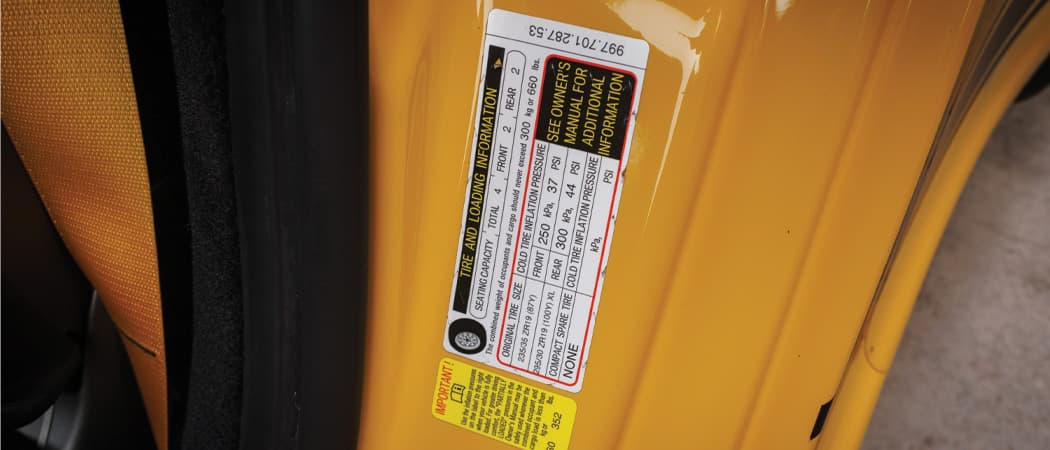
After you have your number, remove the valve cap from one tire and set it somewhere close by. It’s small, but it keeps dirt and moisture out of the valve.
Now you’re ready to check the PSI in the tires. Press the gauge firmly onto the valve stem. You want a quick, solid connection. If you hear a long hiss of air, the seal may not be tight enough. Adjust and try again until you receive a clear reading.
Refer back to the number you received from the driver’s door jam or owner’s manual. This is where knowing how to read tire pressure gauge comes into focus. Digital gauges will display it clearly, while manual gauges might require a quick look at a scale or sliding indicator.
If the pressure is lower than what’s recommended, add air in short bursts, checking the level again after each one. If it’s too high, press the valve lightly to release a bit of air and check again.
Finally, replace the valve cap and move on to the next tire. Repeat this process across all remaining tires. And pro tip: if your car has a spare tire, give that a check as well. Spare tires also lose air over time.
That’s the full car tire pressure check guide in action. No shortcuts, no guesswork. Just a quick routine that helps your tires operate at peak efficiency and provide a better (and safer) overall driving experience.
How to Correctly Use a Tire Pressure Gauge
Using a tire gauge is simple, but small mistakes can lead to inaccurate readings.
If you’re learning how to use a tire pressure gauge, the most important part is getting a solid seal on the valve stem. Press the gauge straight onto the valve and hold it firmly in place. If you hear a quick burst of air and then silence, you’re good. If instead it keeps hissing, reposition and try it out again.
This seal matters more than you might realize. Even a slight leak while checking your tire pressure can lead to a lower reading than what’s actually in your tire, leading to potential overinflation.
Next is knowing how to read tire pressure gauge results. Digital gauges make this simple by displaying a clear number. With manual gauges, you’ll either read a sliding stick or a dial. Either way, take a second to confirm the number before you disengage.
Finally, don’t rush it. A quick, clean reading is more accurate than jamming the gauge on and off too fast.
How to Check Tire Pressure at Home
Once you’ve done it a few times, checking tire pressure at home becomes a quick routine.
The convenience factor here is unrivaled. Your tires are naturally “cold” if the car has been sitting at home, which means you’re already prepared for an accurate reading. All you need is your gauge. Check each tire, adjust as needed, and you’re done in a matter of minutes. If you find low air pressure, either use an air compressor to fill up at home or carefully drive to the nearest gas station or repair shop. Mavis stores generally have free air machines where you can fill up.
This is one of those habits that’s easy to skip, but just as easy to stay on top of once it becomes part of your routine.
How to Check Air Pressure in Tires at a Gas Station
If you don’t have the right tools at home, learning how to check air pressure in tires at gas stations is every bit as effective. Most gas stations have air pumps with built-in gauges. Some let you set your desired PSI, while others require you to check manually as you go.
The process is essentially the same: remove the valve cap, attach the hose, and check the reading. Add air in short bursts, then recheck until you hit your target.
One thing to keep in mind, these machines often run on a timer. It helps to check your current pressure first, so you’re not rushing to figure things out while the meter runs.
Can You Check Tire Pressure Without a Gauge?
Technically, yes. But not in a reliable way. If you’re trying to figure out how to check tire pressure without a gauge, you’re really just looking for rough clues. A tire that looks visibly low, feels soft when you apply pressure, or causes the car to pull slightly while driving might be underinflated.
The problem is, by the time you can see or feel a difference, the pressure is typically already off by a noticeable amount. Modern tires can be significantly underinflated and still appear fine.
This is why guessing isn’t a good strategy. While it could potentially help you identify a major issue like an obvious flat, it won’t help you stay within the right range.
A simple gauge removes all of the uncertainty. For something that affects safety and tire life, it’s worth having a real number instead of a rough estimate.
Common Mistakes to Avoid
Most of the issues related to tire pressure don’t arise from complicated problems. Instead, they usually stem from small, easy-to-overlook habits.
One of the biggest mistakes is checking tire pressure right after driving. As we mentioned earlier, tire pressure rises with heat, so ignoring when to check tire pressure cold or hot can lead to inaccurate readings.
One more common mistake is using the wrong reference point. The number printed on the tire itself isn’t your target, it’s the maximum allowed pressure. For what is the correct tire pressure, always check your vehicle’s door placard or owner’s manual.
It’s also easy to forget to check all four tires. Even if only one appears low, pressure can vary across the vehicle. And while you’re at it, the spare tire is worth checking periodically too.
Lastly, watch for patterns. If one tire keeps losing air, there might be a slow leak that requires additional attention.
How Tire Pressure Fits into Routine Maintenance
Checking tire pressure isn’t something you do once. To keep you safe and support the longevity of your tires, it needs to be a regular routine.
Pairing tire pressure checks with other simple checks (such as looking at tread wear or scheduling tire rotations) can help you catch issues early.
If you’re already stopping in for an oil change or general service, this is an easy maintenance task to have completed at the same time. Consistency matters more than perfection here.
Staying on top of this helps your tires last longer, keep your car handling the way it should, and limits the chances of dealing with bigger problems later.
The Air Down There: Keeping Consistent Tire Pressure
All you need to check your tires’ air pressure is a simple gauge, a few minutes to spare, and a consistent routine. That’s all it takes to keep your tires in the right range and avoid a lot of extra wear and tear. More importantly, you’re helping your vehicle handle and stop the way it was designed. It’s one of those small habits that pays off over time.