How Often Should You Get an Alignment?
By Thomas Sexton
Published 08/14/2025

Every driver out there is bound to have an alignment issue at some point. Tires pulling to one side of the road, a weird feeling with the steering wheel - both are common signs you need an alignment service.
Most drivers out there likely know the importance of wheel alignment. However, plenty of experienced drivers would be hard-pressed to explain what the process involves or describe how often to get an alignment performed on their steering and suspension system.
Let’s fix that. Today, we’ll take a closer look at some of the basics, including:
What is wheel alignment?
What causes bad alignment?
When to get a wheel alignment
Average wheel alignment cost
What is Wheel Alignment?
One of the most important questions is what does wheel alignment actually do? We know the importance, but why?
How Wheel Alignment Works
Wheel alignment is the process of adjusting the angles of your car tires to meet the manufacturer's guidelines. More specifically, wheel alignment is what keeps the tires parallel with each other and perpendicular to the ground. The suspension components are more responsible for keeping them in place than you might realize.


Technician checking for wear or play in the steering/suspension assembly
To put it simply, wheel alignment makes sure that your vehicle’s steering and suspension systems are working with each other, in order to control the vehicle. This translates to a much smoother driving experience. Proper alignment gives you more control over the steering wheel and helps stay safe each time you drive. You might ask, does alignment affect your steering? Absolutely. This is why the first sign you may encounter will be with how your steering feels.
What you may not know is that wheel alignment is more than just about driving straight. When your car is aligned properly, you’re also reducing the strain on your tires. Wheel alignment services also allow you to get the most mileage out of your tires as possible, while also reducing your risk of a blowout. This is why wheel alignments are the key to improving your driving experience.
Wheel Alignment vs Tire Balancing: What's the Difference?
One commonly asked question is, “is wheel alignment the same as tire balancing?” The answer is no, they are not the same. While both services help your car run smoothly, they address completely different issues.
Wheel alignment adjusts the angles of your wheels relative to each other and the road. When your alignment is off, your car pulls to one side, your steering wheel sits crooked, and your tires wear unevenly.
Tire balancing, on the other hand, corrects weight imbalances in your wheel and tire assembly. When your tires are out of balance, you'll feel vibrations in your steering wheel or seat, especially at highway speeds.
If your car is pulling to one side, you likely need an alignment. If your steering wheel is shaking while you drive, you probably need tire balancing. Sometimes you need both, and that’s why both are checked during routine service.
What Causes a Car to Go Out of Alignment?
Misalignment can occur naturally over time, depending on your driving conditions. Some of the most common reasons include:
Driving over potholes
Speed bumps
Striking curbs
Minor accidents
Unpaved roads
Gradual wear
Improper installation of parts or new tires
Wheel Alignment Angles Explained
What are camber, caster, and toe? These parameters refer to the different alignment angles you’ll find on modern suspension systems. To understand what sets them apart, let’s look at each in more detail:


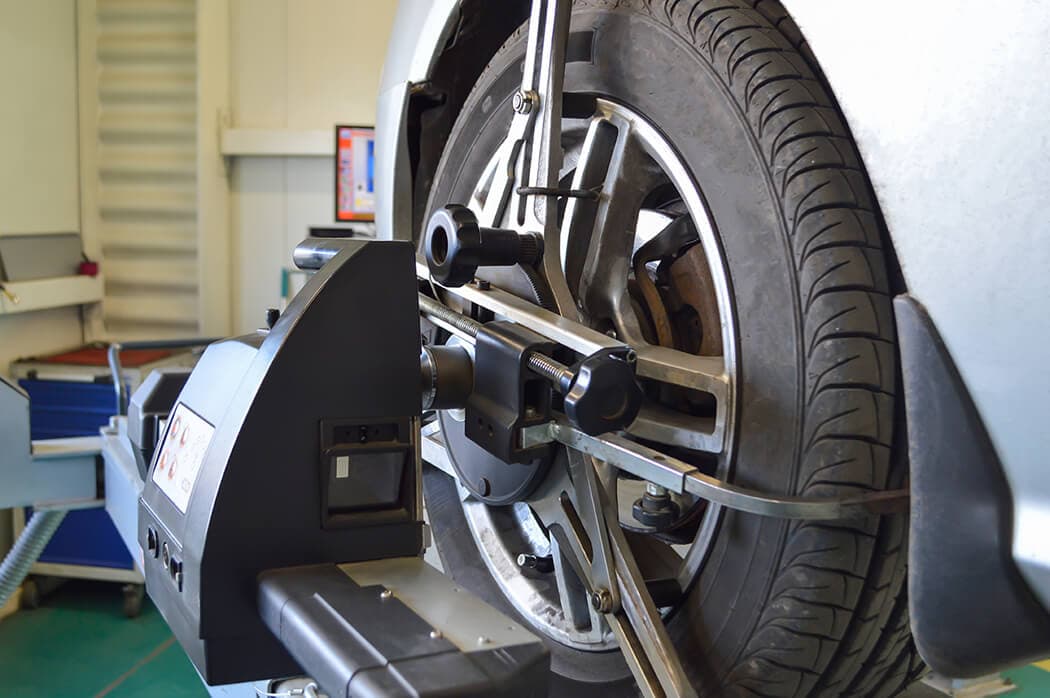
Wheel alignment sensor measuring camber, caster, and toe.
Caster
Caster refers to the angle of the steering axis from front to back on your vehicle. This angle is responsible for overall stability when steering, and gives you the “return-to-center” feel. If the caster angle is off, this can make your car feel wobbly and give the impression that you’re “fighting” the steering wheel for control.
Positive caster means the steering axis is tilted backward, facing the back of your car.
Negative caster means the steering axis is tilted forward, facing the front of your car.
Camber
Camber refers to the tilt of the wheels, both inward or outward, when viewing your vehicle from the front. This angle relates to how well your car can grip road surfaces while cornering and has a huge effect on how your tires wear. A similarly important note is that camber is the primary angle responsible for that sensation of the tire pulling to one side of the road.
Positive camber means the top of the wheel is tilting outward, away from your car.
Negative camber means the top of the wheel is tilting inwards, towards your car. For example, race cars that perform lots of aggressive cornering typically utilize a ‘negative’ camber.
Zero camber means the wheel stands perfectly vertical - it’s not tilting inwards or outwards. For example, many passenger vehicles utilize zero camber to prevent the tires from wearing prematurely.
Toe
Toe refers to whether the wheels are pointing inward or outward when looking at the vehicle from above. Although camber can affect tire tread wear, the toe has the most dramatic effect in the short term. For example, having “too much toe” can contribute to uneven tire wear, like feathering, and negatively impact your overall handling. In addition, because these types of alignment issues create unnecessary drag, they also decrease your fuel efficiency.
Toe-in means the front of the wheels are facing towards each other.
Toe-out means the front of the wheels are pointing away from each other.
Zero toe means the tires are pointing straight ahead.
Luckily for you, you usually don’t have to guess if service is necessary for your vehicle. If you've recently hit a pothole hard enough to make you wince, struck a curb while parking, or been in even a minor fender bender, it's worth having your alignment checked. Even an accident that may have seemed harmless at the time can affect your alignment.
Wheel Alignment Issues: A Closer Look at Tread Wear
To see if there’s an issue with your alignment, we look for three types of excessive tread wear, including:
Camber wear: This tread wear occurs on the inside or outside edges of your tires when the middle of the tread appears less worn.
Feathering: This tread wear occurs more on one side versus another, similar in shape to bird feathers. When feathering develops, this could mean your tires are not parallel to each other and they’re either pointing toward or away from each other. This aspect of alignment is also referred to as ‘toe’.
Heel/toe wear: This tread wear occurs when your tires’ treads are more worn in the front from braking or in the rear location from rotating and being in contact with the roadway. It’s also referred to as heel-to-toe wear and could require wheel alignment to properly rotate your tires.
Uneven tire tread wear is a common indicator that you need to have your wheel alignment checked
Why is Wheel Alignment Important?
Having a basic understanding of wheel alignments can definitely bring a certain appreciation, but it’s important to remember the reasons why they are important.
Tread wear: Misaligned tires create uneven tread wear that can be bad for your tread, causing uneven wear and effectively shortening their shelf life. Many passenger tires are designed to last between 3 and 5 years, or 30,000 to 60,000 total miles.Although your personal driving style and other environmental conditions will affect their exact lifespan, ensuring your tires are optimally aligned in accordance with manufacturer specifications is one of the easiest ways to preserve them for as long as possible.
Safety: Misalignment results in a more turbulent feel behind the wheel, often limiting your control while reducing your vehicle’s handling. In other words, this will make driving feel very uncomfortable and bumpy.
Fuel efficiency: Misalignment also produces drag, which drains fuel efficiency as your wheels effectively become more resistant to the road and cause your vehicle to work harder. That means more visits to the pump or less range delivered with your electric vehicle.
Ride quality: Cars have come a long way in terms of silencing the noise of the road while driving. This is something you may forget about until the silence is gone. Misalignment creates a less stable driving experience and even produces powerful vibrations you can feel within the cabin.
Financial savings: Addressing alignment issues quickly can help preserve your tires and optimize your fuel efficiency, but neglecting this part of your vehicle maintenance altogether can cause costly damage to the suspension.
How Do You Know if Your Car Needs an Alignment?
There are plenty of signs you need an alignment, and self-diagnosing the issue is relatively simple. These are the symptoms you should look out for:
Your car is pulling to one side of the road.
The steering wheel feels off-center when you’re driving in a straight line.
Your tire tread shows uneven wear such as feathering, camber wear, or heel-toe patterns.
The steering wheel feels disconnected or tends to drift on its own.
You feel vibrations and unusual noises when driving.
You recently repaired or replaced suspension components.
You recently replaced a tire.
You recently struck a pothole or another object on the roadway.
When in doubt, it never hurts to visit a Mavis professional near you for a closer inspection.
How Often Should You Get a Wheel Alignment?
At Mavis, we recommend a wheel alignment service twice a year, or roughly every 7,500 miles. If you notice any pulling, vibrations, or uneven tire wear, don't wait for your next scheduled service. The same goes if you've recently hit something on the road or had suspension work done.
It’s a good idea to check your wheel alignment when:
Installing a new tire.
Completing suspension repairs.
Striking something while driving or after a minor accident.
Preparing for a long road trip.
Keep in mind, even if your car seems fine now, wheel alignment issues can gradually creep in and cause more noticeable effects. By then, there may already be considerable wear and tear to your tire tread.
How Much Does an Alignment Cost?
Curious about the cost of a wheel alignment? We typically see the following industry averages for wheel alignment services below:
Alignments range from $100 to $150 (required for front wheel drive and all wheel drive vehicles).
Steering angle adjustments: Ranges from $20-40 and $160-225 for high-end luxury cars
Driving a luxury or specialty vehicle? Stop by a Mavis Service Center for the most accurate pricing.
Should I Get an Alignment Now?
Here's our straightforward recommendation: if you're noticing any of the symptoms we've covered - pulling, vibrations, uneven tire wear, or an off-center steering wheel - schedule an alignment service as soon as possible. It’s important to note that alignments don’t cause vibrations directly, but a poorly worn tire will vibrate. These issues only get worse with time, and delaying service can turn a simple alignment into a more expensive repair involving new tires or suspension components.
Even if your car seems fine, we recommend having your alignment checked whenever you're getting new tires, after any suspension repairs, or if you've hit something on the road. An alignment check takes just a few minutes, but it can save you hundreds in potentially unnecessary tire replacement.
When in doubt, stop by a Mavis location. We'll take a quick look and tell you what you need - no surprises, just honest assessment from experienced technicians.
Wheel Alignment: Key Takeaways
We’ve covered a lot on the subject of wheel alignment. For easy reference, here are some of the most important points to consider:
Wheel alignment adjusts the angle of your tires to match manufacturer specifications.
Wheel alignment keeps your tires parallel to each other and perpendicular to the road beneath you.
Good alignment provides a safer, smoother driving experience that maximizes fuel efficiency; uneven tire wear alignment issues can occur when things are out of order.
Some common causes of wheel misalignment include driving over potholes, speed bumps, rough/unpaved roads, minor accidents, and improper handling of the suspension system or with a tire replacement
Proper camber, caster, toe alignment can help reduce safety issues.
Tire alignment service is recommended at least twice a year.
The cost of wheel alignment is balanced out by the savings in fuel and extended lifespan of your tires.
Are you in the market for wheel alignment services? Schedule an appointment with Mavis today!