How Long Can You Drive on a Spare Tire?
By Dan Krauss
Published 06/22/2026
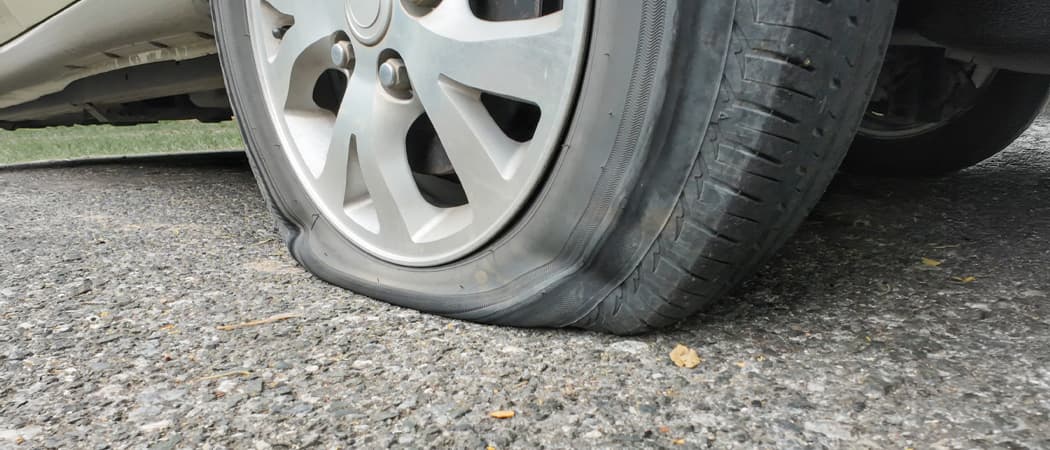
A flat tire rarely picks a good time. The TPMS light blinks on, steering feels a little off, and now you’re by the shoulder looking at the spare. The big questions come fast: how many miles can you drive on it? What’s the safe speed?
The answers depend on the kind of spare you have. Temporary compact spares, often referred to as donuts, are designed to get you out of trouble and into a shop. Not to finish a commute or a weekend trip.
In this guide we’ll separate donuts from full‑size spares, give clear distance/speed limits, explain why those limits exist, and lay out what to do after the spare goes on.
Distance and Speed Limits for Spare Tires at a Glance
Not all spares are the same. Most cars carry a compact donut meant for short, slow trips to a shop, while some include a full‑size spare that may be able to stand in for a regular tire when it truly matches. Use the guide below to understand the safe mileage and speed for each type before you pull back into traffic.
Donut spare (temporary compact): allows for about 50 miles of distance at speeds below 40 mph. Treat those numbers as ceilings, not goals. Heat, passengers, cargo, hills, and rough pavement can shorten the safe window. Donut spares will not perform well and should not be used on snowy or icy roads.
Full‑size spare: you can generally drive normally if the spare matches the regular tire’s size, load rating, and type, and it’s not aged out or dry‑cracked. If it’s mismatched, treat it like a short‑range solution to reach a shop. Spare tires mounted to the tail gate or under a vehicle are subject to low air pressure and dry rotting. If your spare is in one of these positions, you should have it checked regularly.
Safety first: if traffic is fast or weather is bad, don’t feel pressured to “keep up.” The right speed is the one that keeps the car stable on the spare and gives you enough margin to react. Use your hazard lights in situations where you need to slow down below the flow of traffic in order to stay safe.
What is a donut spare?
A donut is a compact, lightweight tire and wheel assembly designed to save trunk space and reduce vehicle weight. It’s intentionally narrow, with a tall sidewall and a basic tread pattern, and it’s built for emergency use only. The rubber compound runs firm, the construction is lighter than a standard tire, and the wheel is usually steel. That combination makes it easy to store and quick to mount, but it also limits how far and how fast you should go.
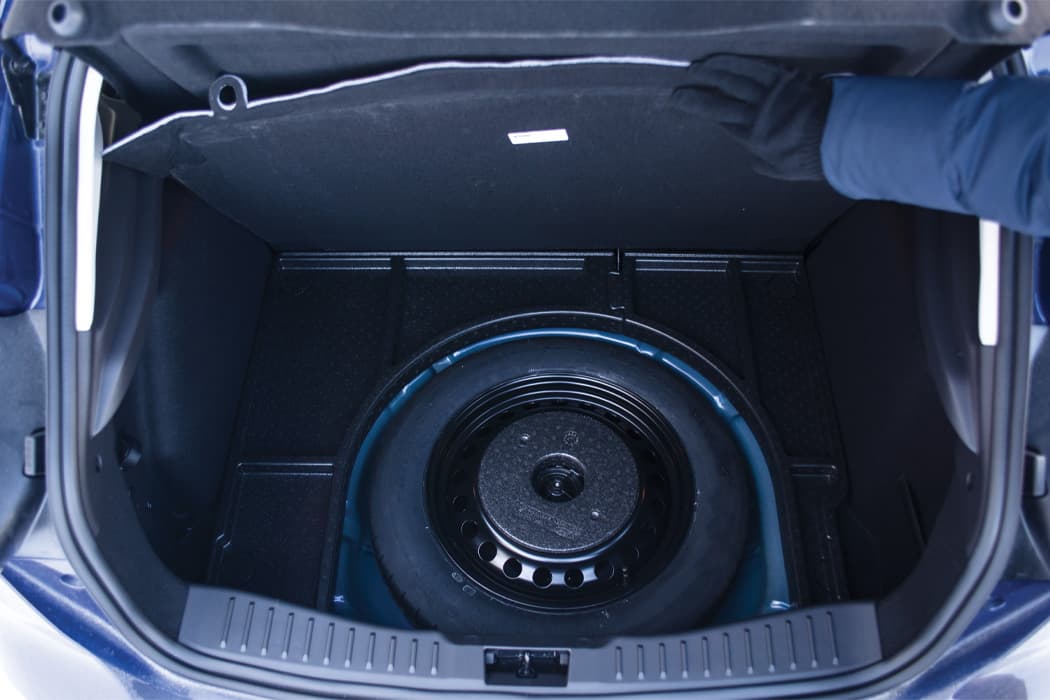
Think of a donut as an exit ticket: it lets you leave a risky spot and reach a tire shop for a proper repair or replacement. It’s not meant for freeway commutes, long detours, or heavy loads.
Why donuts have strict limits
Donuts are not simply smaller tires. They’re built to do a different job. Let’s break down the specific features of a donut that contribute to their safety limitations.
Narrow footprint: Less rubber meets the road. That shrinks grip, especially in the wet. And it lengthens stopping distance.
Less structural reserve: The lighter construction is not built for the sustained heat that tires experience under normal wear or high‑speed stress. Long runs build heat in the carcass and sidewall.
Rolling resistance: The tall, narrow profile can flex more as it rolls, which generates heat and robs a little power. Heat is the enemy of a temporary tire.
Reduced traction and braking: Emergency maneuvers are harder to control, and ABS/traction control may work overtime.
Uneven driveline load: On vehicles that drive the front or all four wheels, the smaller diameter and different grip can stress differentials and clutches if you run it too long.
Bottom line: those safe‑use limits aren’t marketing; they’re engineering guardrails to keep a temporary tire from becoming the next emergency.
Risks of driving too long on a donut
The longer a donut stays on the car, the more risk climbs.
Overheating: Heat buildup degrades the rubber and can lead to failure. The tire can break apart.
Blowout risk: A temporary tire pushed past its envelope can let go with little warning.
Longer stops: Less contact patch means more distance before the car comes to a halt. This is even more exaggerated on wet roads.
Electronics get confused: ABS and traction control can act erratically when one corner behaves differently than the others.
Driveline wear: On AWD, and even some FWD systems with electronic clutches, running a mismatched diameter forces components to work constantly, adding wear.
If a donut starts to feel vague, wander, or buzz at speed, slow down and shorten the trip. That’s a sign you’re nearing the limit.
Driving limits for full‑size spares
A full‑size spare may be able to stand‑in for your regular tire, but only under the right conditions.
Match matters: Size, load rating, speed rating, and construction, all‑season vs. performance, run‑flat vs. standard, should match the tires on the car. A single oddball on one axle can change handling and braking.
Age counts: A tire can look brand new yet be aged out. Check the DOT date code; if it’s older than about six years, treat it as temporary. Rubber hardens with time, which cuts grip, especially in wet conditions.
Condition is everything: Dry cracks, sidewall bubbles, cords showing, or uneven wear make a spare untrustworthy.
Air Pressure: Tires lose air over time. Have your spare checked on a regular basis to make sure it has the appropriate amount of air in it. If you have not had it checked lately, get to a service station as soon as possible to confirm its good.
Tread depth: A full‑size spare with much deeper tread than the opposite tire can upset AWD systems. When in doubt, use it to get to a shop and ask about pairing or replacement.
If your full-size spare truly matches and passes a visual inspection and the air pressure is right, you can drive at normal speeds. If it’s a space‑saver labeled as a full‑size in diameter but not a true match in spec, treat it like a short‑range solution and head to a shop.
Common scenarios (and how to handle them)
Spare‑tire theory is helpful, but real‑world conditions can complicate things quickly. Traffic speed, drivetrain layout, weather, and how far you are from a shop all change the safest move. Use the notes below to think through the most frequent situations once the spare is on.
Spare on an All-Wheel Drive (AWD) vehicle
Many all‑wheel‑drive systems assume all four tires have the same exact rolling diameter. A donut is smaller and spins faster than the other wheels. Your owner’s manual may list special instructions for AWD spares. Follow them exactly. Failure to follow the spare tire instructions in your manual could result in thousands of dollars of drivetrain damage. If you have a full-size spare, and it is the right size and age, install it on the axle where the damaged tire lived and drive gently to service.
Highway vs. local roads
A donut’s speed limit rules out most freeway traffic. If you can choose between local streets at 35 to 45 mph and a highway at 65 to 75, pick local roads. Even with a full‑size spare, gentle speeds and smooth inputs are your friends until you can get a proper repair.
Night or bad‑weather driving
A temporary tire already weakens your grip. Darkness and weather cut visibility and traction further. Slow down, increase following distance, and avoid sudden inputs. If conditions look dicey, consider waiting for roadside assistance instead of pressing on.
Long trips away from home
If the donut goes on far from a shop, pause and reassess. Some roadside services can patch a tread puncture on the spot if the tire’s otherwise healthy. If not, plan the shortest, slowest route to a tire store. Even if that means staying off the interstate for a bit or delaying your trip.
What to do right after you mount the spare
The moment is stressful. A brief, calm routine keeps you in control.
Check pressure: Donuts often sit for years. Verify the spare’s PSI against the sidewall marking. Many donuts run around 60 psi, much higher than your regular tires.
Stow the flat safely: Place it flat in the trunk so it won’t roll. If it’s damaged, avoid touching any exposed wires or cords.
Set your hazards and ease back onto the road: Build speed gradually and keep steering inputs smooth. Listen for unusual noises.
Plan your route to service: Choose streets where you can maintain an easy pace and avoid high‑speed merges.
Tell the shop what happened: Where you found the puncture or damage, how far you drove, and whether the tire saw any time at zero pressure. Those details help decide repair vs. replacement.
New to pressure checks? Visit Tire Pressure 101.
How long do spare tires last in the trunk?
Spare tires age even if they’ve never touched the road. Heat cycles in the trunk and years of sitting take a toll on rubber. Most manufacturers treat six years as a practical upper bound for a spare’s reliable life, and many recommend inspection at each service. Check the DOT date code and the tire’s condition. If it’s older than you think or shows cracks, replace it before you need it. Spare’s also lose air pressure over time so be sure to check the air pressure.
For more on tire age and date codes, see How Long do Tires Last.
What to do after you get back on four regular tires
Spare tire chapter closed? Take some quick steps to prevent a repeat and catch hidden damage.
Have the wheel inspected: A rim that rode on a flat can bend or develop sharp edges that cut a new tire bead.
Ask for an alignment check: A curb strike or pothole that punctured a tire can knock angles out of spec. If the steering wheel sits off‑center afterward, that’s a tell.
Reset TPMS and verify pressures: Make sure the light turns off and the four corners match the placard values.
Check out the Tire Rotation Guide for even wear going forward. Curious about sensor warnings? See What Is the TPMS System?
A spare is a tool for getting you out of a bad spot. Use it conservatively, respect its limits, and plan the fastest path to a proper repair or replacement. If you’re not sure what kind of spare you have, or whether your full‑size spare is still serviceable, we’ll check the date code, measure tread, and confirm it matches your vehicle’s specs. A few minutes at the shop buys back full braking, predictable handling, and peace of mind for the miles ahead.
Spare Tire - Common FAQs
On a donut, aim for the shortest path to a shop, about 40-50 miles at most. On a full‑size spare that truly matches and is in good shape with the correct air pressure, you can drive normally, but don’t treat it as a long‑term replacement.
Treat 50 miles as a maximum, not a target. Shorten that if you’re carrying passengers and cargo, driving in heat, or dealing with hills.
Keep a donut under 40 mph. A matching full‑size spare can run at normal speeds, but build up to highway pace gradually and leave extra space around you.
Generally no. The speed and distance limits don’t line up with typical highway traffic. Choose surface streets when possible and head straight to service.
Yes, if the spare matches the tire it’s replacing and passes a visual inspection for age and condition including air pressure. If it’s an older, unmatched, or worn spare, use it to reach a shop.
Rubber ages in storage. Check the DOT date code. After about six years, many spares should be replaced even if unused. Inspect for cracks each time you check pressure.
It can if you exceed a donut’s limits or run a mismatched tire on vehicles with sensitive AWD systems. Long use can stress differentials and clutches, and emergency handling is reduced.
Read Next
just don't want to deal?
We get it, and can handle everything
Our in house tire experts are always available to help you find a great tire.

just don't want to deal?
We get it, and can handle everything
Our in house tire experts are always available to help you find a great tire.