Everything You Need to Know About Tire Air Pressure
By Mavis Tire Team
Published 05/04/2025
Did you know that underinflated tires decrease your fuel efficiency and increase the likelihood of tire damage and failure? Improperly inflated tires are also prone to irregular tread wear that can shorten the life of your tires. All in all, checking your tire air pressure often can help you save a lot of money over the life of your tires.
Just how often should you check your tire air pressure? How do you properly inflate your tires? Is nitrogen better for your tires than compressed air? Courtesy of the experts at , here's everything you need to know about tire air pressure.
The Importance of Correct Tire Air Pressure
Properly inflated tires provide an even distribution of your vehicle's weight across the entire contact patch of each tire, offering the best fuel efficiency, tire performance, and treadwear, Driving for a long time on overinflated or underinflated tires can cause irregular tread wear, shortening your tire's lifespan.
Underinflation Vs Overinflation
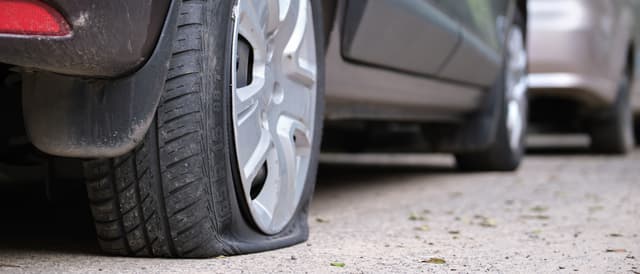
Underinflated tires bulge excessively and put the vehicle's weight on the sidewalls of the tire. In time, your tire will experience excessive wear on its shoulders, reducing its tread life. Underinflated tires can also create excessive heat buildup that can damage the tire's sidewalls.
Additionally, underinflated tires cause extra resistance as they roll down the road, reducing your vehicle's fuel economy.
Overinflated tires balloon outward at the center tread, reducing the contact patch (and your tire's grip on the road), which can lead to irregular tread wear and reduced tread life.
How Often to Check Your Tire Air Pressure
Many types of driving conditions and environmental factors can reduce tire air pressure, including:
Permeation. Tires lose air from the rubber sidewall at a rate of about 1-2 pounds per square inch (PSI) per month.
Weather. Tire pressure reduces by 1 PSI per 10-degree drop in temperature. The reverse is also true, so refilling your tires in a cold snap right before a significant temperature warm-up could lead to overinflation.
Altitude changes can cause tire air pressure changes.
Road hazards such as screws, nails, etc., can become embedded in your tire and act as an inefficient plug, leading to your tire losing pressure so slowly you may not notice.
As a result, you should check your tire pressure at least once a month or every other trip to fill up with gas – whichever is more often. Don't forget to check the tire pressure of the spare tire, too.
Don't wait until the dashboard light comes on to alert you to low tire pressure – these alerts don't activate until a tire is 25% below or above its proper air pressure. The adverse effects of driving on underinflated tires start with as little as 5% underinflation.
How Much Air Does a Tire Need?
Your vehicle's owner's manual or tire placard will list the recommended tire pressure as PSI for the front and rear tires (which may be different). The PSI on the tire is the maximum pressure, so stick with the pressure recommended by your vehicle manufacturer. Every vehicle has specific requirements, but most passenger cars have a recommended pressure between 30 to 35 PSI.
How to Properly Inflate Your Tires
Follow these steps to inflate your tires properly:
Remove the valve stem caps from every tire and keep them safe.
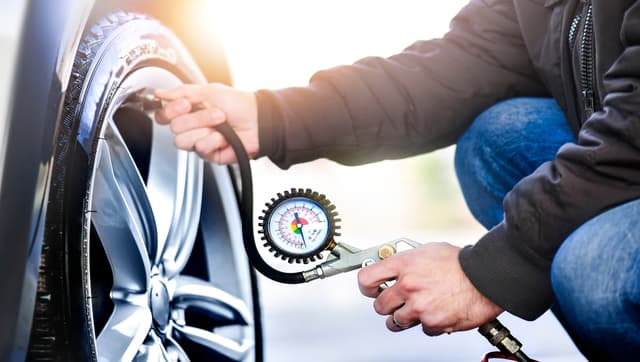
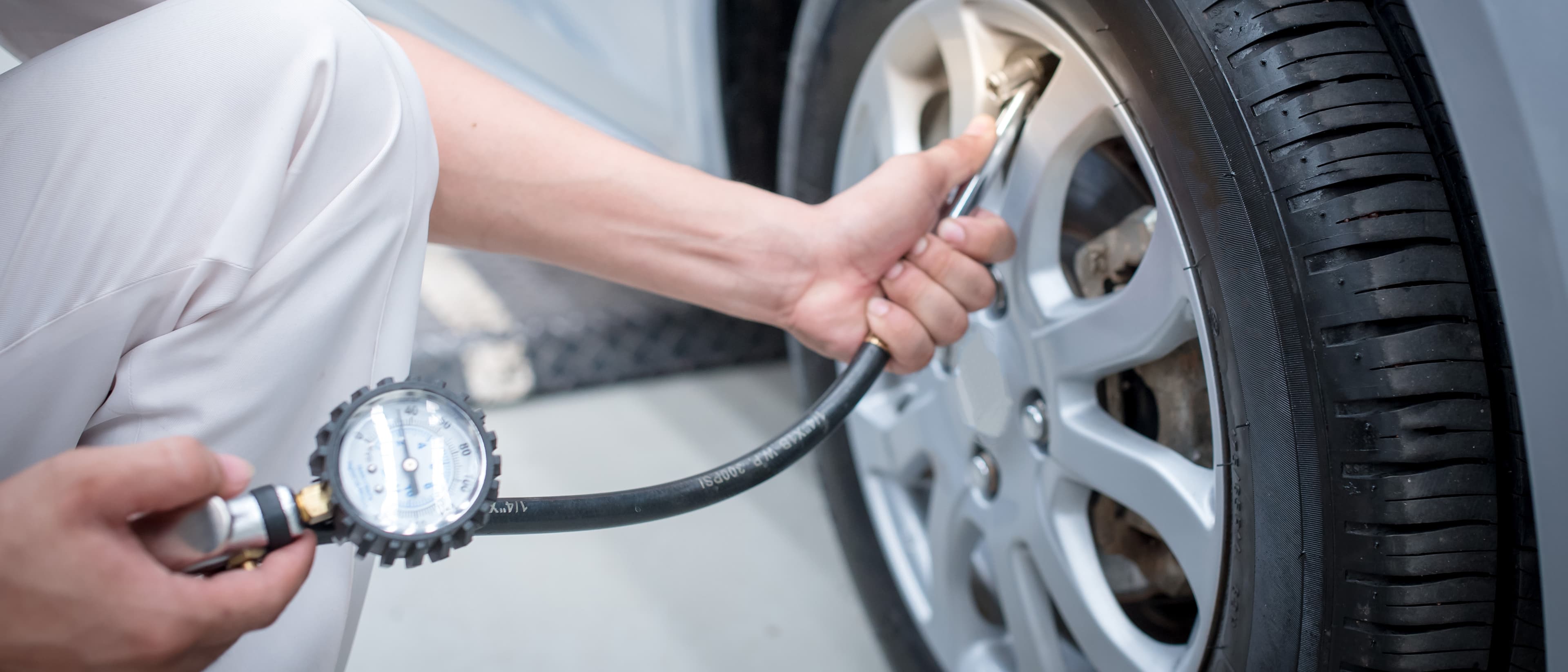
Attach the nozzle of an air compressor to the valve stem and seal it by using the locking mechanism on the nozzle head (listen for air escaping to indicate an improper seal).
Turn on the air compressor (which will be loud) and inflate to the correct PSI using the compressor's included gauge or fill for 5-10 seconds and check with a manual tire pressure gauge.
Turn off the air compressor and remove the nozzle head when you reach the proper PSI. If you overfill the tire, release air by pressing the center valve pin.
Recheck the tire pressure before replacing the valve stem caps.
Remember, at every Mavis location has a FREE air pump for your convenience.
Additional tips:
Always replace your valve stem caps after refilling your tires – put them somewhere you can see them, so you don't forget and drive away without them.
Keep an accurate air gauge in your vehicle and use it regularly.
Check your tire pressure after extreme temperature changes.
Fill your tires slowly to avoid overinflating them.
Create a routine for checking your tire air pressure, including your spare tire, and stick to it.
Is Nitrogen Better Than Air For Your Tires?
In theory, nitrogen molecules, larger than oxygen molecules, would be less likely to escape from the semipermeable tire liner, resulting in less tire pressure loss. Additionally, nitrogen is “drier” than compressed air, which means corrosion (oxidation) is less likely to build up on TPMS sensors on your wheel finish.
Additionally, your tires will still lose pressure over time since they are prone to normal contraction and expansion. Some auto shops charge extra for nitrogen rather than regular air, while others may not have nitrogen at all.
If you have nitrogen in your tires now, it is safe to add regular air to your tires if you can't find a place that has nitrogen – but you will need to purge the tire before refilling it with nitrogen.
How Do I Know if My Tires Have Nitrogen in Them Now?
A tire's valve cap tells you whether the tire contains nitrogen or compressed air. Tires filled with regular air will have black valve caps or chrome, while tires filled with nitrogen will have green valve caps or have an “N2” emblem.
Get Your Tires Checked or Replaced at Today
Whether you want to pop in and have us check your tire air pressure or you need a whole new set of tires, can help you with all of your tire needs. Find your nearest location to shop for tires or schedule an appointment now.