Can I Drive on a Flat Tire?
By Ryan Boccaccio
Published 09/12/2025
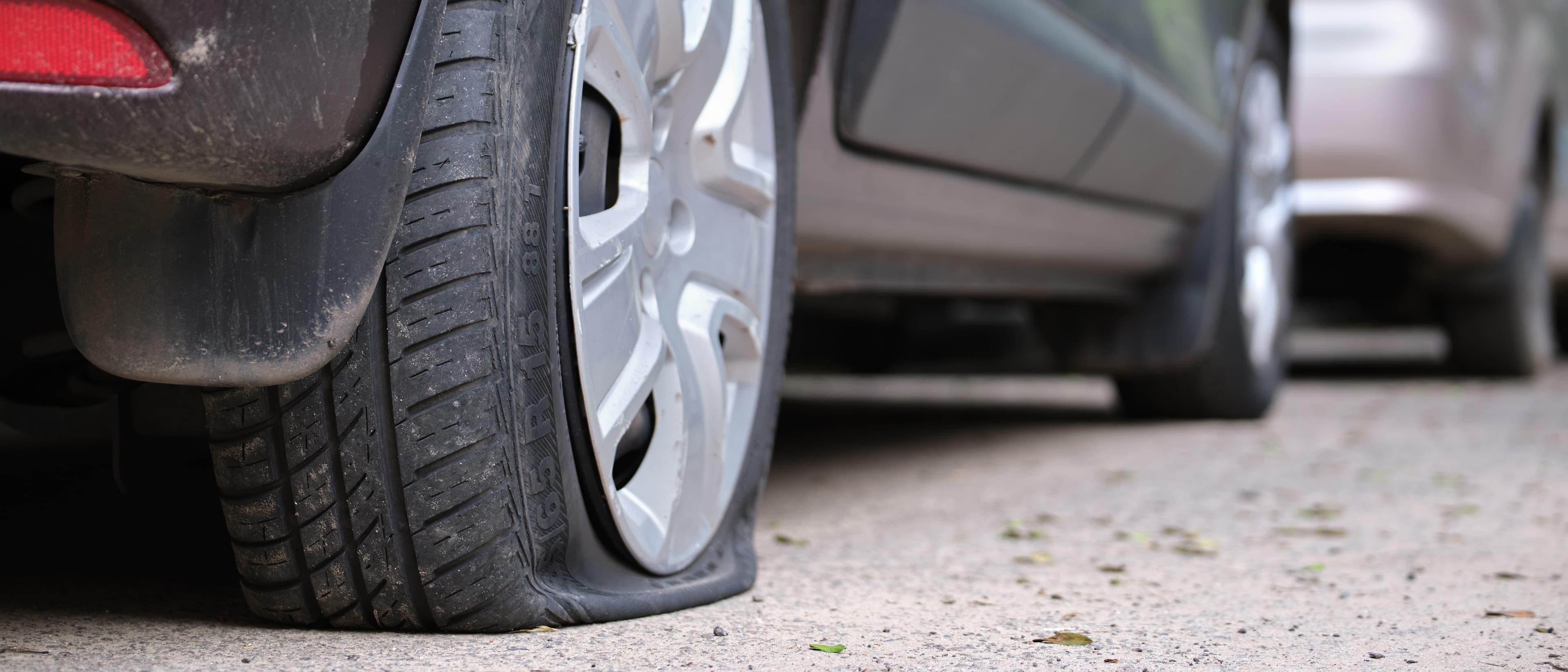
Whenever you notice your tire pressure monitoring system (TPMS) light pop on, or perhaps the wheel tugs, or you even hear a dull thud coming from your tires, it’s time to pull over. Driving with a flat tire is never safe.
Without air to support it, your tire can’t do its job. Steering your vehicle begins to feel vague and stopping takes longer. The tire’s rubber can break apart quickly, and when that happens, the metal wheel isn’t far behind. What starts as a tiny puncture can turn into a ruined tire and a bent rim in minutes. At any typical driving speeds, that kind of failure puts you, and everyone around you, at serious risk.
In this guide we’ll break down what qualifies as a true flat versus a low pressure tire, why driving on a flat is dangerous, and how to prevent damage from driving on a flat tire.
Flat Tire vs. Low Pressure - Understanding the Difference
Knowing the difference between a flat tire and a low pressure tire helps you make the safest next move. A soft, underinflated tire might only need air and a check for a slow‑leak once you’re parked somewhere safe. A flat tire means the tire can’t support the car at all. That’s what we consider a “stop‑now situation.” As a simple reference point, a true flat is typically zero to five PSI.
For comparison:
A normal tire runs between 30–35 PSI.
Low pressure (say, 15 to 25 PSI) can still affect performance and safety.
Anything below ten PSI is flirting with disaster.
Below five PSI is a flat tire.
Signs your tires are experiencing more than just low pressure:
Your steering feels heavy or off-center.
You hear a flapping or grinding noise.
You can visually see one tire slumped lower than the others.
Your TPMS sensor can alert you to changes, but it shouldn’t be relied upon alone. Always be aware of your tires’ condition and how they feel while driving on the road. If it feels flat or looks flat, treat it as flat. It’s always better to be safe.
Why Driving on a Flat Tire Is Dangerous
The risk of driving on a flat climbs with every rotation of the wheel. A tire without air can’t support the vehicle, keep steady grip, or absorb bumps the way it should. The result is less control for you and more stress on parts that were never meant to carry the load. Here’s what typically happens when a flat keeps rolling:
You can lose control. Handling gets unpredictable, especially during braking or quick moves.
The wheel gets damaged. With no air cushion, the rim meets the road and repairs get expensive fast.
The tire tears apart. What might have been repairable becomes a total loss once the rubber overheats and unravels.
Other parts take a hit. Brakes, suspension, and alignment can all be affected when the vehicle rides unevenly.
People around you are at risk. A tire that lets go can send debris across lanes or force sudden swerves.

Is It Ever a Good Idea to Move a Car With a Flat Tire?
It may sound convenient to limp to the next gas station or shop on a flat tire, but it isn’t safe. The only time to move a car with a flat tire is when staying put creates an even bigger hazard. For example, if you’re sitting in a live lane or perhaps blocking a blind curve, it’s necessary to move to safety. Even then, you’re only relocating the vehicle to a better place for inspection.
If you must move, keep it slow. Aim to move at walking speed, not traffic speed. You should roll only as far as needed to reach the nearest safe spot such as a shoulder, driveway, or parking lot. Try to keep the wheels straight and avoid curbs or sharp turns so you don’t grind the rim or tear the tire apart.
Run-flat vs. regular flat tire driving
Standard tires: When a regular tire loses pressure, the sidewall collapses and the wheel starts doing the work the air normally does. Damage happens fast. Rubber overheats, beads can unseat, and the rim can cut into the tire. Change to a spare tire, use a safe temporary sealant to get to a shop, or call for help.
Run-flat tires: These are built to carry limited weight for a short distance with no air. Most use reinforced sidewalls. The general rule you’ll hear is a run-flat tire distance of up to 50 miles at speeds under 50 mph, but that’s a ceiling, not a target. Heat, cargo, passengers, and road surface all shorten that range. A warning light on run‑flats isn’t a green light to keep driving; it’s a prompt to head straight to service.
Not sure which types of tires you have? Check the sidewall and your owner’s manual. Run‑flats are often labeled with markings like RFT (Run Flat Technology), SSR (Self Supporting Runflat), ROF (Run On Flat), EMT (Extended Mobility Technology), ZP (Zero Pressure), and RSC (Run Flat System Component).
What to Do Immediately If You Get a Flat
We’ve all found ourselves stuck with a flat tire. The moment feels hectic, traffic is close, and it’s easy to panic. Take a breath. Your job now is to keep yourself visible, stay calm, and work through a simple, safe checklist. Here’s a step-by-step guide to easily follow that takes the guess work out of it.
Pull over somewhere safe as soon as you feel or hear the flat.
Turn on your hazard lights to alert other drivers.
If it’s safe to exit, do a quick inspection of your vehicle. Listen for hissing coming from the tire and look for punctures, sidewall bulges, or objects in the tread.
Take your next step:
If you know how to replace a tire and are in a safe location, swap in your spare or donut.
If not, call roadside assistance.
You can use tire sealant in a pinch, as long as it’s a temporary and not a long-term fix.
Or call your nearest Mavis location for a full inspection and tire repair or replacement.
After a Flat: Repairable or Replacement?
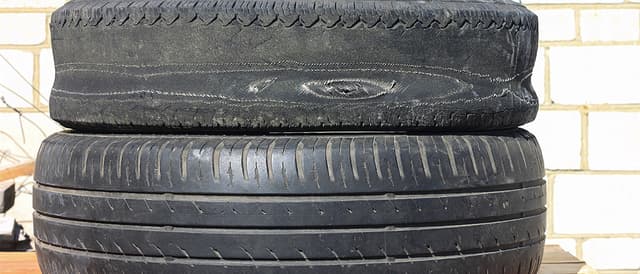
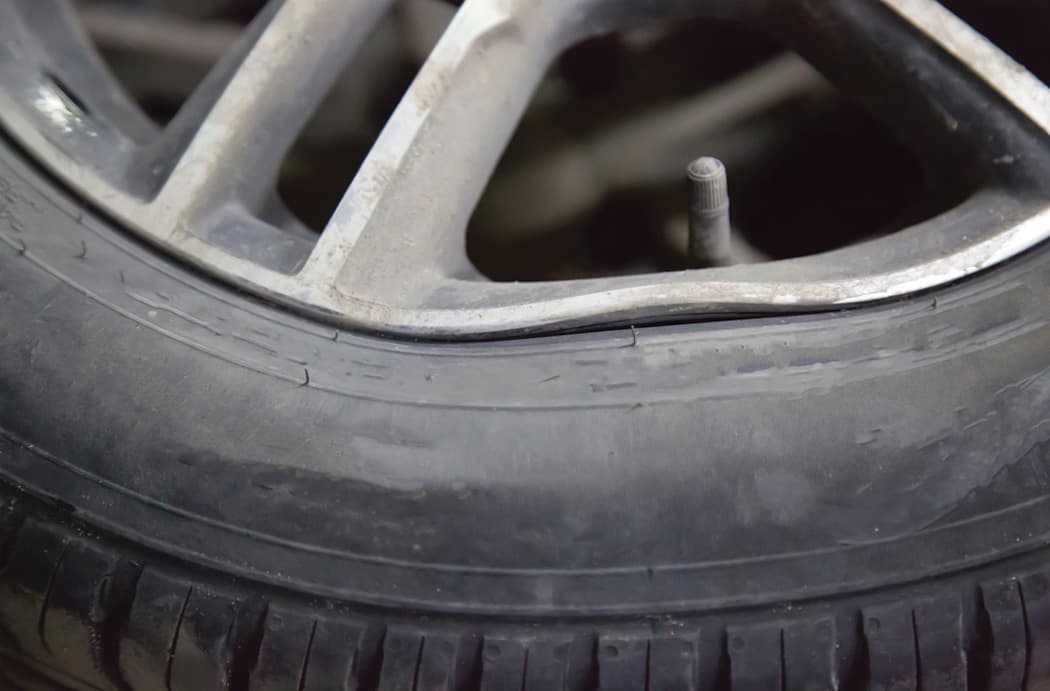
Whether a tire can be saved comes down to two things: how quickly you stopped and where the damage lives. If you pull over right away and the puncture sits shallow in the tread, there’s a good chance it can be repaired using an industry‑standard plug‑and‑patch from the inside. Once a tire has been driven on while flat, though, the internal cords and sidewall can be damaged in ways you can’t see from the outside. If the sidewall has been pinched, or the rim has left an imprint in the rubber, that tire is no longer safe to repair.
What can happen if you keep driving on a flat? If you keep rolling, the damage to the tire will accelerate. The rubber will overheat, the tread can separate, the sidewall can tear, and the rim may gouge the tire. That extra heat and imbalance don’t always stop at the wheel either. They can strain suspension parts, wheel bearings, and even your brakes. Continuing to drive turns a small repair into a tire and wheel replacement, and sometimes more.
If you’re unsure, stop where it’s safe and have a technician remove the tire for an internal inspection. If it passes, a proper plug‑and‑patch will restore the tire’s function. If it doesn’t, replacement is the right move. And if the rim took a hit or the vehicle now pulls or vibrates, plan on a wheel inspection and an alignment check.
How to Prevent Flats in the First Place
You aren’t going to dodge every nail or pothole, but you can stay ahead of tire trouble with a little preparation. Here are a few simple habits that will lower your risk, help your tires last longer, and even improve fuel economy:
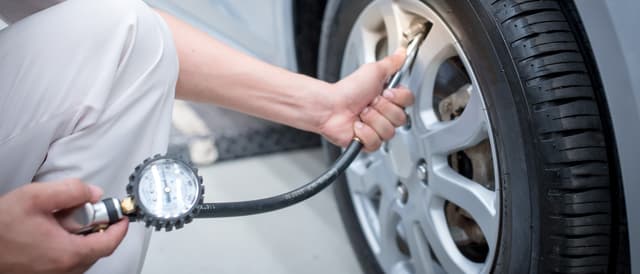
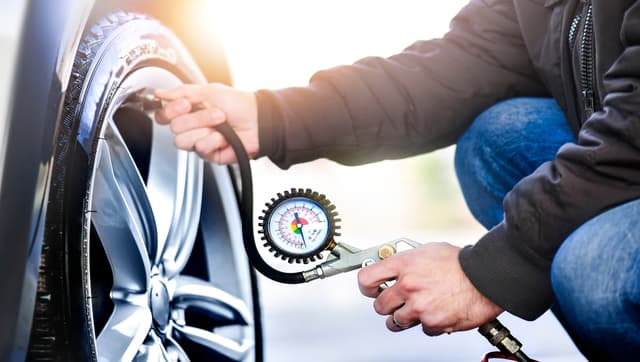
Check your tire pressure once a month.
Respond to TPMS warnings right away.
Inspect your tread for debris or damage.
Rotate and inspect your tires regularly.
Always carry a working spare, jack, and lug wrench.
We understand that you’re busy and a flat is never convenient. But taking a few extra minutes to stop safely and call for help can save you hours, and hundreds of dollars, down the line.