Disc vs. Drum Brakes: What’s the Difference?
By Tracy Fetters
Published 08/15/2025
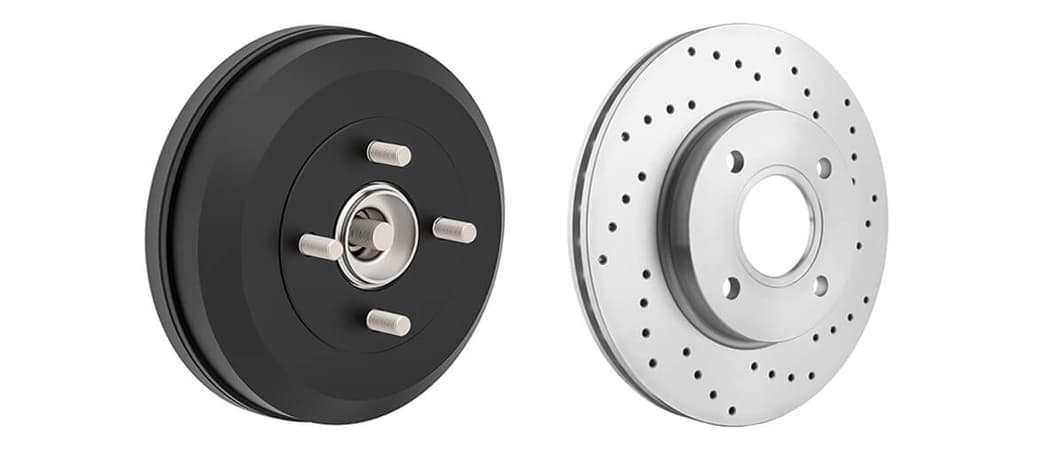
If you’ve ever wondered what sets disc and drum brakes apart, you’re not alone. At a glance, it comes down to how they create the friction that slows your car.
Disc brakes use pads that clamp down on a spinning disc (called a rotor).
Drum brakes, on the other hand, press shoes outward against the inside of a drum.
That difference affects more than just stopping power - it can impact how your car handles, how often you need repairs, what those repairs cost, and most importantly, how safe your vehicle is on the road.
In this guide we’ll break down the basics of each system, compare performance and maintenance, and we’ll help you figure out which setup is best for your needs - with some insights from real Mavis technicians.
What Are Disc Brakes?
Disc brakes’ main job is to slow or stop your vehicle’s wheels. Simple enough, right? Let’s get more specific: when the driver presses the brake pedal, hydraulic fluid sends pressure from the master cylinder through the brake lines to the calipers. The caliper pistons squeeze the brake pads inward against the rotors. This pressure creates friction that turns the vehicle’s kinetic energy into heat, and this makes the car come to a stop. The rotor’s main job is to flush out this heat and decrease the risk of brake fade, allowing you to safely come to a halt.

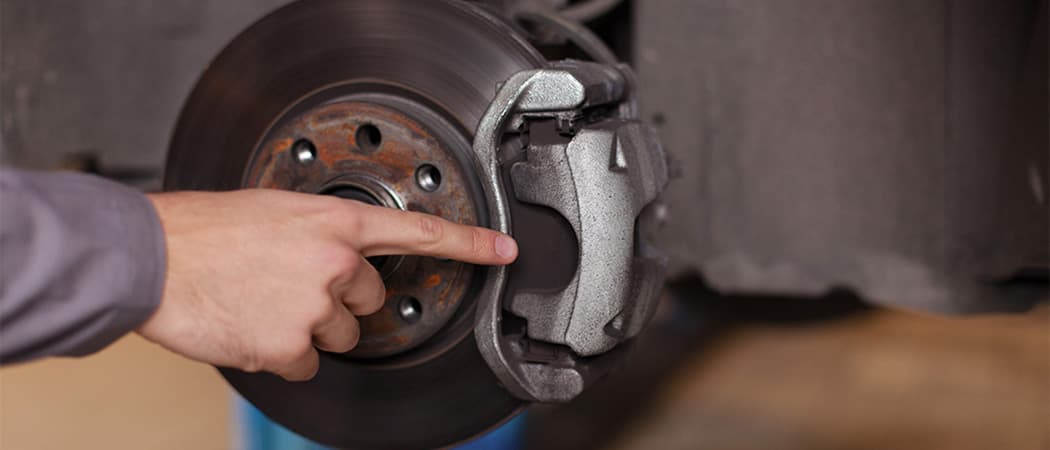
Disc brake with caliper and brake pads, tire removed.
In the above image, we can see the mechanic pointing to the brake caliper, which is hugging the disc rotor. The brake pads sit inside the calipers and press against the rotor when pressure is applied to the brake pedal. This creates the friction that brings your car to a stop.
Disc Brake Performance
Disc brakes offer a variety of benefits that enhance brake performance, including their excellent stopping power. Disc brakes also let the heat that accumulates from the friction in the brake system to be regulated and reduce brake wear over time. The holes or slots built into the disc remove excess water and dust, which helps them to perform better in wet conditions. They also provide a smoother driving experience and more seamlessly stop the vehicle.
Disc Brake Cost
Disc brake repair costs can range depending on what you need – just pads, or the whole setup. The total cost to replace or repair disc brakes on your vehicle will be between $250 - $800+ per axle. DIY costs can be lower, but we recommend having your brakes professionally serviced, since they are a critical safety component in your vehicle.
Disc Brake Maintenance
No matter what type of brake pads you have, they should be routinely checked to make sure they meet the manufacturer’s required thickness, which often lands between 1-3mm. At Mavis, we like to inform our customers about the “percentage worn” for their brake pads, and we recommend considering replacement when the pads are 70% worn or greater. Regular maintenance checks are recommended every 6-12 months.
Disc Brake Lifespan
Brake pads on disc brakes typically last between 30,000 and 70,000 miles, depending on your driving habits and driving conditions. Factors like region of the country (arid vs. humid), weather and road treatments (dry roads vs. wet winter roads with rock salt), and how hard you typically press your brake pedal, can all impact how long your brake pads will last.
What Are Drum Brakes?
Drum brakes are usually found on the rear wheels of passenger cars and light trucks. Instead of clamping a rotor, drum brakes work by pushing brake shoes outward against the inside of a spinning drum. The friction created by this process will ultimately slow your vehicle.

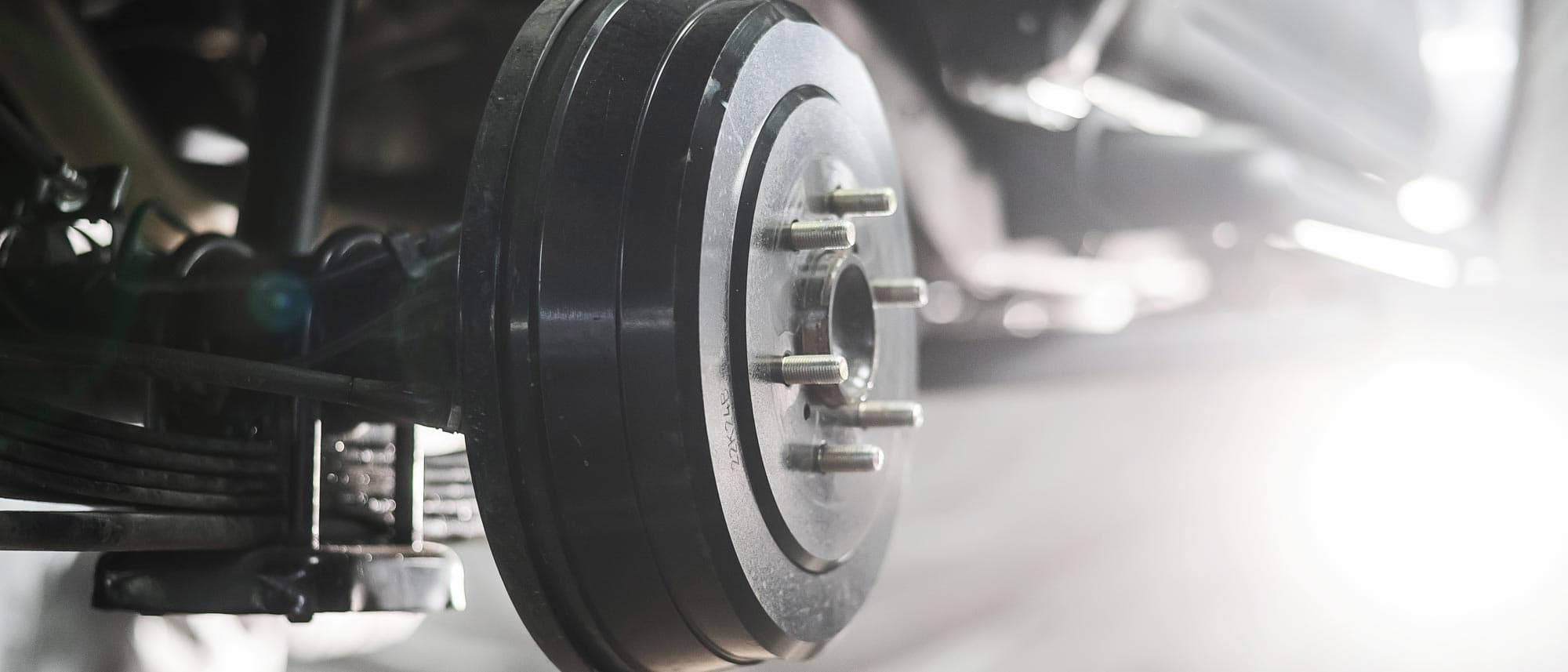
See how there is no caliper or brake pad visible in the image above? That’s because the key parts, the brake shoes, are located inside of the cylinder. The brake shoes press outward from the inside of the drum to slow the vehicle down.
Drum Brake Performance
Drum brakes are unique in their “self-energizing” action. The rotation of the drums helps to push the brake shoes outward, creating a higher braking force. They also have a larger friction surface, which makes them more durable than their counterparts. The design of the drum brakes ensures all the important components are located inside the drum, which protects them from water, mud, and other debris. So, if you are driving in harsh conditions or off-roading, these will be your go-to option. They are also quieter and corrode less frequently than disc brakes.
Drum Brake Cost
Drum brakes tend to be more affordable than disc brakes as they are less expensive to manufacture and replace.
Drum Brake Maintenance
Drum brake repairs will be more frequent and need occasional adjustments as opposed to disc brakes, which are self-adjusting. To top it off, it can take longer to perform standard drum brake maintenance because the actual drum requires removal to inspect or replace the internal components. If not maintained, brake fade can occur when brake fluid hits a boiling point inside the wheel cylinder and causes total loss of braking force. So, keep in mind, while drum brakes can last longer, they need to be periodically cleaned to function at their highest capacity.
Questioning whether or not your drum brakes need to be changed? Take a look at this article for more in-depth details on the telltale signs that it’s time to change them.
Drum Brake Lifespan
At Mavis, we recommend inspecting your brakes every 6-12 months, or during every tire rotation, to identify wear before it becomes a bigger issue. Keep in mind that drum brakes often last longer because of the higher material volume and slower wear rates, but need to be manually adjusted to continue performing their best.
Disc vs. Drum Brakes Expert Insights
Here’s what we’ve seen in the shop that most drivers don’t know: The brake pads used in disc brakes are made from a variety of different materials, such as ceramic or metal, which can help deter many brake-related issues, such as brake fade. There are also different types of rotor construction that help with monitoring heat, including vented, slotted, or cross-drilled.
Drum brakes have a self-energizing component that happens when the inward rotation of the brake shoe presses against the drum, effortlessly increasing the force that is applied when the brake pedal is pushed. Pretty cool, right? Something else to keep in mind is that while more recent drum brakes most likely have adjusters incorporated into them, they can become stuck and lead to uneven brake wear if they aren’t checked periodically.

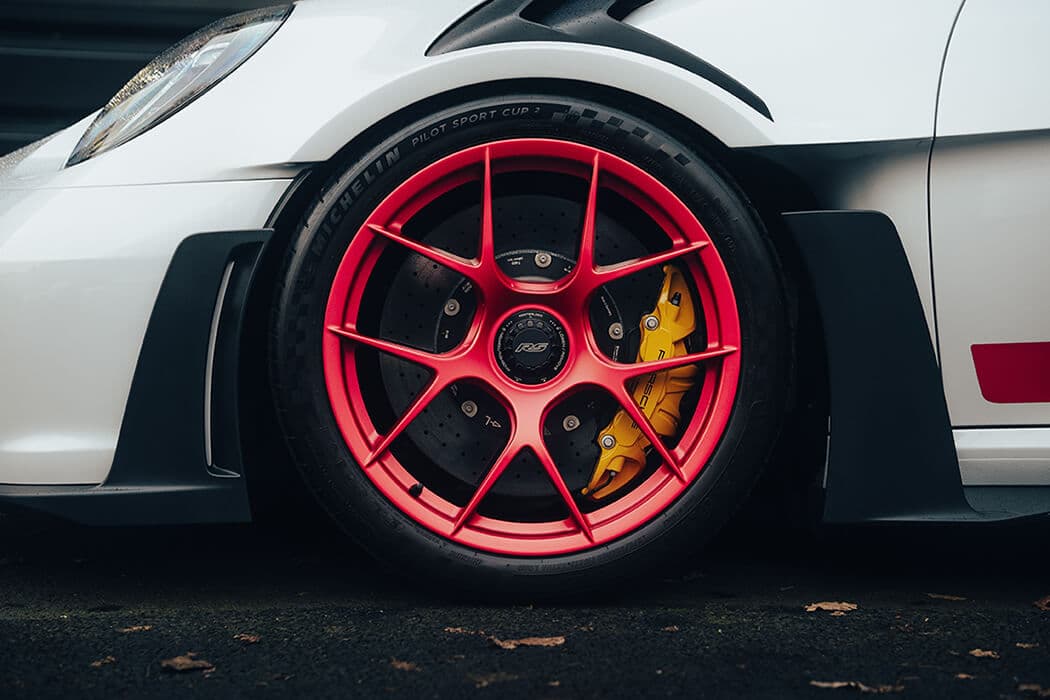
Performance tire with aftermarket colored caliper and drilled rotors
Disc vs. Drum Brakes Safety and Performance
Are drum brakes good? Are rear brakes drum or disc? What is the safest brake system for my car? These are some of the many questions you may be asking yourself when comparing the pros and cons of different brake systems. Safety is the top priority when getting behind the wheel, and above all, it’s important to know that your vehicle is equipped to reliably and predictably stop.
Whether your vehicle relies on disc brakes vs. drum brakes will often be decided by the manufacturer. As a general rule of thumb, disc brakes offer an improved alternative over many of the common pitfalls of drum brakes. For instance, while drum brakes internally trap heat, disc brakes are vented to dissipate it. Quick stops in traffic? Disc brakes respond faster and handle heat better, which leads to more reliable stopping when it matters. The response time on disc brakes allows for immediate engagement, while drum brakes can take longer to activate.
In short, disc brakes are going to be the safest option for consistent performance. If you are looking to utilize drum brakes, it is suggested that they only be used on the rear wheels, as they tend to be less reliable over time. Almost no vehicles have been produced with front drum brakes since 1986.