Cabin Air Filters Explained - Everything You Need to Know
By Dan Krauss
Published 08/29/2025

Cabin air filters aren’t always the first thing we think of when it comes to ongoing vehicle maintenance. Although they’re underappreciated, cabin air filters play an important role in cleaning the air you breathe behind the wheel, improving fuel efficiency, and getting the best possible driving experience out of your car, truck or SUV.
The large majority of vehicles driving on the road today have a cabin air filter. As the name suggests, these filters are specifically designed to filter or clean the air as it enters your vehicle’s cabin, removing common contaminants from the outside air.
Here we’ll explore everything you need to know (and then some) about cabin air filters, including:
What does a cabin air filter do? An overview of the basics including how cabin air filters work.
How much does a new cabin air filter cost? We’ll explore the costs of new cabin air filters, and typical maintenance intervals.
Signs you need cabin air filter replacement - Why reduced airflow and nasty smells can tell you it’s time for a new filter, and how often to replace cabin air filters.
We’ll cover all of the above in detail, and we’ll unpack a few lesser-known facts that every driver should know about this often overlooked part of their vehicle.
Cabin Air Filters: A Basic Overview
Cabin air filters are a vital component in your car’s HVAC system, meant to protect you and your passengers from the outside elements. The filter(s) act as a barrier against things like dust, pollen, exhaust, pollutants, and other particles you don’t want to be breathing in.
How Do Cabin Air Filters Work?
Cabin air filters are designed to trap dust, smog, and allergens, day in and day out. Like many types of filters, cabin air filters work by forcing the outside air through pleated filtration materials like paper, cotton, or synthetic fiber. These pleats in the filter capture the particles and pollutants as air flows through the car’s ventilation system. To absorb odors and chemical pollutants, some more advanced filters also use activated carbon or electrostatic filtration.
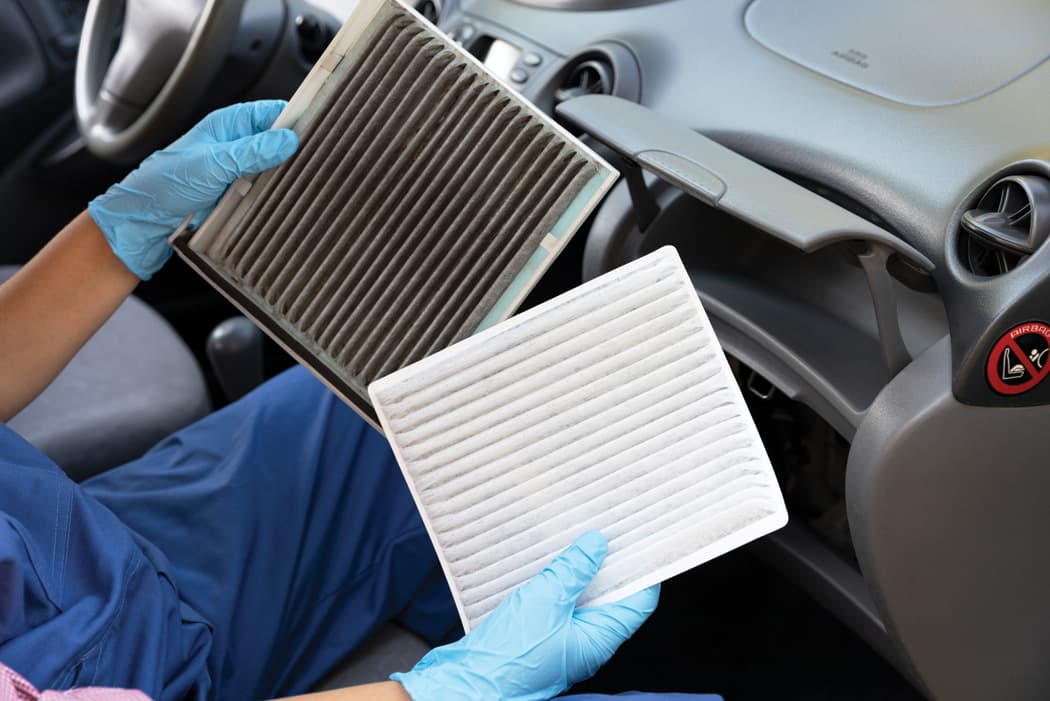
It’s a dirty job, as you can probably imagine. Eventually, your cabin air filters will become too filthy to effectively clean the air in your car. And when your cabin air filter reaches that point, it can quickly become more of a hindrance than a help to your driving experience.
Do Cabin Air Filters Actually Help With Fuel Efficiency?
Yes, clean cabin air filters will help to improve your fuel efficiency. Why? Because a dirty or clogged cabin air filter reduces the efficiency and airflow in your vehicle’s HVAC system, and that causes it to work harder. This, in turn, can deplete more fuel, costing you more money. What's more - the added strain to your HVAC system can eventually contribute to costly repair jobs down the road.
You don’t want to find yourself with a broken AC during summer, or no heat in the winter - so make sure you take the step of having your cabin air filter checked and replaced at your next auto service appointment. Your lungs, and your wallet, will thank you for it.
How Much Does a Replacement Cabin Air Filter Cost?
As of 2025, the average cost to replace a cabin air filter is usually between $40 and $70, depending on your vehicle. At Mavis we make it easy to get your cabin air filter replaced during a scheduled service. It’s quick, it’s affordable, and it’s done by a technician you can trust. Keeping up with this simple maintenance helps keep your air clean and gives you good HVAC performance all year long.
Where to Find the Cabin Air Filter
The cabin air filter is usually found directly behind the passenger side glove box, on most vehicles. They’re easy to overlook because their location behind the vehicle glove box makes them less visible. Unlike issues like low tire pressure, which you can easily spot, you might not even know you’re due for cabin air filter replacement until your mechanic is holding the dirty one in front of you.
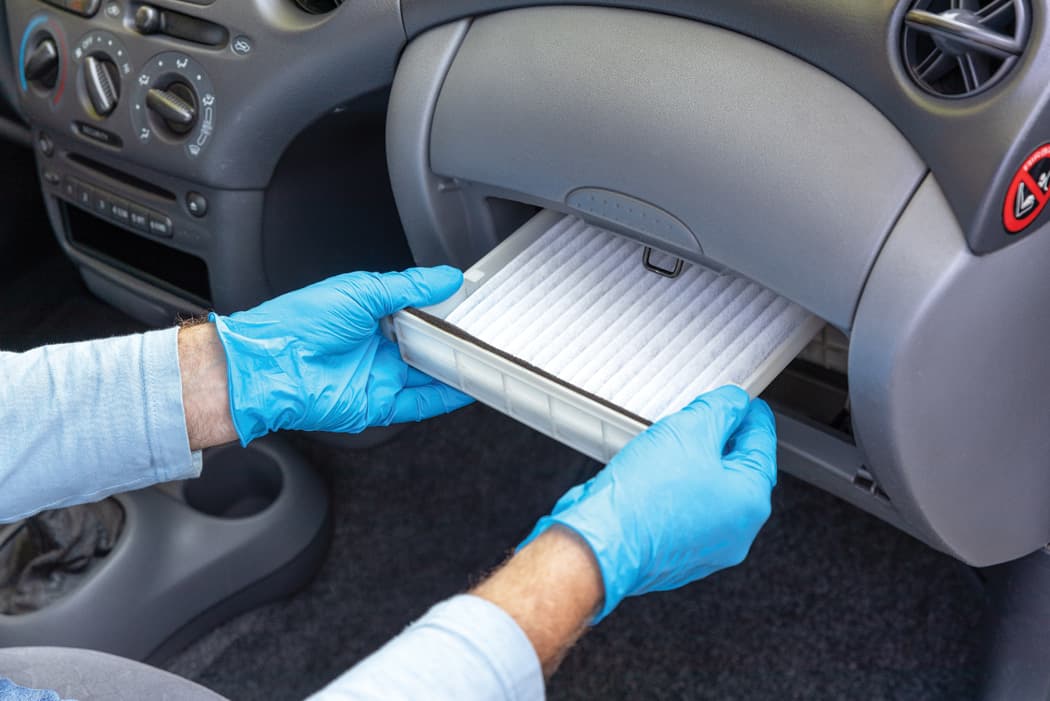
On some car models, though it is more rare, the cabin air filter can be found either under the hood beneath a plastic cover, or somewhere behind the dashboard. To verify the exact location of your cabin air filter, you can always consult your vehicle owner’s manual for info on your particular make and model’s filter.
How Do You Know When to Replace Your Cabin Air Filter?
Apart from visually inspecting your filter, here are 5 signs you’re due for a replacement cabin air filter:
#1: Decreased Airflow
Have you recently noticed that your HVAC doesn’t seem to be blowing the way it used to? Have you noticed it’s taking longer for your cabin to cool or get warm?
These are common signs that you’re driving with a dirty cabin air filter.
Your HVAC system becomes less efficient over time, as your cabin air filter becomes clogged by trapped dirt, pollen, and other contaminants from the outside air. All of those contaminants clog up the filter and make it more difficult for the air from your HVAC to get to the cabin, resulting in reduced airflow.
#2: Funky Smells
Trapped, clogged contaminants in your cabin air filter can give off some truly funky odors. If your car smells terrible every time you crank up your heat or AC, this could be a clear sign you’re driving with a dirty cabin air filter.
So if you find yourself asking - “why does my car smell when I turn on the air?” An old, dirty cabin air filter is the likely culprit. Old filters can smell dusty, moldy, or musky, all of which you’ll especially notice on the longer drives when your system has been running for a bit.
#3: Worse Allergies
Allergy season can be a tough time for a lot of us, but it can be absolutely miserable without a proper cabin air filter. If you or your passengers have more frequent allergy issues, like sneezing or watery eyes, this could be a sign you’re driving with a dirty cabin air filter.
#4: Foggy or Icy Windows
Clearing up the condensation and fog from your windows requires good airflow from your HVAC system. Decreased airflow is a sure sign of a dirty filter, so if you have trouble clearing up your fogged or cloudy windows, this could be an indicator that you have a dirty cabin air filter.
#5: Visible Dust in the Cabin
Have you ever seen dust blowing out from the vents and billowing around the cabin? This is one of the clearest signs your cabin air filter needs to be replaced. If you find your allergy symptoms worsening, make it a point to look for dust or debris coming from the vents when your air is running. If you see anything coming from your vents, it’s time for a new cabin air filter.
If you aren’t sure which type is right for your vehicle, the pros at Mavis can help you choose the best filter, and they’ll handle the replacement during your next service. No guesswork, just clean, healthy air every time you get in your vehicle.