Why Is My ABS Light On? Causes, Safety Risks & Fixes
By Thomas Sexton
Published 09/05/2025

If you’re seeing that amber ABS warning light on your dashboard, you’re probably wondering what it means whether your vehicle is safe to drive. The ABS light indicates issues with your Anti-lock Braking System, from faulty sensors to low brake fluid or damaged wiring. While you can usually drive carefully with the ABS light on, it’s important to understand what causes ABS warning light issues so they can be properly addressed.
In this guide, we’ll cover the most common ABS warning light causes, what to do immediately, and when to enlist professional help.
Reasons Your ABS Light May Come On
So, what does the ABS light mean, anyway? There are a handful of different ABS warning light causes that could impact your driving experience:
1. Faulty ABS Wheel Sensor
The most common cause that could trigger your ABS light is a faulty sensor. With the sensor so close to the ground, it’s common for dirt and debris to cause corrosion. If this is happening to your vehicle, you could also experience loss of traction control.
2. Low Brake Fluid
The Anti-locking Brake System shares brake fluid with the brake system. If the brake fluid levels drop below a predetermined threshold, it could trigger the ABS light, in addition to the regular brake warning light. This can be caused by a handful of different scenarios, including worn brake pads, which cause the brake fluid to hover at a lower threshold, fluid leaks, or even if fluid was restored after recent brake service.
3. Damaged Wiring or Corroded Connectors
Similar to our everyday electronics, the wires that connect the wheel speed sensors to the ABS module can fray over time. This will happen more frequently to vehicles operating in snowy conditions, because the road salt used to help with traction eats away at the wires.
4. Faulty ABS Module
The ABS Control Module uses the information from sensors in the wheels to control the hydraulic valves in your vehicle. If any of the internal circuits fail during this process, the light will come on. These valves and circuits can be more expensive to repair, so keep this in mind.
5. Blown ABS Fuse or Relay
The ABS control system has its own fuse, otherwise known as a relay. If the fuse is blown out, this will trigger the warning light. It’s a relatively affordable fix, but if this issue happens a handful of times, it could be a sign of more significant electrical problems.
6. Recent Brake Work
If you recently had brake service completed, the ABS system may need to be reset with a scan tool. Air trapped in the ABS hydraulic system could be causing issues, triggering the ABS light to turn on.
What is ABS?

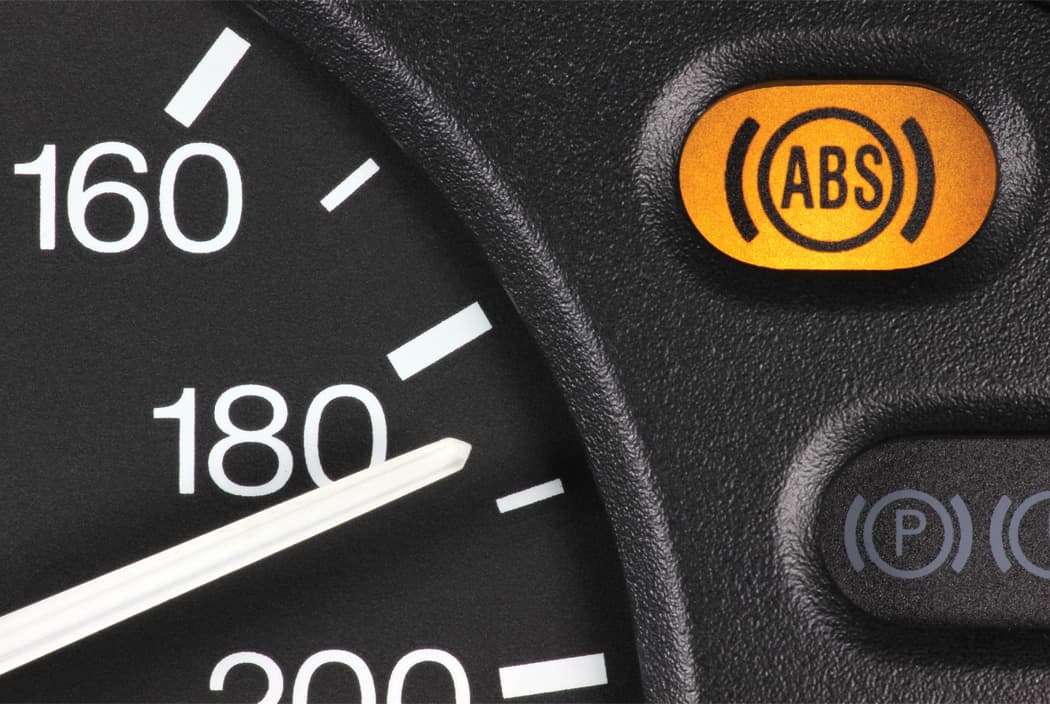
ABS, or the Anti-lock Braking System, is a safety feature in vehicles that prevents wheels from locking up during hard or emergency braking. ABS automatically pulses brake pressure for each of your wheels while coming to a stop, allowing for the driver to maintain control.
Let’s take a look at the three types of ABS and how they differ from one another:
Four-channel, four-sensor ABS is when each wheel is individually monitored and controlled.
Three-channel, three-sensor ABS is typically only seen in older pickup trucks. Each of the front two wheels functions with its own sensor, but the rear wheels share a sensor.
One-channel, one-sensor ABS only monitors the rear axle. It’s an older system that is significantly less accurate than the typical four-channel, four-sensor system.
ABS Components
Just like the brake system, different ABS components allow it to detect what is happening with your wheels and take action when needed:
Wheel Speed Sensors: The sensor on each of the vehicle wheels, or the axle, depending on the type of vehicle. These sensors monitor rotation speed.
Electronic Control Unit (ABS Module): The electronic control unit compares the wheel speeds several times per second. If one or more of the wheels are slowing down faster than the others, this is an indicator that they are about to lock up.
Hydraulic Modulator/Valves: Now that a potential lock-up has been identified, the ABS sends a message to small valves in the brake lines, telling them to release, hold, and quickly reapply pressure.
Brake Pulsing: ABS takes the job of pumping the brakes away from the driver and does it automatically. This system is able to create that pumping motion up to 15-20 times per second. This action allows the tires to maintain traction so they can slow their vehicle to a stop without skidding on the road.
What Happens When ABS Fails
Without ABS, your vehicle is no longer able to prevent wheel lock-up during braking, and the likelihood of skidding and loss of steering control can increase. In the event that your ABS stops working, you could also experience a longer stopping distance, which makes it difficult to quickly and safely come to a halt.


Another side effect is that your brake pedal may feel less effective or require more pressure to actually bring your car to a stop. Other systems in your vehicle may be impacted by the loss of ABS. For example, traction or stability control could also stop functioning properly as a result. Your vehicle may make odd sounds when you press on your brake pedal, as well.
As you can see, it’s important to closely monitor this safety feature, so when the dashboard light turns on, do your best to prioritize getting it inspected. If your ABS does happen to fail, stay calm and follow these steps:
1. When the ABS light turns on, remember that your brakes still work, so continue to drive carefully until you can bring your car to a stop.
2. Check for any additional warning lights, such as your brake light, which could indicate an additional system issue. If you see a red brake warning light turn on, pull over once it is safe to do so.
3. Once you are off the road, test your brakes by pressing on the brake pedal to examine stopping power.
4. Check that your brake fluid levels fall between the minimum/maximum lines on the brake fluid reservoir.
5. Examine each of your wheels for visible damage.
6. Carefully drive to a trusted professional for inspection.