Get Instant Answers to Common Auto Repair Questions with the Auto Q&A
By Mavis Tire Team
Published 03/23/2025
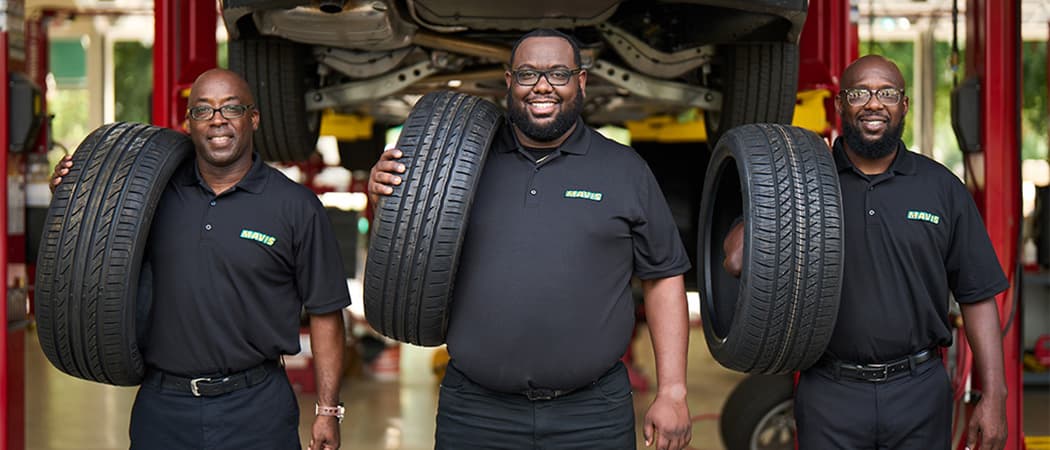
Even if you really know your way around your car, truck, or other vehicle, you may have questions from time to time. What if you had a seasoned automotive expert you could turn to each and every time those questions arise?
That's where the automotive experts at Mavis come in. We pride ourselves on being so much more than just a great place to purchase affordable tires and other automotive services. At Mavis, we strive to be a trustworthy source of useful information as well.
Learn More About Your Vehicle
Understanding when to service your vehicle is important. Do you wish you knew the actual functional benefits of getting an oil change? Are you not quite certain when you might need to replace your brakes? You've come to the right place.
We've compiled a comprehensive list of automotive Q&A resources designed to help vehicle owners find out what they need to know about their vehicles. Learn more about how your vehicle actually works and what functions each of its parts perform. Receive valuable tips and advice on how to care for your vehicle and keep it in tip-top condition. You can also get to the bottom of how your mechanic performs auto diagnostics, repair work, and more.
Is the Difference You've Been Looking For
At Mavis, we're not just about reliable, affordable service with a smile. We also firmly believe that every vehicle owner can and should have easy access to the answers they're after. Browse each section of our Q&A and get to know your vehicle from tires, to brakes, to batteries. Still have questions? Contact one of our representatives or visit your nearest for answers!
Common Auto Repair Questions
If you do not know your tire size, that’s ok! Bring your car into Mavis, Tire Kingdom or NTB and we will determine your tire size and make certain that the right size is on your car or truck.
Yes, but doing so will cost you more money and compromise your vehicle’s non-winter performance. Winter tires will wear out faster on warm pavement due to the soft and pliable rubber they’re made of. In addition, those sipes and channels that do a great job helping with winter traction actually reduce handling ability on dry roads.
A complete brake repair means that our technicians will replace your brake pads and rotors and inspect the brake hardware. They will also check the caliper slides and piston operation. We also offer a brake fluid exchange so you can get back on the road with the confidence that your brake system can respond properly and reliably as you navigate through your day.
Most drivers find that their brakes need to be replaced after the first 30,000 miles and every 25,000 to 30,000 miles after that. As a general rule, it varies a lot depending on the type of driving that a vehicle performs and the habits of the driver, too.
Many factors may cause your air conditioning to malfunction, including time. The rubber hoses and seals inside your vehicle’s air conditioning can be worn down over time, causing leaks. Moisture can damage your air conditioning, so any wear and tear on the seals may cause damage to your air conditioning or the refrigerant. Ensuring your air conditioning is properly working should be part of your regular maintenance.
The frequency at which you need to recharge your car’s air conditioning system depends on many factors. In most cases, you just need to recharge your air conditioning when you notice a change in performance. Maintaining your car’s air conditioning as needed will help stave off any major repairs. Regular car care will help you avoid air conditioning problems.
Servicing an auto air conditioner is difficult because it takes special equipment and expert knowledge. There are also environmental regulations for the system’s refrigerant that need to be followed. It is best to take your car to a professional for an air conditioning service. There are also air conditioning recharge kits available, but they may only mask the underlying issue for some time.
The average car battery life is 3–5 years, but there are several other factors to consider. Extreme temperatures put more stress on cars overall, and mileage and frequency of use matters, too. If your alternator breaks down, it can also shorten your battery’s life span. Regular vehicle inspections and battery inspections for older cars can help you stay ahead of issues.
Aside from getting stranded with a dead battery at a bad time, there are other risks of delaying getting a new car battery:
Warning lights may spontaneously illuminate
Electrical components, including door locks, windows, and LCD screens may not work properly
The car alarm may go off without warning
You may find that you can’t shift gears on an automatic transmission
There are a variety of factors that can affect the lifespan of a new set of tires. If your vehicle is all-wheel drive or four-wheel drive, the same set of tires may wear faster on that vehicle than on a two-wheel-drive vehicle.
Environmental factors can also come into play as things like high temperature or direct sunlight can cause the rubber in the tire compound to start to break down. It’s also important to remember that a tire manufacturer’s tread-life rating is not the same and is not an accurate estimation of how many miles the tire will last on your particular vehicle. With that said, the number of miles your tires will last is entirely dependent on several factors. If you’re unsure whether you need a replacement, schedule an appointment with Mavis, Tire Kingdom or NTB today.
Each tire price is set by the manufacturer based on size, usage, and type of tire, but you can be sure that at Mavis, Tire Kingdom or NTB, you’re getting the absolute best tire deals, guaranteed! We carry a variety of all-season, high-performance, off-road, and summer tires to ensure that we have the right choice for your needs and budget when you need a replacement.
There’s no hard and fast rule when it comes to how often you should replace your tires because there are many external factors that can drastically affect tire wear. The most important consideration is the safety of your tires. If you notice the contact surface of the tire becoming closer and closer to smooth or extensive weather-cracking due to age or sitting in the sun, it’s time to come into a Mavis location and let our tire experts set you up with an appointment for tire installation.
A general rule of thumb is never to mix two types of tires together. Mixing all-season tires with snow tires can lead to loss of traction and control when you need it most. All four tires must work in concert to keep a vehicle under control when the road gets slippery.
Since snow tires are designed to work in lower temperatures, a good rule of thumb is to put on snow tires when early morning (the coldest part of the day) temperatures are regularly dropping below 45 degrees Fahrenheit.
No, a tire rotation is different from an alignment on your vehicle. A tire rotation moves the vehicle’s tires around to minimize unnecessary wear and help increase tread life. While an alignment looks at your vehicle's tires and their positioning to make sure they are aligned with the axis and pointing straight. You may need an alignment if your car veers one way or the other without your control.
Yes, it is a good idea to have your tires rotated when you get a tire replacement or a flat tire repaired to help balance out the wear on the remaining three tires. Depending on the wear of the other tires, you may be encouraged to purchase all new tires when you need a replacement. This is to help your vehicle operate at its optimal level of performance.
In short, tire rotation involves removing all four wheels and repositioning them to another wheel so the tires wear evenly throughout their life.
The rotation pattern depends on your tire type and drivetrain, for example:
Asymmetrical or unidirectional tires usually need to stay on the same side of your vehicle, so we'll swap them front to back
Front-wheel drive: Forward cross, meaning the front tires go to the same side on the rear, but the rear tires move to opposite front wheels.
All-wheel drive or rear-wheel drive: Swap tires in an X pattern, meaning left front goes to right rear, vice versa.
If you have a spare tire that's the same as your four tires (i.e., not a donut), we will perform a five-tire rotation.
After completing a tire rotation, we'll reset the tire pressure sensors.
Front-end work encompasses the steering system and front suspension of a vehicle. On a front-wheel drive vehicle, it may also include the transaxle, which combines the drive axles and the transmission.
Rear-end work on a front-wheel-drive vehicle will be limited to suspension or body work, while rear-end work on a rear-wheel-drive or all-wheel-drive vehicle could mean everything from driveshafts to suspension components. Regardless of the drivetrain, all vehicle front ends include the steering system.
First off, if you feel a vibration or notice uneven tire wear, it’s time to get your vehicle down to Mavis, Tire Kingdom or NTB for an inspection. Although a tire that’s out of balance is usually the culprit, Mavis can help you figure out what’s really going on.
Even without any symptoms, it’s good to get your tires balanced every time you rotate your tires (usually every 5,000 miles). If you don’t drive often, you’ll want to get your tires balanced at least every two years. But if you live in an area with rough roads or potholes, you’ll want to shorten that timeline down to a year.
Whenever you purchase new tires, you’ll want to make sure they’re properly balanced for a smoother ride and optimum fuel economy.
Bad shocks are usually identifiable by a bumpy, unstable ride, especially when traveling at high speeds. If your vehicle tips to one side when turning, you may also have bad shocks. Mavis will be able to identify the need for replacement shocks and strut assembly.
Yes, you should replace shocks and struts when they need to be repaired. Worn-out shocks and struts would create more damage if left damaged. Replacement shocks will help maintain your vehicle, including minimizing tire wear.
In addition to changing the oil and filters, we offer a tire pressure check, a fluid top-off, a tire rotation, wiper blade replacements, visual brake checks, and we can also provide an inspection of your vehicle.
There are several types of motor oil to consider when you’re bringing your car in for service. Most cars rely on synthetic or synthetic blend oil, but conventional motor oil is still an option, too.
Conventional motor oil is derived from crude oil with a variety of additives.
Synthetic motor oil is man-made, and is offered as full synthetic or as a synthetic blend. Full synthetic motor oil protects your engine better than conventional oil due to the purity and uniformity, and it can be changed less often than other products. Synthetic blend motor oils are often more cost-effective, but may need to be changed more often than full synthetic motor oil.
High-mileage motor oil contains anti-wear additives that prolong engine life. It’s available in conventional, synthetic blend, and full synthetic oil formulas. It’s best used in vehicles with 75,000 miles or more.
Choosing the right motor oil can be determined by your vehicle and your driving style. Our service team can make recommendations at your next oil change.
There are several reasons a TPMS sensor may fail, including a dead sensor battery, a faulty sensor, or a calibration issue. Your TPMS sensor can be evaluated for these issues, and the system can relearn the sensors, or you can get a TPMS sensor replacement.
To ensure that your system is working correctly, you should have the TPMS sensor installed by a professional for the best results. Each TPMS sensor has a valve stem and valve core that are specific to it. It is important to make sure that any replacement of sensors has the correct parts.
Replace your muffler every five to seven years, or when there are signs of wear and tear that could affect the quality of your vehicle.
Driving without a muffler has several risks. A broken muffler sounds loud, but it could be improperly sending carbon monoxide and other gasses into the car.
In some cases, yes, you can fix your muffler. For example, it may just need to be reattached properly or have a part replaced. However, it is best to have your muffler and exhaust system evaluated before deciding how to move forward.
Older batteries have many more issues than newer batteries, so if you’ve had your battery for several years, start planning for its replacement. If your car no longer starts, or needs to be jumped every time it needs to be driven, it’s time to replace it.
Battery testing can help identify an issue before you get stranded and dependent on roadside assistance. Always plan to replace the battery before your vehicle is unreliable.
A brake warning light is used to predict a brake system problem. Common problems include brake pads, warning sensors, or low brake fluid. In other vehicles, the brake light alone is used as an indicator to make drivers aware when the parking brake is on.
Our service centers can help with the most common types of brakes including disc brakes, drum brakes, emergency brakes (also known as the parking brake), and anti-lock brake systems.